Does Living in a Simulation Affect Our Perception of Reality?
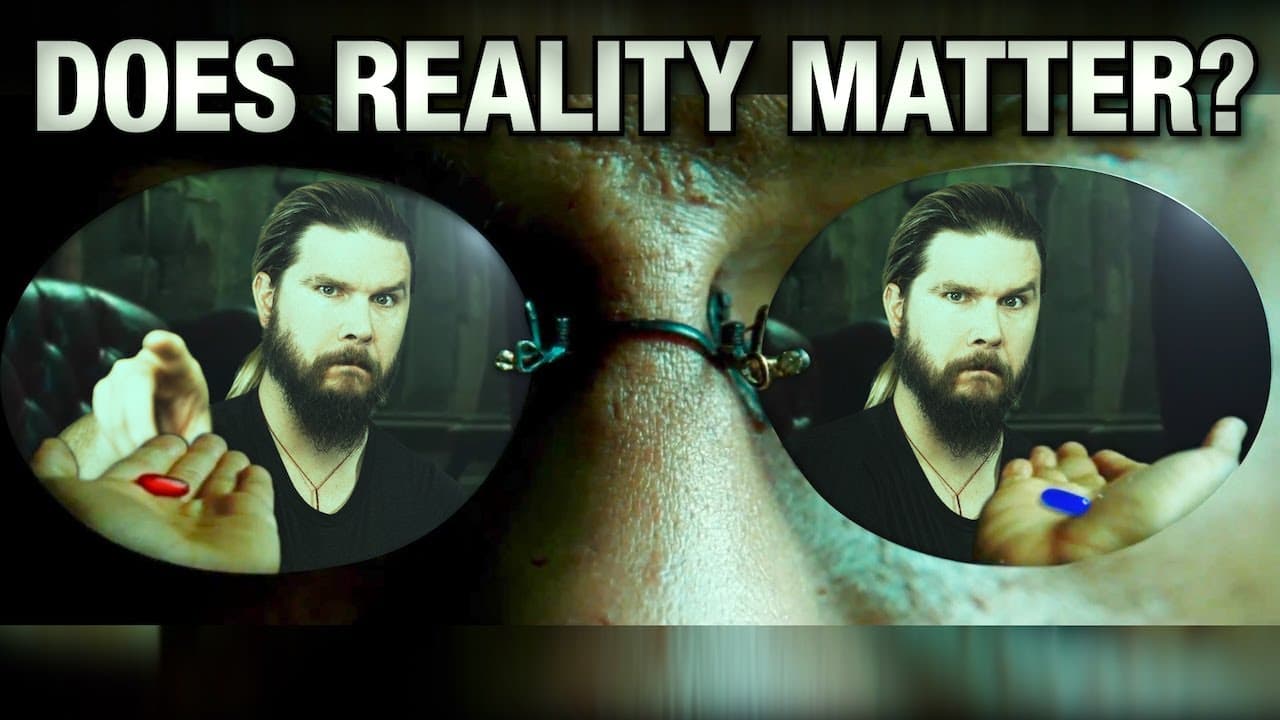
TL;DR
Our perception of whether reality is better than a simulation is largely influenced by the status quo bias, which leads us to prefer familiar circumstances, even if better options exist. Studies suggest that many individuals choose to remain in a simulated life, valuing the comfort of their current experiences over potential improvements.
Transcript
what if i told you that your choice to live a simulated life or not may depend less on the importance of what's real than it does on the world you think you're in now the world where you go to work where you go to church where you pay your taxes or not i guess what if i told you that you cannot truly choose reality or simulation until you confront ... Read More
Key Insights
- 💖 The Matrix popularized the concept of living in a simulation, sparking philosophical discussions about reality and perception.
- 💭 David Nazik's thought experiment challenges the idea that hedonism is the ultimate measure of human well-being.
- 🖐️ The reversal test demonstrates that our preference for the status quo plays a significant role in our choice to stay in a simulated life.
- 🎁 People's decisions to remain plugged into a simulation may be influenced by their attachment to their present circumstances and a reluctance to embrace change.
- 🫚 The preference for reality over simulation may not necessarily reflect a deep concern for reality itself but could be rooted in our cognitive biases.
- ❓ The status quo bias highlights that humans often prioritize familiarity and maintaining their current experiences.
- 🥹 The perception that the real world is inherently better than simulation is not universally held, as indicated by individuals choosing to stay plugged into a simulated life.
Install to Summarize YouTube Videos and Get Transcripts
Explore YouTube Video Summarizer or Get YouTube Transcript Extractor
Questions & Answers
Q: What is the main question posed in The Matrix and how did people respond to it?
The main question is whether one would choose to unplug from a simulated life if they knew it was not real. Many individuals expressed a preference for realness and true reality over a potentially simulated existence.
Q: How did David Nazik's thought experiment challenge hedonism?
Nazik's experience machine thought experiment presented the idea of living a life of continuous pleasure through simulation. However, he argued that most people would reject this option, suggesting that meaning and being a certain kind of person matter more than mere pleasure.
Q: What does the reversal test reveal about our bias towards the status quo?
The reversal test shows that knowledge of one's real-life circumstances influences the choice to stay plugged into a simulated life. People tend to prefer their current circumstances, even when other circumstances may be objectively better.
Q: Does the preference for reality above simulation reflect a genuine care for reality?
According to philosophers like Philippe De Brigard, the preference for reality over simulation may be a result of the status quo bias. It suggests that individuals may prioritize familiarity and current circumstances, rather than a profound concern for the nature of reality.
Summary & Key Takeaways
-
The Matrix popularized the idea that we might be living in a simulation, sparking philosophical debates about reality and perception.
-
David Nazik's experience machine thought experiment challenges the hedonistic view, suggesting that people value meaning and purpose over pleasure.
-
However, a reversal test reveals that our preference for the status quo influences our choice to stay plugged into a simulated life, even when alternative circumstances may be better.
Read in Other Languages (beta)
Share This Summary 📚
Summarize YouTube Videos and Get Video Transcripts with 1-Click
Try YouTube Summary with ChatGPT & Claude or YouTube Transcript Generator
Explore More Summaries from Kyle Hill 📚




![🔴 Viral "Hanger Reflex" Explained! | [OFFICE HOURS] Podcast 090 thumbnail](/_next/image?url=https%3A%2F%2Fi.ytimg.com%2Fvi%2F-GQPNu0erKc%2Fhqdefault.jpg&w=750&q=75)
![What Made MEGALODON So Huge? | [OFFICE HOURS] Podcast #025 thumbnail](/_next/image?url=https%3A%2F%2Fi.ytimg.com%2Fvi%2F2F_zCTfPt-I%2Fhqdefault.jpg&w=750&q=75)
Summarize YouTube Videos and Get Video Transcripts with 1-Click
Try YouTube Summary with ChatGPT & Claude or YouTube Transcript Generator