The Marvels and Mysteries Revealed by the James Webb Space Telescope | Heidi Hammel and Nadia Drake
TL;DR
Heidi Hammel discusses the James Webb Space Telescope, its unique features, and its potential to uncover new information about celestial bodies in our solar system and beyond.
Transcript
Nadia Drake: Well, I do want to ask you about the sharpest new shiny space telescope in the shed which happens to be here, the James Webb Space Telescope, or JWST. Heidi Hammel: We already knew back then in the late 80s, 1990s, that the universe was expanding. And we knew that to see the very first galaxies and maybe even the first stars that ever ... Read More
Key Insights
- 🔭 The James Webb Space Telescope (JWST) was built to focus on the infrared part of the spectrum to see the first stars and galaxies, as the expansion of the universe has shifted their light to longer wavelengths.
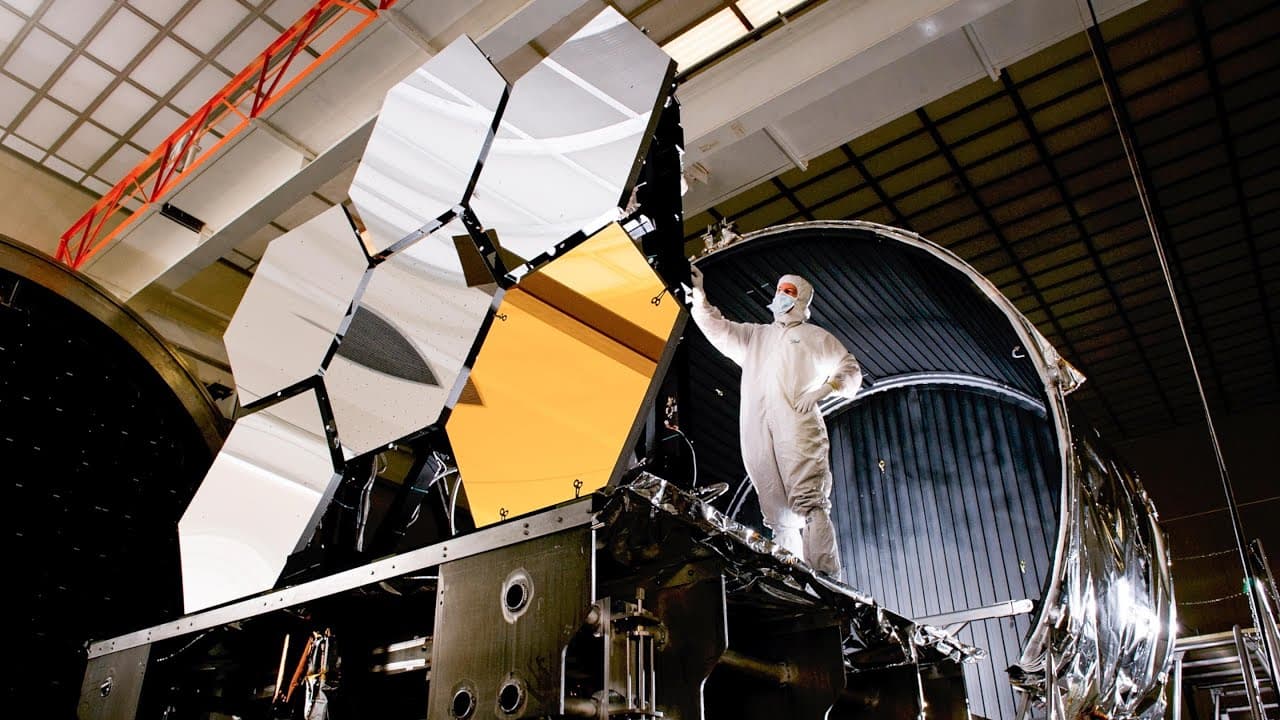
- 🔭 JWST is bigger than Hubble, with a six-and-a-half-meter mirror compared to Hubble's two-point-four-meter mirror. It had to be folded up for launch and has a sunshield to protect it from the warmth of the Sun, Earth, and Moon.
- 🔭 JWST's first deep field image covers only a small piece of the sky, but it contains thousands and thousands of galaxies. Researchers are eagerly awaiting the deep field image where they will stare at a dark spot and expect the universe to mentally expand.
- 🔬 Different wavelengths of light tell different parts of the story of the universe. JWST's spectrographs can analyze the light to identify the composition, temperature, pressure, and motion of astrophysical objects.
- 🔬 JWST is expected to provide new insights into planets within and beyond our solar system. It is particularly of interest for studying the TRAPPIST-1 system and its potentially habitable Earth-sized planets.
- 🌌 Life beyond Earth is considered possible given the scale and age of the universe. JWST and other missions, like the Clipper spacecraft, will continue the search for signs of life, especially on moons like Europa, which has evidence of an ocean and energy sources.
- 🌌 Planetary systems, including our own, and the formation of the first stars and galaxies are major areas of interest in astronomy. Understanding how our solar system and habitable conditions developed are particularly intriguing questions.
- 🌌 There are still many unanswered questions in astronomy, such as how the first stars and galaxies formed and the specific conditions required for habitability. Observations by JWST and other telescopes will continue to shed light on these mysteries.
Install to Summarize YouTube Videos and Get Transcripts
Explore YouTube Video Summarizer or Get YouTube Transcript Extractor
Questions & Answers
Q: Why was the James Webb Space Telescope (JWST) built?
The JWST was built to focus on the infrared part of the spectrum, as that is where the first stars and galaxies can be seen. It was designed to probe the light from the first galaxies and also to study planets like Neptune and Uranus through their infrared molecular signatures.
Q: How is the JWST different from the Hubble Space Telescope?
The JWST is larger than the Hubble, with a six-and-a-half-meter mirror compared to Hubble's two point four meters. The JWST had to be folded up for launch and has a sunshield to protect it from the warmth of the Sun, Earth, and Moon. Unlike other telescopes, the JWST is completely exposed to the elements of space.
Q: How nervous were people about the deployment sequence of the JWST?
People were very nervous about the deployment sequence of the JWST because there were several points where if something didn't unfold or unbolt correctly, the telescope would not function. It had to unfold in space, and every step needed to go right for it to work.
Q: What is the purpose of the sunshield on the JWST?
The sunshield on the JWST is crucial because it protects the telescope from the warmth of the Sun, Earth, and Moon. The telescope had to be placed at a point called the L2 Point, a million miles away from Earth, because it needed to be cold to sense infrared light effectively.
Q: What can we expect from the James Webb Space Telescope Deep Field?
The Deep Field images from the JWST will allow us to see even further back in time to the beginning of the universe. The first deep field will cover a small portion of the sky, but future deep fields will cover the entire sky. These images will expand our understanding of the universe and be mind-blowing.
Q: Can life exist in our local neighborhood beyond Earth?
It is possible that life exists beyond Earth in our local neighborhood. Moons like Europa, which has a subsurface ocean, and even some planets in our solar system, like Mars, have the potential to host or have hosted life. Further explorations and missions will help us uncover more about the potential for life in our local neighborhood.
Q: How did Heidi Hammel become interested in astronomy?
Heidi Hammel became interested in astronomy when she used to get carsick on family road trips. While staring out at the night sky, she started recognizing star patterns and became more familiar with them. This sparked her interest in astronomy and led her to pursue it as a career.
Q: What are some of the nagging unanswered questions in astronomy for Heidi Hammel?
Heidi Hammel is interested in understanding how the first stars and galaxies formed in the universe and tying together observations to create a coherent story. She is also intrigued by the formation and habitability of our own solar system, including the role of giant planets like Jupiter and Neptune. These questions touch on our understanding of our own existence and will keep astronomers busy for a long time to come.
Summary & Key Takeaways
-
The James Webb Space Telescope (JWST) was built to focus on the infrared part of the spectrum, as it allows scientists to see the first stars and galaxies in the universe.
-
JWST is much bigger than the Hubble telescope and had to be folded up to be launched. It is located a million miles away from Earth at a point called the L2 Point to keep it cold and detect infrared light.
-
Heidi Hammel, an astronomer, is excited about JWST's ability to study planets like Neptune and Uranus, as well as exoplanets in the habitable zone such as the TRAPPIST-1 system. She is also interested in understanding the formation of the first stars and the habitability of our own solar system.
Read in Other Languages (beta)
Share This Summary 📚
Summarize YouTube Videos and Get Video Transcripts with 1-Click
Try YouTube Summary with ChatGPT & Claude or YouTube Transcript Generator
Explore More Summaries from TED 📚




Summarize YouTube Videos and Get Video Transcripts with 1-Click
Try YouTube Summary with ChatGPT & Claude or YouTube Transcript Generator