Why I often write unit tests before writing javascript
TL;DR
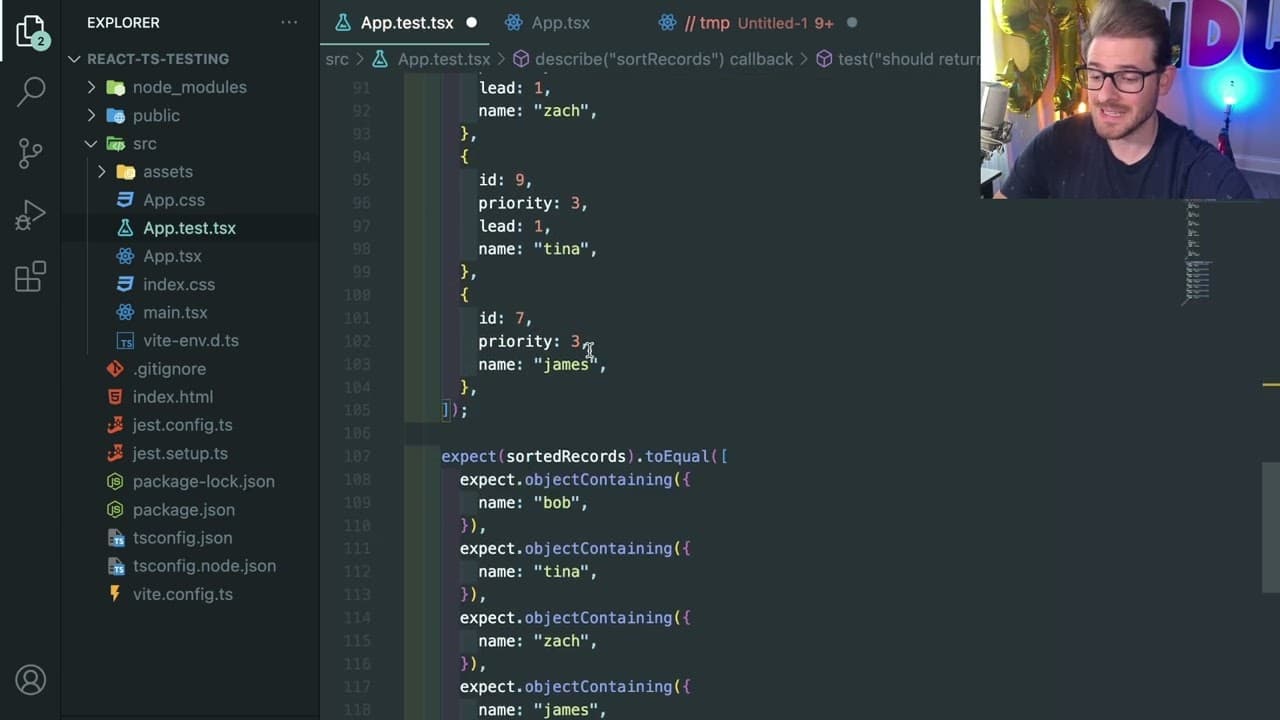
Test driven development enhances code reliability by facilitating structured problem-solving through testing.
Transcript
all right so this is going to be a really quick video I want to explain why I really like test driven development and why I like doing testing along the way on all my applications if possible now I will say most of my side projects I don't do testing on but for anything professional I try to make sure everything is well tested with unit test integr... Read More
Key Insights
- 👨💻 TDD promotes higher code quality by encouraging developers to define expectations through tests before writing code.
- 🏃 Utilizing TDD can save time in the long run by preventing bugs and reducing the need for extensive debugging efforts.
- 👨💼 The complexity of certain business requirements necessitates robust testing to ensure accurate implementation.
- 👨💻 By testing edge cases, developers can improve their code, making it less prone to errors related to specific conditions.
- 👨💻 TDD enhances developer confidence when making changes to production code due to verified functionality.
- 😤 Maintaining comprehensive test suites makes it easier for new team members to understand existing code behavior.
- 🏆 TDD can help streamline collaboration among developers by clarifying implementation details through test-driven discussions.
Install to Summarize YouTube Videos and Get Transcripts
Explore YouTube Video Summarizer or Get YouTube Transcript Extractor
Questions & Answers
Q: Why is test driven development (TDD) advantageous?
Test driven development is advantageous as it establishes a systematic approach to coding that ensures each unit of code meets specified criteria. By writing tests beforehand, developers clarify expectations and reduce the likelihood of bugs, making it easier to modify existing code. TDD promotes higher-quality software and enhances overall productivity.
Q: How does the example in the video illustrate the necessity of TDD?
The example of sorting entries based on priority and leader-follow relationships emphasizes the complexity of implementing conditional logic in code. With TDD, the developer can continually test the code against various edge cases, ensuring that it behaves as expected under all circumstances, thus avoiding errors that could arise from manual coding alone.
Q: What are some challenges associated with using TDD?
While TDD can significantly enhance code quality, challenges include the initial overhead of writing tests before coding, which can be time-consuming. Additionally, maintaining tests over the software's lifecycle can become burdensome if the code frequently changes, and modifying tests may become necessary to align with new requirements or functionality.
Q: How does TDD contribute to long-term code maintainability?
TDD contributes to long-term code maintainability by providing a comprehensive suite of tests that document expected behavior. When developers need to modify or extend code, these tests serve as a safety net, giving them confidence that changes won’t introduce new bugs. It escalates the usability of the codebase over time and simplifies onboarding of new developers.
Q: Can TDD be applied to all software projects?
TDD is beneficial, especially in scenarios with complex logic, but its application varies by project. While it may offer significant advantages for professional or larger projects, developers working on simpler or rapid prototyping tasks may find TDD cumbersome and opt for a less formal testing approach.
Q: What examples were provided about edge cases in the sorting function?
The video highlights edge cases such as the absence of a leader, where the sorting logic needs adjustments. The sorting function must handle situations where individuals without a leader are identified, ensuring that sorting maintains accuracy and that entries are displayed correctly based on the business requirements.
Q: How does TDD aid in identifying missed edge cases?
TDD naturally leads to the identification of missed edge cases because each test corresponds to a specific condition or requirement. If tests fail, developers are prompted to revisit their implementation, ensuring all aspects of the functionality are considered and tested. This iterative testing illustrates gaps that might not be evident during initial coding efforts.
Summary & Key Takeaways
-
The video outlines the advantages of test driven development (TDD) in achieving reliable coding processes, emphasizing the importance of writing tests before coding implementations to ensure quality.
-
A practical example is presented, highlighting the complexity of sorting entries with priority and associated leaders, which reinforces the need for thorough testing to avoid potential pitfalls.
-
The speaker discusses the iterative nature of TDD and how it aids in identifying and correcting errors in code, ultimately improving maintainability and boosting developer confidence when modifying existing code.
Read in Other Languages (beta)
Share This Summary 📚
Summarize YouTube Videos and Get Video Transcripts with 1-Click
Try YouTube Summary with ChatGPT & Claude or YouTube Transcript Generator
Explore More Summaries from Web Dev Cody 📚

Summarize YouTube Videos and Get Video Transcripts with 1-Click
Try YouTube Summary with ChatGPT & Claude or YouTube Transcript Generator