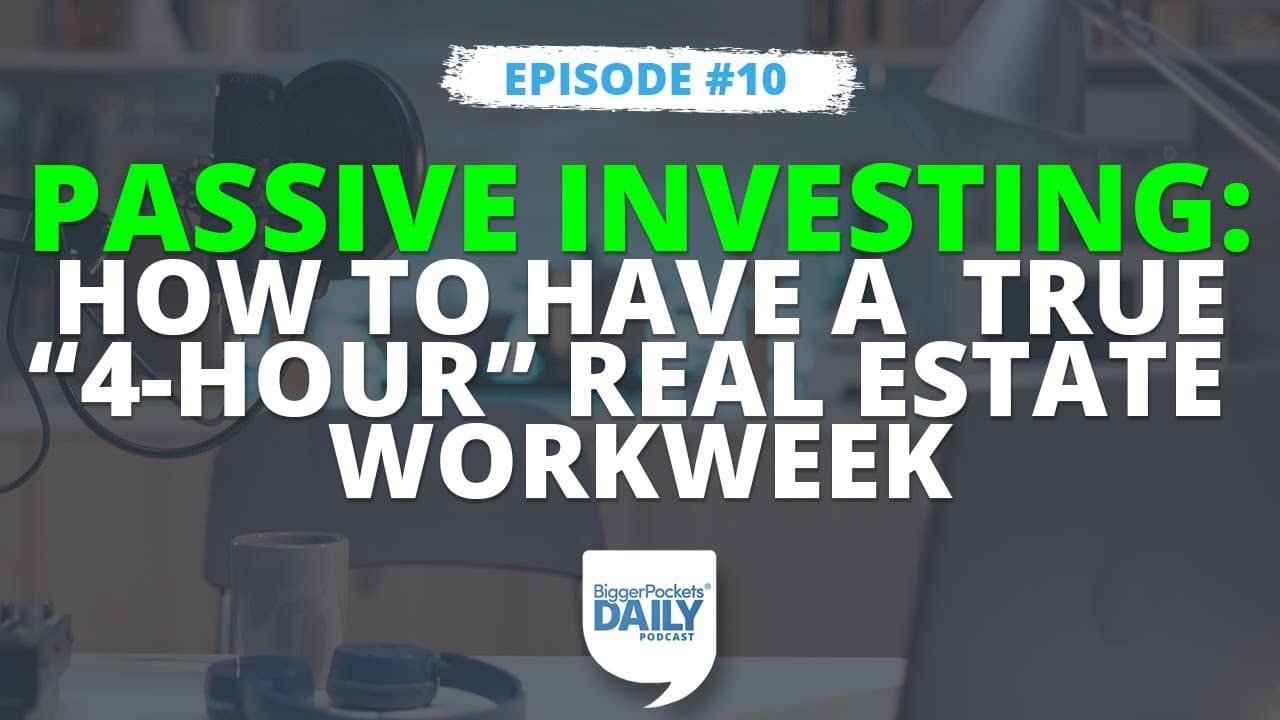
Passive Investing: How to Have a True “4-Hour” Real Estate Workweek | Daily #10
TL;DR
Explores passive income strategies in real estate for financial freedom.
Transcript
this is biggerpockets daily the audioized version of the world's number one real estate investing blog hope you're having a relaxed sunday i'm your host tyler and i read these articles so you can keep learning while you go about your busy life oh and you'll find endless content on biggerpockets.com create an account today it's free passive investin... Read More
Key Insights
- Passive income in real estate allows for financial freedom by minimizing active involvement in income generation, focusing on initial setup and management.
- The concept of a '4-Hour Work Week' by Tim Ferriss is about minimizing undesirable work to pursue passions, not eliminating work entirely.
- Active income in real estate involves constant effort, such as wholesaling and flipping, which may not align with lifestyle goals of freedom.
- Passive income strategies include multi-family buy-and-hold, triple net leases, notes, REITs, and tax liens, each with unique benefits and challenges.
- Multi-family investing involves renting properties for profit, potentially outsourcing management to property companies, though due diligence is crucial.
- Triple net leases transfer maintenance responsibilities to tenants, providing a hands-off investment but requiring careful location selection.
- REITs offer a stock-like investment in real estate with liquidity and tax advantages, though returns may vary compared to direct property ownership.
- Tax liens provide opportunities to earn interest on unpaid taxes and potentially acquire properties, though initial research is essential.
Install to Summarize YouTube Videos and Get Transcripts
Explore YouTube Video Summarizer or Get YouTube Transcript Extractor
Questions & Answers
Q: What is the main difference between active and passive income in real estate?
Active income in real estate involves continuous effort and management, such as wholesaling and flipping properties, where success depends on ongoing work. In contrast, passive income strategies, like multi-family buy-and-hold or triple net leases, require upfront setup and management but allow for minimal ongoing involvement, aligning with lifestyle goals of financial freedom.
Q: How does the '4-Hour Work Week' concept relate to real estate investing?
The '4-Hour Work Week' concept, popularized by Tim Ferriss, is about reducing the time spent on undesirable tasks to focus on passions. In real estate, it means setting up investments like multi-family properties or REITs that require minimal active involvement, allowing investors to pursue interests while maintaining financial stability through passive income.
Q: What are the benefits of multi-family buy-and-hold investing?
Multi-family buy-and-hold investing offers steady passive income by renting properties at a profit after expenses. It allows investors to outsource management to property companies, reducing day-to-day involvement. However, it requires careful selection of properties and management partners to ensure profitability and minimize potential issues with tenants or property upkeep.
Q: Why are triple net leases considered a step up in automation from multi-family investing?
Triple net leases are considered more automated because they transfer all maintenance and property expenses to the tenant, unlike multi-family investing where management companies handle these tasks. This hands-off approach allows investors to receive income with minimal involvement, as tenants are responsible for property upkeep, making it a preferred choice for passive income seekers.
Q: What are the potential risks of investing in triple net properties?
Investing in triple net properties carries risks such as high initial costs due to commercial property prices and potential vacancies if the location is undesirable. Investors must carefully select properties and ensure they are in prime locations to attract and retain creditworthy tenants, as prolonged vacancies can lead to significant financial losses.
Q: How do REITs differ from direct property ownership in real estate investing?
REITs differ from direct property ownership by offering a stock-like investment in real estate, providing liquidity and tax advantages. Investors own shares in a real estate holding company rather than individual properties, which means they avoid tenant management and property maintenance. However, returns may vary compared to direct ownership, requiring careful consideration of investment goals.
Q: What is the role of tax liens in passive real estate income?
Tax liens offer passive income opportunities by allowing investors to purchase liens on properties with unpaid taxes. Investors earn interest on the lien and, if the property owner fails to pay, may acquire the property. This strategy requires thorough research to understand lien properties and state regulations, as it involves legal and financial complexities.
Q: How can real estate investors transition from active to passive income strategies?
Real estate investors can transition from active to passive income by initially building capital and experience through active methods like wholesaling or flipping. As they accumulate resources and knowledge, they can invest in passive strategies such as multi-family properties, REITs, or tax liens, focusing on long-term, hands-off income generation aligned with lifestyle goals.
Summary & Key Takeaways
-
This content discusses passive income strategies in real estate, focusing on the benefits of minimizing active work to achieve financial freedom. It contrasts active income methods like wholesaling with passive approaches such as multi-family investing, triple net leases, and REITs.
-
The article emphasizes the importance of lifestyle design, advocating for investments that align with personal passions and freedom. It explores various passive income vehicles, detailing their setup, management, and potential returns, while highlighting the need for careful planning and research.
-
Real estate offers multiple avenues for passive income, including tax liens and note investing, each with unique advantages. The content suggests starting with active income to build capital, eventually transitioning to passive strategies for a lifestyle-driven investment approach.
Read in Other Languages (beta)
Share This Summary 📚
Summarize YouTube Videos and Get Video Transcripts with 1-Click
Try YouTube Summary with ChatGPT & Claude or YouTube Transcript Generator
Explore More Summaries from BiggerPockets 📚





Summarize YouTube Videos and Get Video Transcripts with 1-Click
Try YouTube Summary with ChatGPT & Claude or YouTube Transcript Generator