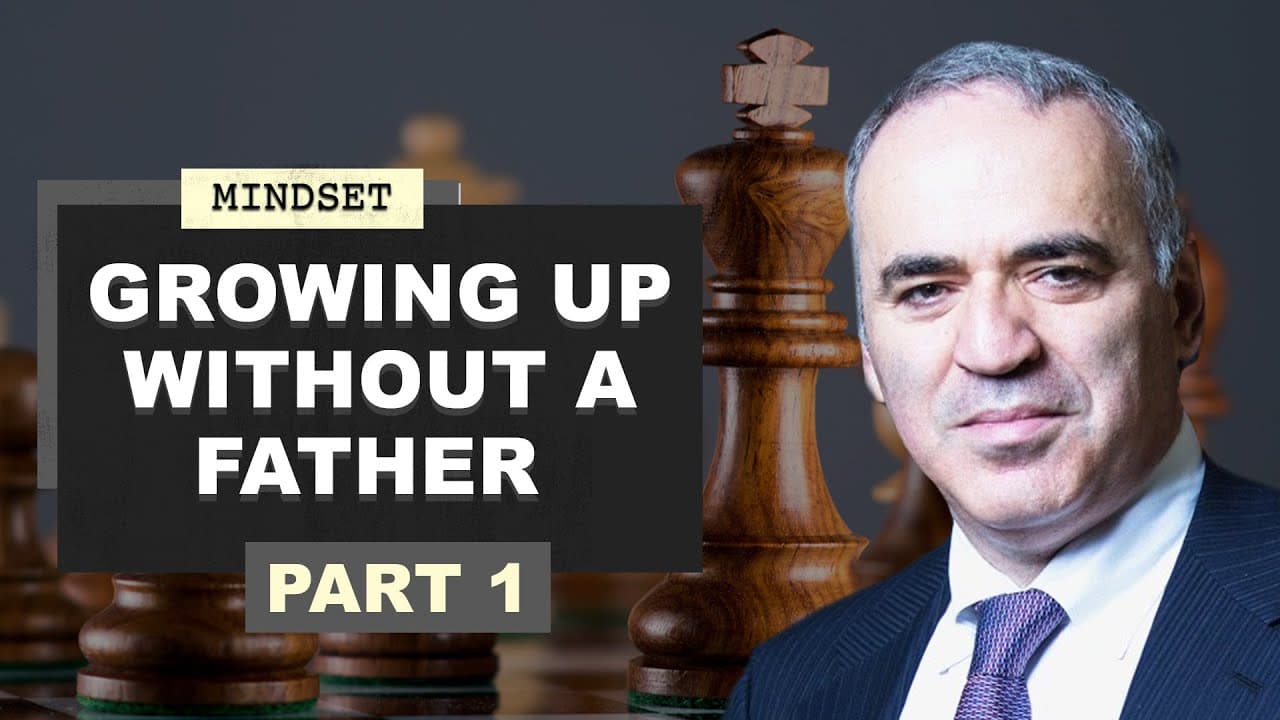
Chess Legend Garry Kasparov on growing up without a father
TL;DR
Gary Kasparov, world chess champion and political activist, shares insights on identity, chess, and life lessons.
Transcript
hello and welcome to this very special how to academy event i'm matt stadlin and i was an lbc presenter i was a bbc presenter i was a telegraph columbus i am now a how to academy interviewer lots of the time it's always a pleasure and a privilege to be part of how to academy and one of the reasons for that is that it means i get to interview legend... Read More
Key Insights
- 💠 Kasparov's diverse background as a "half-Jewish, half-Armenian" individual shaped his identity and experiences in the USSR, reflecting on cultural complexities and familial influences.
- 🌉 Chess served as a transformative tool for Kasparov, bridging personal development with strategic decision-making and political activism, becoming a symbolic arena for challenging oppressive systems.
- ♟️ Kasparov's book "How Life Imitates Chess" delves into the parallels between chess strategies and everyday decision-making, emphasizing introspection, adaptability, and authenticity in personal growth.
- ♟️ Kasparov's encounters with chess champions like Anatoly Karpov and Bobby Fischer influenced his strategic mindset, fostering resilience, adaptability, and the pursuit of excellence.
Install to Summarize YouTube Videos and Get Transcripts
Explore YouTube Video Summarizer or Get YouTube Transcript Extractor
Questions & Answers
Q: How did Gary Kasparov's diverse ethnic background impact his identity growing up in the USSR?
Kasparov reflects on his mixed Jewish-Armenian heritage, acknowledging the complexities of identity and the challenges faced in a multicultural society.
Q: What role did chess play in Kasparov's life, both as a career and a platform for political activism?
For Kasparov, chess served as a tool for personal growth, decision-making, while also becoming a symbolic battleground for challenging political systems and promoting democracy.
Q: How did Kasparov's encounters with other chess champions like Anatoly Karpov and Bobby Fischer shape his approach to the game and life?
Kasparov's experiences with formidable opponents like Karpov and Fischer influenced his strategic outlook on life, fostering resilience, adaptability, and the drive for continuous improvement.
Q: In what ways did Kasparov's book "How Life Imitates Chess" offer a unique perspective on decision-making and personal development?
Kasparov's book provides a personalized account of translating chess strategies into life lessons, emphasizing the importance of self-awareness, individuality, and continuous learning.
Summary & Key Takeaways
-
Gary Kasparov, a former world chess champion, shares his upbringing as a "half-Jewish, half-Armenian" individual raised in the USSR, emphasizing his diverse identity.
-
Kasparov discusses his journey in chess and politics, highlighting the intertwined nature of decision-making, personal identity, and societal impacts.
-
The book "How Life Imitates Chess" by Kasparov delves into life lessons drawn from chess strategies, emphasizing individuality and introspection.
Read in Other Languages (beta)
Share This Summary 📚
Summarize YouTube Videos and Get Video Transcripts with 1-Click
Try YouTube Summary with ChatGPT & Claude or YouTube Transcript Generator
Explore More Summaries from How To Academy Mindset 📚





Summarize YouTube Videos and Get Video Transcripts with 1-Click
Try YouTube Summary with ChatGPT & Claude or YouTube Transcript Generator