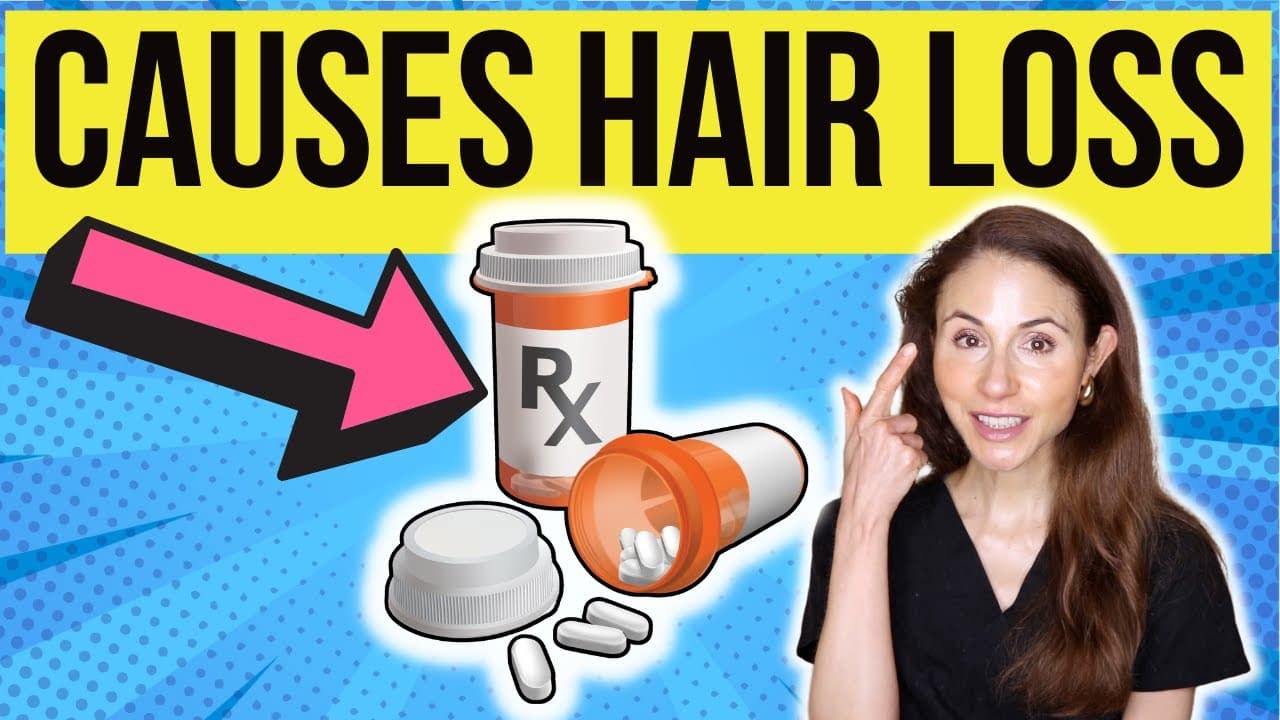
These 6 Medications Can Cause Hair Loss
TL;DR
Various medications can cause temporary hair loss, categorized as antigen alopecia or telogen alopecia.
Transcript
well hey guys in today's video I want to talk about medications that might cause hair loss alipa AKA hair loss is a commonly reported side effect of many different medications you may have been prescribed a medication and upon reading the package insert you see hair loss as a potential side effect that might alarm you it might make you scared it ma... Read More
Key Insights
- 🥺 Medications can lead to two main types of hair loss: antigen alopecia and telogen alopecia.
- ❓ Antigen alopecia results in sudden balding and is commonly associated with chemotherapy treatments.
- 😯 Telogen alopecia causes hair shedding without complete baldness and is often triggered by stress or medication side effects.
- 👱 Various medication classes, including retinoids, antifungals, psychotropics, anticoagulants, and antihypertensives, can contribute to hair loss.
- 👱 Understanding the type of hair loss caused by medications can help patients manage and address the issue effectively.
- 👱 Hair loss from medications like telogen alopecia is typically reversible and resolves once the medication is discontinued or adjusted.
- 👱 Patients experiencing medication-induced hair loss should consult their healthcare provider before making any changes to their treatment regimen.
Install to Summarize YouTube Videos and Get Transcripts
Explore YouTube Video Summarizer or Get YouTube Transcript Extractor
Questions & Answers
Q: What are the two main types of hair loss caused by medications?
The two main types of hair loss caused by medications are antigen alopecia and telogen alopecia. Antigen alopecia results in sudden balding, often seen with chemotherapy, while telogen alopecia involves hair shedding due to stress or medication side effects.
Q: How does telogen alopecia differ from antigen alopecia in terms of hair loss patterns?
Telogen alopecia leads to hair shedding but does not result in complete baldness, unlike antigen alopecia, which causes sudden, noticeable balding due to the destruction of growing hair follicles.
Q: What are some common medications that can cause telogen alopecia?
Medications like retinoids, certain antifungals, psychotropic drugs, anticoagulants, and antihypertensives have been linked to telogen alopecia, resulting in excessive hair shedding.
Q: How can patients manage hair loss caused by medications like telogen alopecia?
Hair loss from medications like telogen alopecia can often resolve on its own once the medication is discontinued or the dose is lowered. In some cases, switching to a different medication may also help alleviate hair shedding.
Summary & Key Takeaways
-
Hair loss is a common side effect of many medications, causing distress and concern for many patients.
-
Medications can lead to two types of hair loss: antigen alopecia and telogen alopecia, each with its own causes and treatments.
-
Antigen alopecia, like chemotherapy-induced hair loss, leads to sudden balding, while telogen alopecia involves hair shedding due to stress or medication side effects.
Read in Other Languages (beta)
Share This Summary 📚
Summarize YouTube Videos and Get Video Transcripts with 1-Click
Try YouTube Summary with ChatGPT & Claude or YouTube Transcript Generator
Explore More Summaries from Dr Dray 📚




Summarize YouTube Videos and Get Video Transcripts with 1-Click
Try YouTube Summary with ChatGPT & Claude or YouTube Transcript Generator