Stanford Webinar: Effective Data Visualization in the Era of COVID-19, Kristin Sainani
TL;DR
Learn about the principles of effective data visualization and how it impacts our understanding of the COVID-19 pandemic.
Transcript
welcome everyone i hope everyone is staying safe and i'm glad to see so many people trying to learn new skills while they're stuck at home today i'm going to be talking about effective data visualization my name is kristen sennani and i'm an associate professor at stanford university where i teach both statistics and writing i think data visualizat... Read More
Key Insights
- 🔨 Data visualizations are powerful tools in shaping public understanding and behavior during the COVID-19 pandemic.
- 🗯️ Effective data visualizations should be accurate, transparent, and chosen with the right graph type for the data.
- 👪 Color usage, clutter reduction, and conveying a clear take-home message are crucial for effective data visualization.
Install to Summarize YouTube Videos and Get Transcripts
Explore YouTube Video Summarizer or Get YouTube Transcript Extractor
Questions & Answers
Q: How has data visualization been used to shape public understanding of the COVID-19 pandemic?
Data visualizations have informed the public and policymakers about the pandemic, influencing behaviors and prompting people to stay home. Examples include the "flatten the curve" graphic and real-time tracking maps.
Q: What are some common mistakes or flaws in data visualizations?
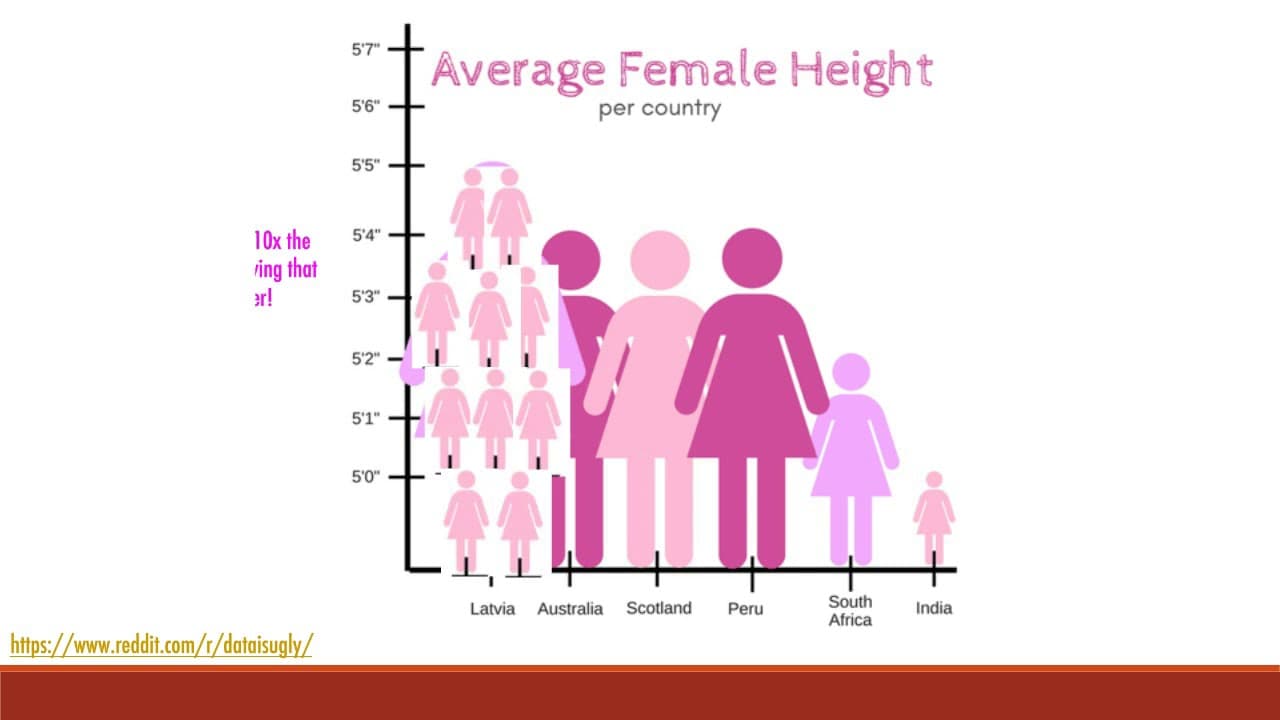
Common mistakes include choosing the wrong type of graph for the data or using inaccurate and non-transparent representations of numbers. Poor color choices, cluttered graphs, and unclear take-home messages can also hinder the effectiveness of data visualizations.
Q: How does the choice of graph type impact the effectiveness of data visualization?
Choosing the right graph for the data is essential, as different graphs are suited to different purposes. For example, bar graphs are useful for representing frequencies, while line graphs are effective for showing trends over time.
Q: What is the importance of accuracy and transparency in data visualization?
Accuracy and transparency ensure that data visualizations provide a reliable representation of information. Misleading or inaccurate graphs can misinform audiences and undermine the credibility of the visualization.
Q: How can the use of color impact the effectiveness of data visualizations?
Color usage in data visualization should be carefully chosen to enhance understanding. Poor color choices or gradients can create confusion or give false impressions, while appropriate color schemes can aid comprehension and highlight important trends or patterns.
Q: Why is it important to cut clutter in data visualizations?
Cluttered graphs can overwhelm viewers and make it difficult to extract meaningful insights. By removing unnecessary lines, tick marks, or elements, data visualizations can be more focused and easier to interpret.
Q: What is the role of conveying a clear take-home message in data visualization?
Data visualizations should have a clear message or purpose that is communicated to the audience. Without a clear take-home message, the visualization may fail to effectively convey its intended information or insights.
Q: How can the same data be graphed in different ways to tell different stories?
By using different statistical and design choices, such as linear vs. logarithmic scales or adjusting for population size, data visualizations can emphasize different aspects or trends within the data, shaping the narrative conveyed to the audience.
Summary & Key Takeaways
-
Data visualization plays a crucial role in shaping public understanding and behavior during the COVID-19 pandemic.
-
Examples of effective data visualization include the influential "flatten the curve" graphic and real-time tracking maps.
-
Principles of effective data visualization include using the right graph, accuracy and transparency, color usage, cutting clutter, conveying a clear message, and considering visual appeal.
Read in Other Languages (beta)
Share This Summary 📚
Summarize YouTube Videos and Get Video Transcripts with 1-Click
Try YouTube Summary with ChatGPT & Claude or YouTube Transcript Generator
Explore More Summaries from Stanford Online 📚



Summarize YouTube Videos and Get Video Transcripts with 1-Click
Try YouTube Summary with ChatGPT & Claude or YouTube Transcript Generator