JC18: Practice Activity Analysis
TL;DR
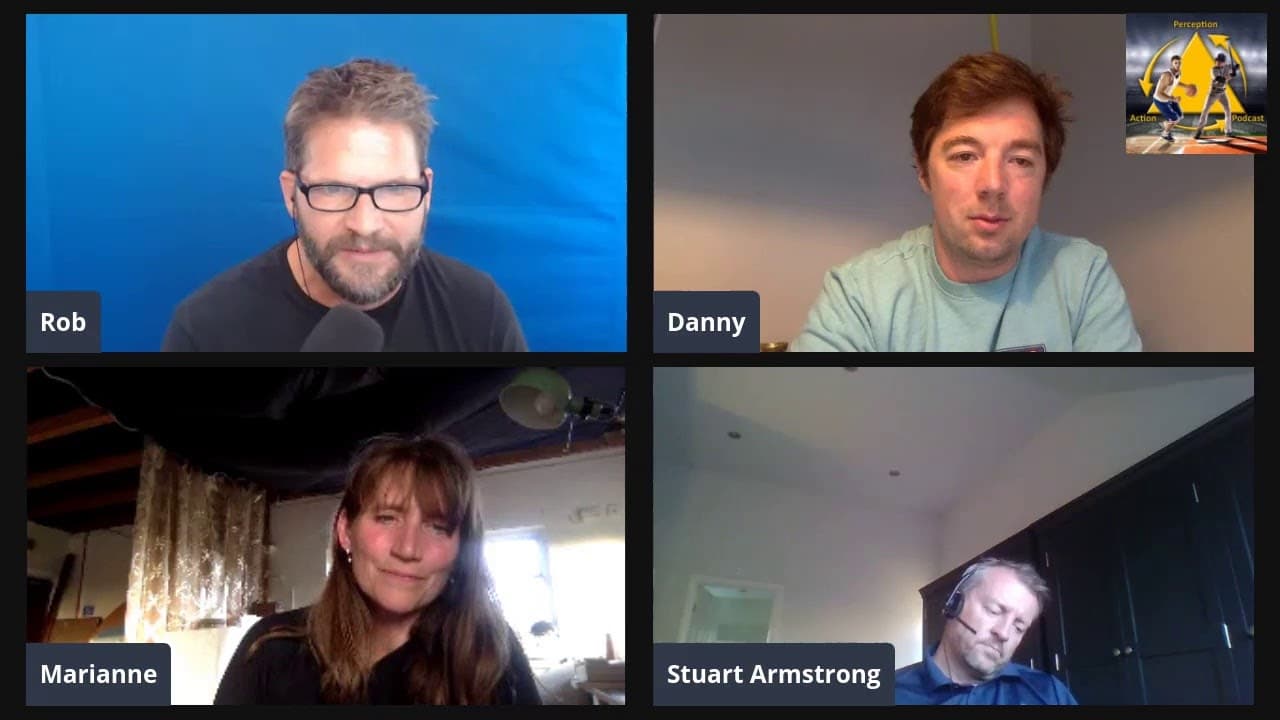
Panelists discuss practice videos to enhance skill acquisition.
Transcript
nothing all right hello everyone and welcome to another edition of the perception and action Journal Club today we're doing something really different I think than we've done before they hope some fun for people and I'm looking forward to it myself what we're going to do today is I'm calling a practice activity analysis so we have a bunch of videos... Read More
Key Insights
- The panel discusses the importance of understanding the coach's intention behind practice activities to better analyze their effectiveness and suggest improvements.
- Constraints-led approach is highlighted as a method to enhance skill acquisition by modifying task constraints to promote exploration and adaptation.
- The significance of representative design in practice activities is emphasized, ensuring tasks closely mimic real-game scenarios for effective skill transfer.
- Panelists explore the trade-off between representativeness and exploration, suggesting that sometimes breaking representativeness can promote creativity and new solutions.
- The role of variability in practice is discussed, with suggestions to incorporate different stimuli and conditions to enhance adaptability and decision-making skills.
- The concept of co-adaptation between attackers and defenders is explored, emphasizing the importance of designing practices that simulate real interactions and decision-making processes.
- Panelists highlight the value of using videos and demonstrations to spark imagination and encourage learners to explore new movements and techniques.
- The discussion includes the challenges of designing effective solo practice activities, stressing the need for creativity in maintaining engagement and skill development.
Install to Summarize YouTube Videos and Get Transcripts
Explore YouTube Video Summarizer or Get YouTube Transcript Extractor
Questions & Answers
Q: What is the purpose of using constraints in practice activities?
Constraints are used in practice activities to shape behavior and promote skill acquisition by modifying task elements. This approach encourages learners to explore new solutions and adapt to different scenarios, enhancing their ability to perform in real-game situations. By altering constraints, coaches can target specific skills or strategies, facilitating a deeper understanding and application of those skills.
Q: How can variability be incorporated into practice activities?
Variability can be incorporated into practice activities by introducing different stimuli, conditions, or constraints that require learners to adapt their movements and decision-making processes. This can include changing the size or type of equipment, altering the environment, or using random cues to trigger responses. The goal is to create an unpredictable and dynamic practice environment that challenges learners to develop adaptable skills.
Q: What is the significance of representative design in skill acquisition?
Representative design ensures that practice activities closely mimic real-game scenarios, providing learners with opportunities to engage with the same perceptual and decision-making processes they will encounter in competition. This approach enhances skill transfer by promoting the development of context-specific skills and strategies, making practice more relevant and effective in preparing learners for actual performance.
Q: Why is co-adaptation between attackers and defenders important in practice?
Co-adaptation between attackers and defenders is important because it simulates the dynamic interactions and decision-making processes that occur in real-game situations. By practicing against live opponents, learners can develop their ability to read cues, anticipate actions, and adjust their strategies accordingly. This interaction fosters a deeper understanding of the game and enhances the ability to perform effectively under competitive conditions.
Q: How can solo practice activities be made more effective?
Solo practice activities can be made more effective by incorporating elements that maintain engagement and challenge the learner's skills. This can include using different types of equipment, varying the practice environment, or introducing external cues, such as auditory or visual signals, to trigger specific actions. The aim is to create a dynamic and engaging practice setting that encourages learners to explore and refine their skills, even when practicing alone.
Q: What role do videos and demonstrations play in skill acquisition?
Videos and demonstrations can serve as powerful tools in skill acquisition by providing learners with visual examples of desired movements or strategies. They can spark imagination and encourage learners to explore new techniques, offering a reference for what successful performance looks like. Additionally, they can facilitate understanding by breaking down complex skills into observable components, aiding in the learning process.
Q: What challenges arise from using non-representative practice activities?
Non-representative practice activities can lead to challenges in skill transfer, as they may not accurately reflect the conditions and demands of actual performance environments. Learners might develop skills that are not applicable in real-game situations, leading to ineffective performance. Coaches must carefully consider the trade-offs and ensure that even non-representative activities have clear intentions and contribute to overall skill development.
Q: How can practice activities be designed to promote creativity in learners?
Practice activities can promote creativity by allowing learners to explore different solutions and strategies without rigid constraints. This can be achieved by designing open-ended tasks, encouraging experimentation, and providing opportunities for learners to make decisions and solve problems. By fostering an environment that values exploration and adaptability, coaches can help learners develop creative skills that enhance their overall performance.
Summary & Key Takeaways
-
The panel analyzes various practice activity videos, discussing the importance of understanding the coach's intention and the role of constraints in promoting skill acquisition. They emphasize the need for representative design to ensure effective skill transfer.
-
The discussion explores the balance between representativeness and exploration, suggesting that sometimes breaking representativeness can promote creativity. The role of variability is highlighted, with suggestions to incorporate different stimuli to enhance adaptability.
-
Panelists discuss co-adaptation between attackers and defenders, emphasizing realistic interactions. They also address the challenges of solo practice activities, advocating for creativity to maintain engagement and skill development.
Read in Other Languages (beta)
Share This Summary 📚
Summarize YouTube Videos and Get Video Transcripts with 1-Click
Try YouTube Summary with ChatGPT & Claude or YouTube Transcript Generator
Explore More Summaries from Rob Gray 📚
Summarize YouTube Videos and Get Video Transcripts with 1-Click
Try YouTube Summary with ChatGPT & Claude or YouTube Transcript Generator