How is Climate Change Affecting the Amazon Rainforest?
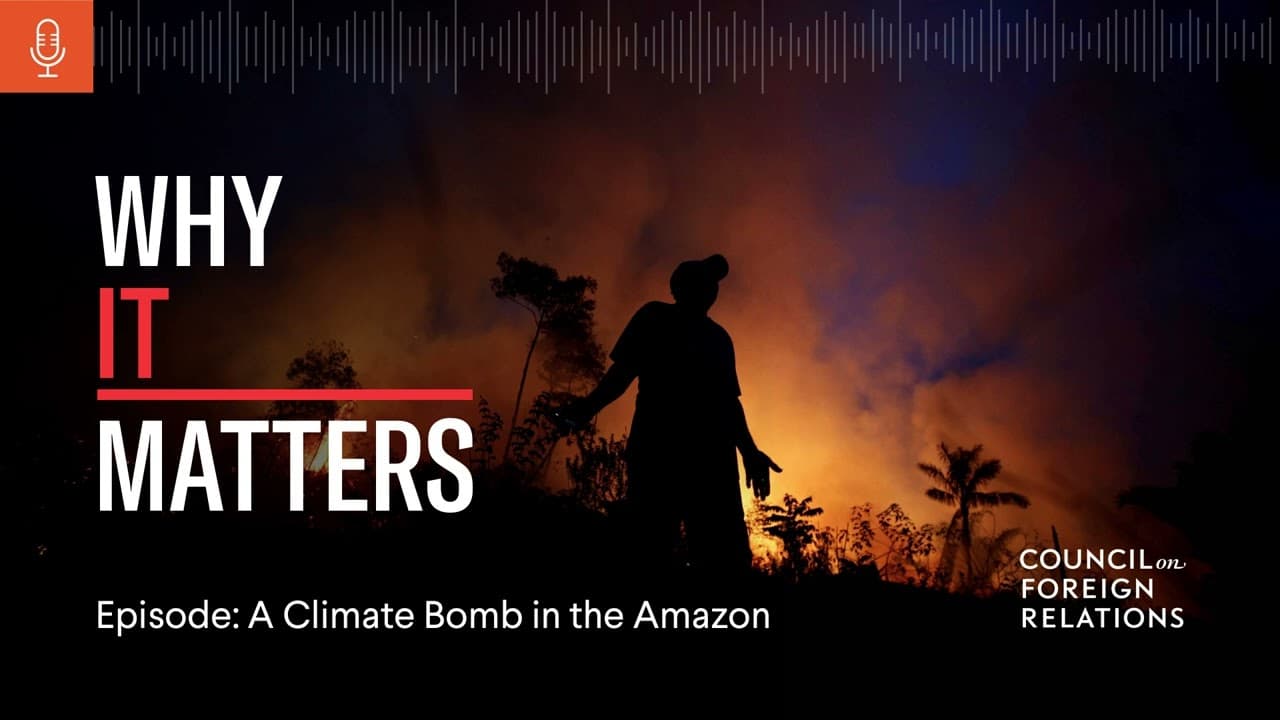
TL;DR
Deforestation in the Amazon threatens global biodiversity and climate stability.
Transcript
SIERRA: The Amazon is the biggest rainforest in the world. If we were standing in the middle of it right now, we’d be surrounded by 2.5 million species of insects. The air would be thick with moisture, thanks to 390 billion trees that exude gallons of water every day. All around us would be thousands upon thousands of species of plants and animals,... Read More
Key Insights
- The Amazon Rainforest, the largest in the world, is a critical carbon sink that stores 60 to 80 billion tons of carbon, twice the amount released from fossil fuels in 2018.
- Fires in the Amazon are not naturally occurring but are set by people to clear land for agriculture, exacerbated by weak enforcement of environmental laws.
- Brazil's Amazon policies under President Jair Bolsonaro have increased deforestation, prioritizing short-term economic gains over long-term environmental and economic stability.
- The Amazon's biodiversity is immense, housing 10% of all known species, and its loss could mean losing potential medical and agricultural breakthroughs.
- Deforestation alters hydrological cycles, impacting rainfall patterns across South America, which can have devastating effects on agriculture and local communities.
- Brazil's private sector recognizes the importance of environmental sustainability, with many companies voluntarily monitoring greenhouse emissions despite government inaction.
- International pressure and cooperation are crucial in addressing deforestation, with historical precedents like the 1990 G7 meeting showing potential for global intervention.
- A sustainable future for the Amazon could involve innovative economic models like bioeconomies and sustainable urban development, leveraging the forest's natural resources without destruction.
Install to Summarize YouTube Videos and Get Transcripts
Explore YouTube Video Summarizer or Get YouTube Transcript Extractor
Questions & Answers
Q: What is the significance of the Amazon Rainforest in terms of carbon storage?
The Amazon Rainforest is a critical carbon sink, storing between 60 to 80 billion tons of carbon. This is roughly twice the total amount of carbon released from fossil fuels in 2018. If deforestation continues, this stored carbon could be released into the atmosphere, drastically accelerating global warming and its associated impacts.
Q: How do the fires in the Amazon differ from wildfires in other parts of the world?
Unlike wildfires in regions like California, which are often sparked by natural causes like lightning, fires in the Amazon are set intentionally by people. These fires are used to clear land for agriculture and logging, requiring a period of dry weather to ignite the typically wet rainforest. This anthropogenic activity is a major driver of deforestation in the region.
Q: What are the potential global consequences if the Amazon reaches a tipping point?
If the Amazon reaches a tipping point, it could transform from a rainforest into a savanna, drastically reducing its capacity to store carbon and altering global climate patterns. This shift would release vast amounts of carbon into the atmosphere, increase global temperatures, and disrupt weather systems, affecting agriculture and biodiversity worldwide.
Q: Why is the Amazon referred to as the 'lungs of the world'?
The Amazon is often called the 'lungs of the world' due to its vast capacity to absorb carbon dioxide and produce oxygen. However, its primary role is as a carbon sink, storing carbon that would otherwise contribute to atmospheric greenhouse gases. This function is critical in mitigating climate change and maintaining global ecological balance.
Q: What economic factors contribute to deforestation in the Amazon?
Economic incentives drive deforestation in the Amazon, as cleared land is often more valuable for short-term agricultural use, such as cattle ranching and soybean production. The lack of land rights and regulatory enforcement further exacerbates this issue, making deforestation a lucrative option for small-scale farmers and loggers seeking immediate profit.
Q: How has Brazil's political climate influenced Amazon deforestation?
Under President Jair Bolsonaro, Brazil's government has weakened environmental protections and enforcement, prioritizing economic development over conservation. This approach has encouraged illegal logging and land clearing, significantly increasing deforestation rates. Bolsonaro's rhetoric and policies have undermined previous efforts to protect the Amazon.
Q: What role does international cooperation play in preserving the Amazon?
International cooperation is crucial in preserving the Amazon, as global pressure and financial support can encourage sustainable practices and strengthen enforcement. Historical initiatives, like the 1990 G7 meeting, demonstrate the potential for collective action to protect the rainforest. Global stakeholders must collaborate to address the Amazon's environmental challenges.
Q: What sustainable alternatives exist for economic development in the Amazon?
Sustainable alternatives for Amazon development include bioeconomies that utilize the forest's natural resources without destruction. This approach could involve aquaculture, sustainable agriculture, and research into the rainforest's biodiversity for medical and technological innovations. Developing sustainable cities within the Amazon, like Manaus, can also provide economic opportunities while preserving the environment.
Summary & Key Takeaways
-
The Amazon Rainforest is a vast carbon sink and biodiversity hotspot, crucial for global climate stability. Recent deforestation, driven by policies under Brazilian President Jair Bolsonaro, threatens to release stored carbon and disrupt weather patterns across South America, with global repercussions.
-
Fires in the Amazon are set intentionally to clear land for agriculture, a practice exacerbated by weak environmental enforcement and economic incentives. The destruction of the rainforest not only threatens biodiversity but also undermines Brazil's agricultural stability by altering regional hydrological cycles.
-
International cooperation is essential to address the Amazon's deforestation crisis. While Brazil's government has been lax in enforcement, the private sector recognizes the importance of sustainability. Innovative economic models and global pressure could help preserve the Amazon's ecological and economic value.
Read in Other Languages (beta)
Share This Summary 📚
Summarize YouTube Videos and Get Video Transcripts with 1-Click
Try YouTube Summary with ChatGPT & Claude or YouTube Transcript Generator
Explore More Summaries from Council on Foreign Relations 📚


Summarize YouTube Videos and Get Video Transcripts with 1-Click
Try YouTube Summary with ChatGPT & Claude or YouTube Transcript Generator