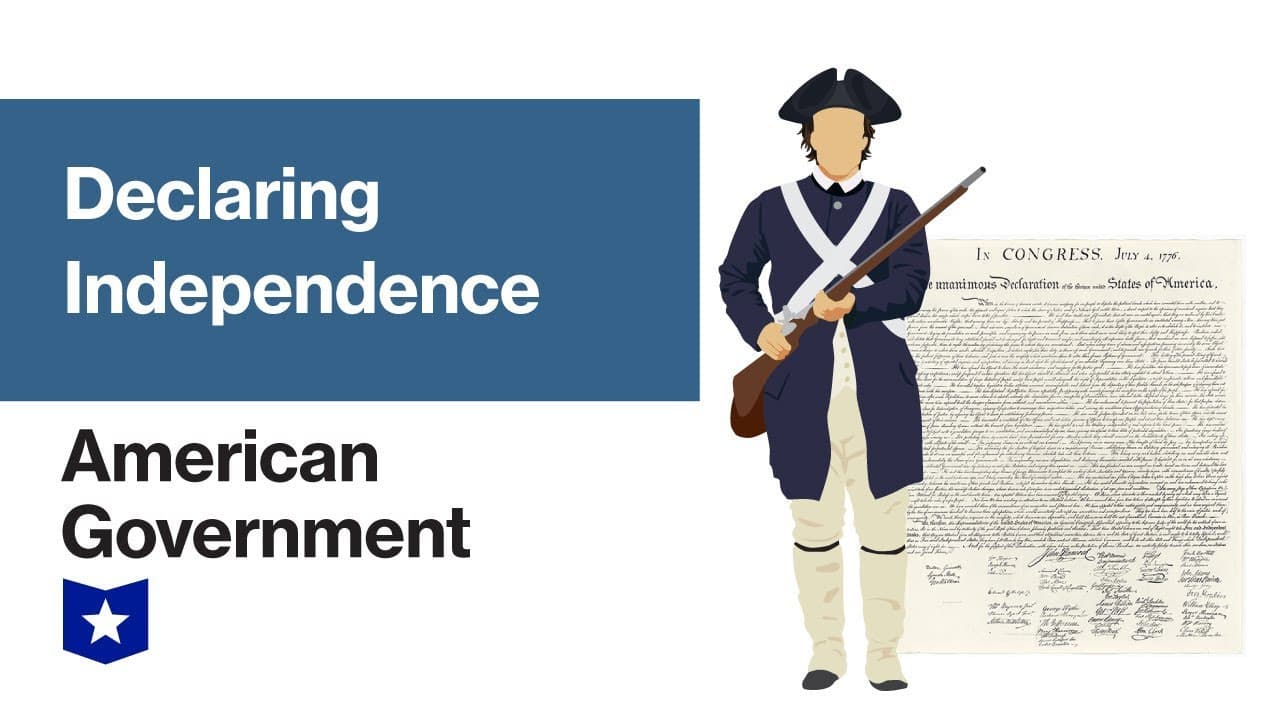
Declaring Independence from Britain | American Government
TL;DR
Colonial resistance to British rule leading to Declaration of Independence based on natural rights and grievances.
Transcript
after a failed attempt at open negotiations with Great Britain popular support for declaring independence from Britain grew in the American colonies then in May 1775 the Continental Congress met and delegates prepared to defend the colonies militarily by creating a Continental Army interestingly while preparing for armed resistance many delegates s... Read More
Key Insights
- 🖤 Colonial resistance to British rule escalated due to grievances and lack of representation.
- 🖐️ Thomas Paine's Common Sense played a pivotal role in swaying public opinion towards independence.
- 🗯️ The Declaration of Independence drew on John Locke's ideas of natural rights to justify breaking ties with Britain.
- ⌛ The establishment of a republic and limited government was revolutionary for its time.
- 👂 Grievances listed in the Declaration highlighted injustices imposed by British rule.
- 😣 The Declaration affirmed the 13 colonies as independent states, severing ties with Great Britain.
- 🇺🇸 The principles of natural rights and consent of the governed shaped the foundation of the United States.
Install to Summarize YouTube Videos and Get Transcripts
Explore YouTube Video Summarizer or Get YouTube Transcript Extractor
Questions & Answers
Q: What were the reasons for the American colonists' discontent with British rule?
The American colonists were unhappy with taxation without representation, lack of fair trials, presence of British troops, and trade restrictions imposed by Britain.
Q: How did Thomas Paine's pamphlet, Common Sense, influence the decision for independence?
Common Sense fueled the case for independence by arguing against monarchy and advocating for self-governance, convincing many colonists of the need to break from Britain.
Q: How did John Locke influence the Declaration of Independence?
Thomas Jefferson drew on Locke's ideas of natural rights and social contract theory to justify colonial separation from Britain, establishing the foundations for limited government and individual liberties.
Q: What were the key grievances listed in the Declaration of Independence?
Grievances included imposing taxes without consent, denying trials by jury, stationing troops in colonies, and disrupting trade, all of which fueled the colonists' call for independence.
Summary & Key Takeaways
-
Colonial discontent grew, leading to Declaration of Independence.
-
Olive Branch petition failed, Thomas Paine's Common Sense spurred independence.
-
Declaration justified independence with natural rights and grievances.
Read in Other Languages (beta)
Share This Summary 📚
Summarize YouTube Videos and Get Video Transcripts with 1-Click
Try YouTube Summary with ChatGPT & Claude or YouTube Transcript Generator
Explore More Summaries from Course Hero 📚



Summarize YouTube Videos and Get Video Transcripts with 1-Click
Try YouTube Summary with ChatGPT & Claude or YouTube Transcript Generator