Road diets: designing a safer street
TL;DR
Road diets improve safety by reducing lanes and adding bike lanes.
Transcript
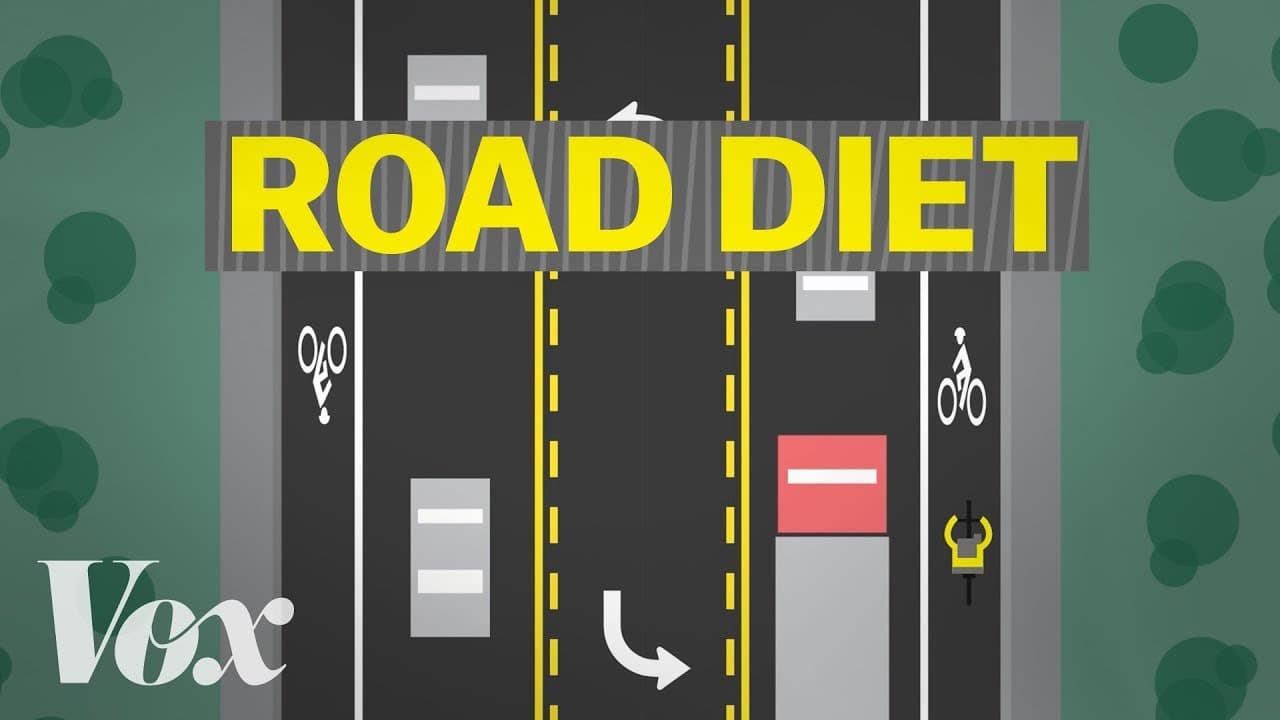
This road might not look like anything special. But what if I showed you the same road, a few years earlier —notice anything different? Here’s a better angle of that: The old road has 4 lanes for traffic. The new one has two. And now there’s this middle lane for left hand turns. There’s also a new bike lane. This is what transportation planners cal... Read More
Key Insights
- Road diets involve reducing the number of lanes to improve safety and add bike lanes, which can decrease the number of conflict points and accidents.
- Historically, four-lane roads became popular due to increased car ownership, but many were overbuilt, leading to unsafe conditions.
- Narrower lanes from road diets can psychologically encourage drivers to slow down, reducing the severity of accidents.
- Road diets can improve traffic flow by removing left-turning vehicles from the main lanes, reducing delays and potential accidents.
- The success of road diets varies by location, with Iowa seeing a 50% crash reduction, while California saw a 17% reduction due to higher traffic volumes.
- Road diets can accommodate more pedestrian and bicycle traffic by reallocating space previously used for car lanes.
- The effectiveness of a road diet depends on factors such as traffic volume, economic impact, and land use.
- Despite concerns, road diets do not necessarily increase congestion and can improve overall traffic movement in urban corridors.
Install to Summarize YouTube Videos and Get Transcripts
Explore YouTube Video Summarizer or Get YouTube Transcript Extractor
Questions & Answers
Q: What is a road diet?
A road diet is a reconfiguration of road lanes to improve safety and accommodate multiple modes of transportation. Typically, it involves reducing the number of car lanes and adding features like bike lanes, wider sidewalks, or green spaces. This approach aims to reduce accidents and manage traffic flow more effectively.
Q: Why were four-lane roads initially built?
Four-lane roads became popular in the 20th century as car ownership increased rapidly. With the introduction of affordable vehicles like Ford's Model-T, roads needed to accommodate more traffic. Engineers expanded roadways to manage congestion, although many were overbuilt, leading to safety issues and inefficiencies.
Q: How do road diets impact traffic safety?
Road diets improve traffic safety by reducing the number of lanes, which decreases conflict points where accidents can occur. They also manage left-turn traffic more effectively and encourage slower driving speeds through narrower lanes. These changes collectively reduce the likelihood and severity of accidents.
Q: Do road diets cause more traffic congestion?
Contrary to concerns, road diets do not necessarily cause more congestion. By optimizing lane usage and managing traffic flow, they can maintain or even improve traffic movement. The shared middle lane for left turns and reduced speed limits can enhance traffic efficiency, especially in urban areas with mixed-use corridors.
Q: What factors influence the success of road diets?
The success of road diets depends on various factors, including traffic volume, urban context, economic impact, and land use. Areas with lower traffic volumes, like Iowa, see greater crash reductions compared to high-traffic areas like California. Local conditions and road usage patterns significantly influence outcomes.
Q: How do road diets benefit pedestrians and cyclists?
Road diets benefit pedestrians and cyclists by reallocating space from car lanes to wider sidewalks and dedicated bike lanes. This enhances safety and accessibility for non-motorized users, encouraging more sustainable transportation options. The additional space can also be used for green buffers, further separating pedestrians from vehicle traffic.
Q: What is the psychological effect of narrower lanes on drivers?
Narrower lanes created by road diets have a psychological effect on drivers, encouraging them to slow down. This perceived constraint makes drivers more cautious, reducing average speeds and the severity of accidents. Even modest reductions in speed can significantly improve safety outcomes on urban streets.
Q: Why do road diets have different outcomes in Iowa and California?
Road diets have different outcomes in Iowa and California due to variations in traffic volume and urban context. Iowa's roads typically have lower traffic volumes, allowing for more significant crash reductions. In contrast, California's higher traffic volumes result in more modest safety improvements, highlighting the importance of context in road diet effectiveness.
Summary & Key Takeaways
-
Road diets involve reducing the number of traffic lanes to improve safety and accommodate other transportation modes. They address issues from overbuilt roads, which were initially designed to handle increasing car ownership but led to unsafe conditions.
-
Implementing road diets can reduce conflict points and accidents, improve traffic flow by managing left turns, and encourage slower driving speeds. These changes make streets safer for all users, including pedestrians and cyclists.
-
The success of road diets can vary based on local conditions, such as traffic volume and urban context. While Iowa saw significant crash reductions, California's results were more modest due to different traffic patterns.
Read in Other Languages (beta)
Share This Summary 📚
Summarize YouTube Videos and Get Video Transcripts with 1-Click
Try YouTube Summary with ChatGPT & Claude or YouTube Transcript Generator
Explore More Summaries from Vox 📚



Summarize YouTube Videos and Get Video Transcripts with 1-Click
Try YouTube Summary with ChatGPT & Claude or YouTube Transcript Generator