Photosynthesis evolution | Cellular energetics | AP Biology | Khan Academy
TL;DR
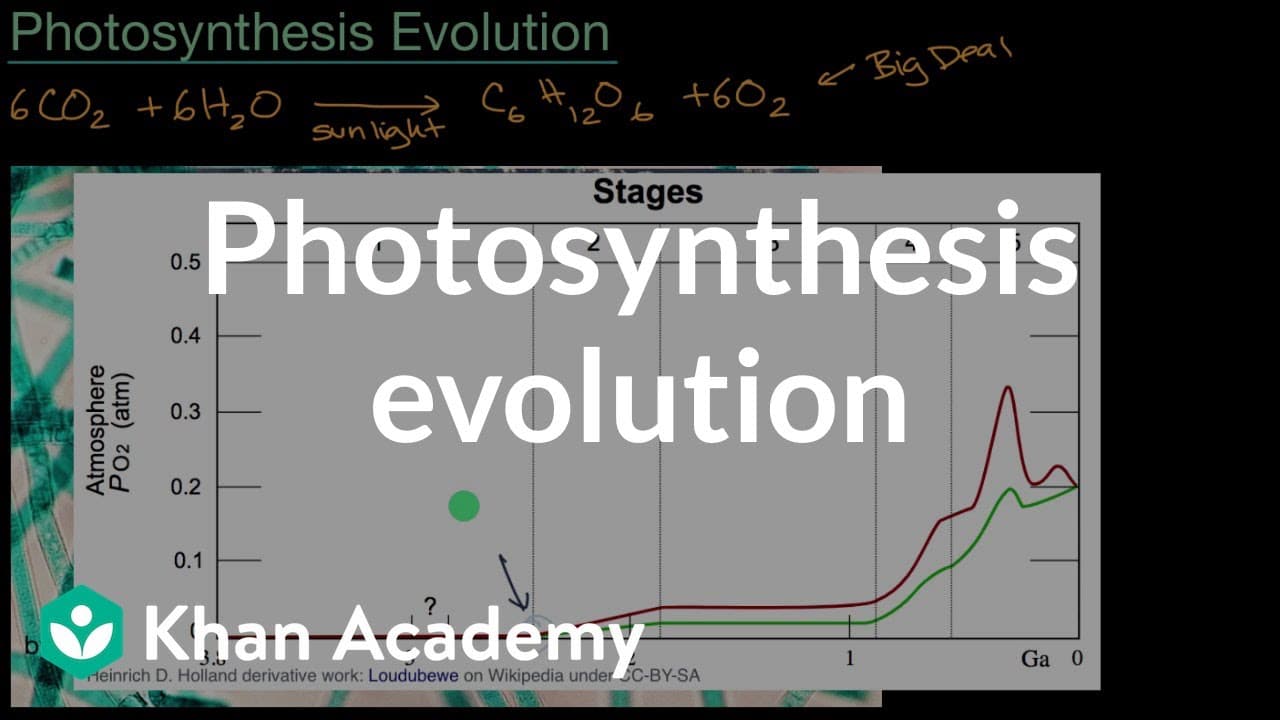
Photosynthesis is a vital process that allows organisms to generate energy and oxygen from sunlight, and it likely evolved on Earth around three billion years ago.
Transcript
- [Instructor] In this video, we are going to talk about the evolution of photosynthesis on Earth because that's the only place that, at least so far, we're aware of photosynthesis occurring. I personally believe that it's occurring in many places in the universe but we don't really know just yet. But first, a reminder of what photosynthesis even i... Read More
Key Insights
- 💦 Photosynthesis is the process by which organisms convert carbon dioxide, water, and sunlight into sugars and oxygen.
- 🖐️ Cyanobacteria and their ancestors played a significant role in the early evolution of photosynthesis on Earth.
- 🥺 Photosynthesis led to the Great Oxygenation Event, where oxygen levels in the atmosphere dramatically increased.
Install to Summarize YouTube Videos and Get Transcripts
Explore YouTube Video Summarizer or Get YouTube Transcript Extractor
Questions & Answers
Q: What is photosynthesis, and why is it important?
Photosynthesis is a process that allows organisms to convert carbon dioxide, water, and sunlight into sugars and oxygen. It is essential because it provides the basis for almost all life forms on Earth, as they rely on the energy and oxygen produced through photosynthesis.
Q: How did photosynthesis evolve on Earth?
Photosynthesis is believed to have evolved on Earth around three billion years ago, with cyanobacteria or similar ancestors playing a crucial role. These organisms were able to use carbon dioxide and water to produce oxygen through photosynthesis.
Q: What was the impact of photosynthetic organisms on Earth's atmosphere?
Photosynthetic organisms, particularly cyanobacteria, had a significant impact on Earth's atmosphere. Over time, the oxygen produced during photosynthesis led to the Great Oxygenation Event, where oxygen levels increased and eventually became a substantial component of the atmosphere.
Q: How did photosynthesis impact the development of complex life forms?
The increase in oxygen resulting from photosynthesis was both beneficial and detrimental to the development of complex life forms. While some anaerobic organisms faced extinction due to oxygen becoming poisonous, it eventually paved the way for the evolution of respiring organisms, dependent on both photosynthesis and respiration.
Summary & Key Takeaways
-
Photosynthesis is the process where organisms use carbon dioxide, water, and sunlight to produce sugars and oxygen.
-
Cyanobacteria, similar to the ancestors of cyanobacteria, played a crucial role in the evolution of photosynthesis on Earth.
-
The Great Oxygenation Event marked a significant increase in oxygen levels in the Earth's atmosphere due to the proliferation of photosynthetic organisms.
Read in Other Languages (beta)
Share This Summary 📚
Summarize YouTube Videos and Get Video Transcripts with 1-Click
Try YouTube Summary with ChatGPT & Claude or YouTube Transcript Generator
Explore More Summaries from Khan Academy 📚



Summarize YouTube Videos and Get Video Transcripts with 1-Click
Try YouTube Summary with ChatGPT & Claude or YouTube Transcript Generator