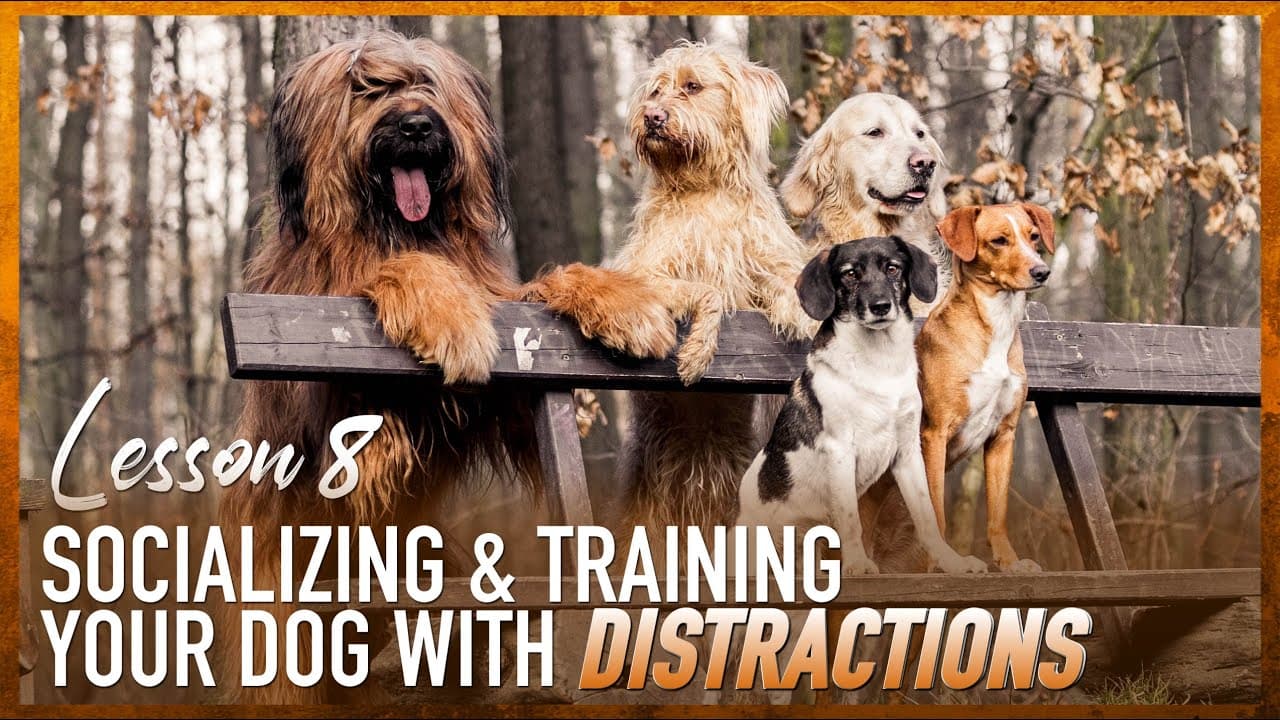
Socializing & Training Your Dog With Distractions
TL;DR
Train dogs in varied environments for better obedience.
Transcript
generally it's a good idea to introduce your dog to increasingly challenging environments and levels of obedience training also known as grading this includes the levels of the tasks levels of obedience levels of proficiency and the intensity of the environment which is also part of your training for your dog's social skills since i'll be going ove... Read More
Key Insights
- Gradual exposure to challenging environments enhances a dog's obedience and social skills. Start with low-intensity settings and progress to more complex ones.
- Socializing a dog involves controlled exposure to new environments, people, and well-behaved dogs, not just playtime with other dogs.
- Pet insurance like Prudent Pet can be beneficial for both active and less active dogs, providing coverage for various needs.
- Training should begin with basic obedience commands in familiar environments, gradually introducing more advanced tasks as the dog becomes proficient.
- Desensitization to stimuli is crucial, starting from low-level exposure and gradually increasing to prevent negative reactions.
- Avoid high-stimulation environments like busy parks initially, opting for controlled settings with well-behaved dogs and knowledgeable owners.
- Generalization ensures a dog understands commands across different settings, preventing obedience issues in new environments.
- A structured training schedule, starting from low-stimulation areas and moving to more challenging ones, helps dogs adapt and respond to commands reliably.
Install to Summarize YouTube Videos and Get Transcripts
Explore YouTube Video Summarizer or Get YouTube Transcript Extractor
Questions & Answers
Q: What is the importance of grading in dog training?
Grading in dog training is essential because it allows trainers to assess and adjust the difficulty level of tasks and environments based on a dog's proficiency. This ensures that dogs are not overwhelmed and can gradually build their skills, leading to successful obedience and socialization.
Q: How does desensitization aid in dog training?
Desensitization aids in dog training by gradually exposing dogs to stimuli that would typically cause a reaction, reducing their sensitivity over time. This process helps prevent negative behaviors, such as fear or aggression, by ensuring dogs become accustomed to various environments and situations without reacting adversely.
Q: Why is pet insurance recommended for dogs?
Pet insurance is recommended for dogs because it provides financial protection against unexpected health issues and accidents. Companies like Prudent Pet offer customizable plans that cover a wide range of needs, ensuring that owners can provide the best care for their pets without worrying about high veterinary costs.
Q: What role does generalization play in dog training?
Generalization in dog training ensures that a dog understands and applies commands consistently across different settings. This concept is crucial because it prevents obedience issues that might arise when a dog is exposed to new environments, ensuring they respond to commands reliably regardless of distractions.
Q: How should one start training a new dog?
Training a new dog should begin with basic obedience commands in a familiar, low-stimulation environment. This approach helps the dog understand foundational commands without distractions. As the dog becomes proficient, gradually introduce more complex tasks and environments to build their skills and confidence.
Q: What are the stages of obedience training?
The stages of obedience training include starting with little to no obedience, progressing to very little obedience with simple commands, moving to medium obedience with more complex commands, and finally achieving full obedience where the dog can perform a wide range of tasks in various environments.
Q: Why should dog parks be avoided initially in training?
Dog parks should be avoided initially in training because they can be high-stimulation environments with unpredictable dogs and situations. These settings may overwhelm a dog that is not yet proficient in obedience, potentially leading to negative experiences that hinder their training and socialization progress.
Q: What is the significance of a structured training schedule?
A structured training schedule is significant because it provides a clear roadmap for gradually increasing the complexity of tasks and environments. This approach ensures that dogs build their skills at a pace suited to their individual learning speed, leading to successful obedience and socialization outcomes.
Summary & Key Takeaways
-
Effective dog training involves gradually increasing the complexity of environments and tasks, starting from low-intensity settings. This approach helps dogs develop better obedience and social skills, ensuring they can perform commands in various situations.
-
Socializing dogs requires controlled exposure to new environments and well-behaved dogs, not just playtime. Desensitization to stimuli is essential, starting from low-level exposure to prevent negative reactions and build confidence.
-
Pet insurance, like Prudent Pet, is recommended for all dogs, providing coverage for various needs. Training should begin with basic commands in familiar environments, gradually introducing more advanced tasks as proficiency increases.
Read in Other Languages (beta)
Share This Summary 📚
Summarize YouTube Videos and Get Video Transcripts with 1-Click
Try YouTube Summary with ChatGPT & Claude or YouTube Transcript Generator
Explore More Summaries from Nate Schoemer 📚


Summarize YouTube Videos and Get Video Transcripts with 1-Click
Try YouTube Summary with ChatGPT & Claude or YouTube Transcript Generator