Classification of Lime
TL;DR
Lime can be classified into high calcium, poor calcium, hydraulic, and dolomitic lime based on their composition. Each type has different properties and uses.
Transcript
click the bell icon to get latest videos from Ikeda hello friends today we are going to study the classification of Lyme we all know that life is such an important material to cement if the amount of lime is not appropriate then the cement can actually crack up so lime is an important component today we will see what are the components of lime and ... Read More
Key Insights
- ✋ Lime can be classified into different types based on calcium content, such as high calcium, poor calcium, hydraulic, and dolomitic lime.
- 😒 High calcium or fat lime is expensive but offers great quality to cement and has various uses.
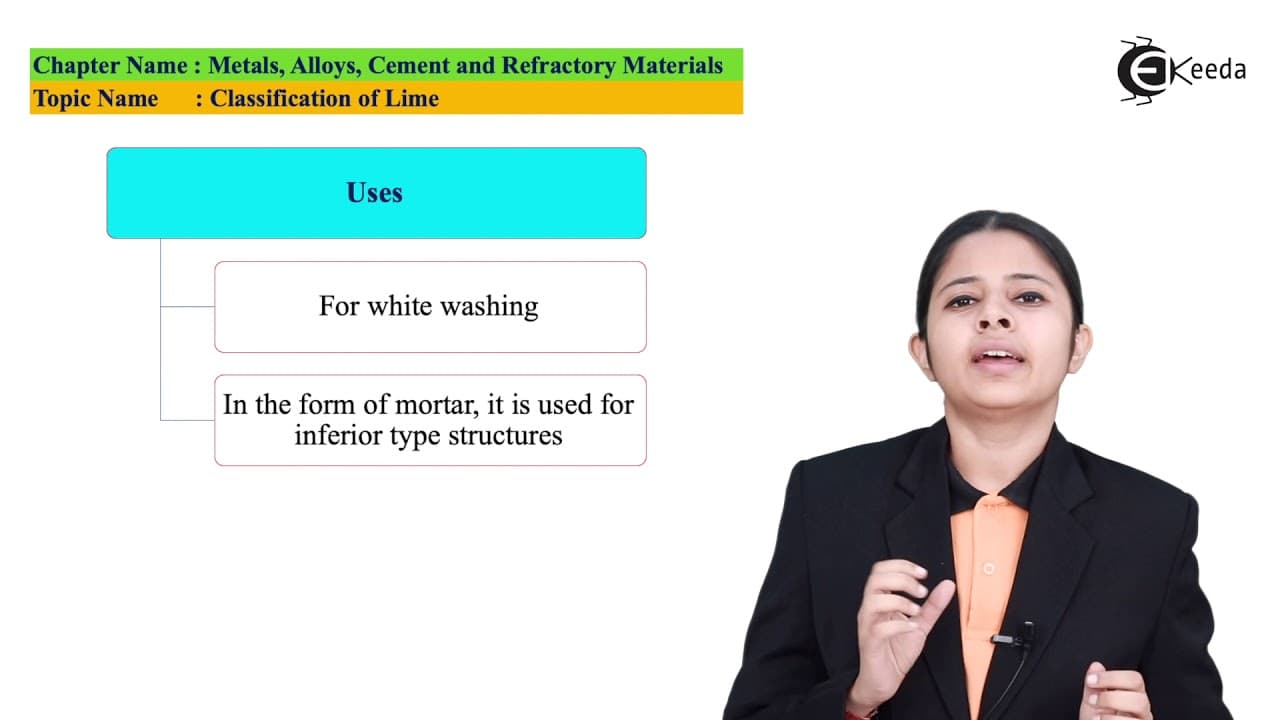
- 😘 Poor calcium or allene lime is cheaper, has lower quality mortar, and is used for less important structures.
- 🚾 Hydraulic lime sets in the presence of water and can be feeble, moderate, or eminent based on clay content.
Install to Summarize YouTube Videos and Get Transcripts
Explore YouTube Video Summarizer or Get YouTube Transcript Extractor
Questions & Answers
Q: What are the different types of lime based on calcium content?
Lime can be classified into high calcium or fat lime, poor calcium or allene lime, and dolomitic lime.
Q: What are the properties of high calcium or fat lime?
Fat lime is expensive, hardens slowly but sets properly, has high plasticity and sand carrying capacity, and is perfectly white in color.
Q: What are the properties of poor calcium or allene lime?
Poor lime is cheaper, has low sand capacity, is non-muddy white in color due to clay content, and produces lower quality mortar.
Q: What is hydraulic lime and how is it classified?
Hydraulic lime consists of calcium oxide, clay, magnesium oxide, and iron oxide. It can be classified as feeble, moderate, or eminent based on the percentage of clay content.
Q: What are the properties of dolomitic lime?
Dolomitic lime is expensive, has good plasticity and strength, produces strong mortar, and has low sand carrying capacity.
Q: What are the uses of dolomitic lime?
Dolomitic lime is used as a flux in metallurgy, for preparing special slags, and for defining and repairing basic refractories.
Summary & Key Takeaways
-
Lime is an important material in cement, and its appropriate amount prevents cracking. It can be classified based on calcium content, such as high calcium or fat lime, poor calcium or allene lime, hydraulic lime (feeble, moderate, or eminent), and dolomitic lime.
-
High calcium or fat lime consists of 90-95% calcium oxide, with small amounts of alumina, silica, iron oxide, magnesium oxide, water, and carbon dioxide. It is expensive but offers high quality to cement, sets properly, has high plasticity, and is used for whitewashing, chemicals, glass industry, and mortar formation.
-
Poor calcium or allene lime contains 60-75% calcium oxide, with small amounts of silica, alumina oxide, and magnesium oxide. It is cheaper than fat lime, not perfectly white due to clay content, and produces lower quality mortar. Its uses include whitewashing and construction of less important structures.
Read in Other Languages (beta)
Share This Summary 📚
Summarize YouTube Videos and Get Video Transcripts with 1-Click
Try YouTube Summary with ChatGPT & Claude or YouTube Transcript Generator
Explore More Summaries from Ekeeda 📚






Summarize YouTube Videos and Get Video Transcripts with 1-Click
Try YouTube Summary with ChatGPT & Claude or YouTube Transcript Generator