Magnetism (1 of 13) Magnets & Magnetic Field Lines, An Explanation
TL;DR
Exploring magnets, poles, attraction/repulsion, magnetizable elements, and drawing magnetic field lines.
Transcript
okay as you can see in today's video we are going to be talking about magnets and magnetism and magnetic field lines and before we get into it specifically I would just show you a few examples of some magnets that I have to let look at those real quick okay before we talk about what magnets are and magnetic filling flashlights show you some that th... Read More
Key Insights
- 🧲 Different types of magnets exist: colored, uncolored, horseshoe, and bar magnets.
- 💈 Magnets have poles: North and South, and are always dipoles, unable to be separated into individual poles.
- ♻️ The only magnetizable elements are iron, cobalt, and nickel at normal conditions.
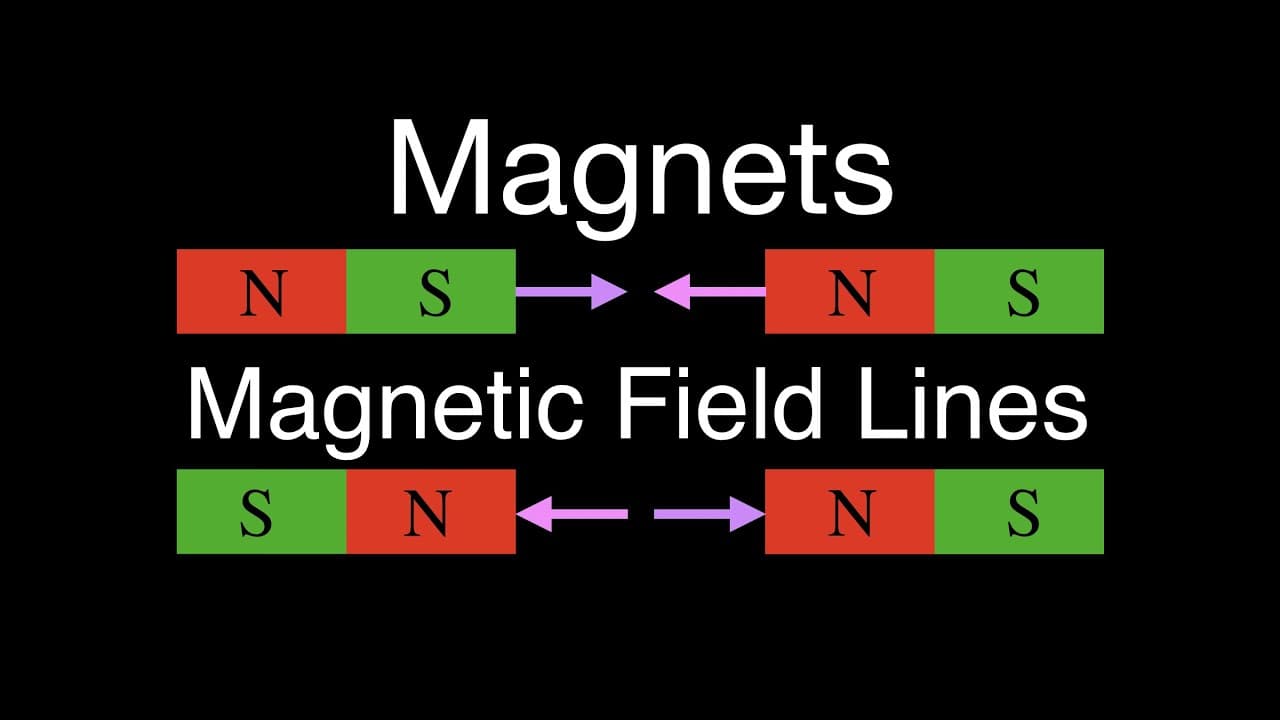
- 💈 Magnetism exhibits attraction between unlike poles and repulsion between like poles.
- 🏑 Drawing magnetic field lines helps visualize the magnetic field's direction and strength.
- 🫥 In magnetic field line drawings, lines do not intersect, and density represents field strength.
- 🏑 Magnetic fields are vectors, with field lines going from North to South.
Install to Summarize YouTube Videos and Get Transcripts
Explore YouTube Video Summarizer or Get YouTube Transcript Extractor
Questions & Answers
Q: What are the different types of magnets shown in the video?
The video displays colored, uncolored, horseshoe, and bar magnets as examples of typical magnet varieties used to illustrate magnetism.
Q: Can a magnet be separated into just a North Pole or South Pole?
Magnets are dipoles, meaning they always have both a North and South Pole; despite theoretical discussions, in practice, you cannot separate the poles.
Q: Which elements from the periodic table can be magnetized?
Iron, cobalt, and nickel, at room temperature and normal conditions, are the only elements that can be magnetized, while metals like copper or aluminum cannot exhibit magnetism.
Q: What happens when like poles of magnets face each other?
Like poles repel each other, demonstrating a force of repulsion, as opposed to unlike poles which attract each other due to a force of attraction.
Summary & Key Takeaways
-
Introduction to various types of magnets: colored, uncolored, horseshoe, and bar magnets.
-
Explanation of magnet poles: North and South, stating magnets are dipoles.
-
Overview of magnetizable elements: iron, cobalt, nickel, emphasizing they can be magnetized.
Read in Other Languages (beta)
Share This Summary 📚
Summarize YouTube Videos and Get Video Transcripts with 1-Click
Try YouTube Summary with ChatGPT & Claude or YouTube Transcript Generator
Explore More Summaries from Step by Step Science 📚
Summarize YouTube Videos and Get Video Transcripts with 1-Click
Try YouTube Summary with ChatGPT & Claude or YouTube Transcript Generator