The anti-racist town in the American South, explained
TL;DR
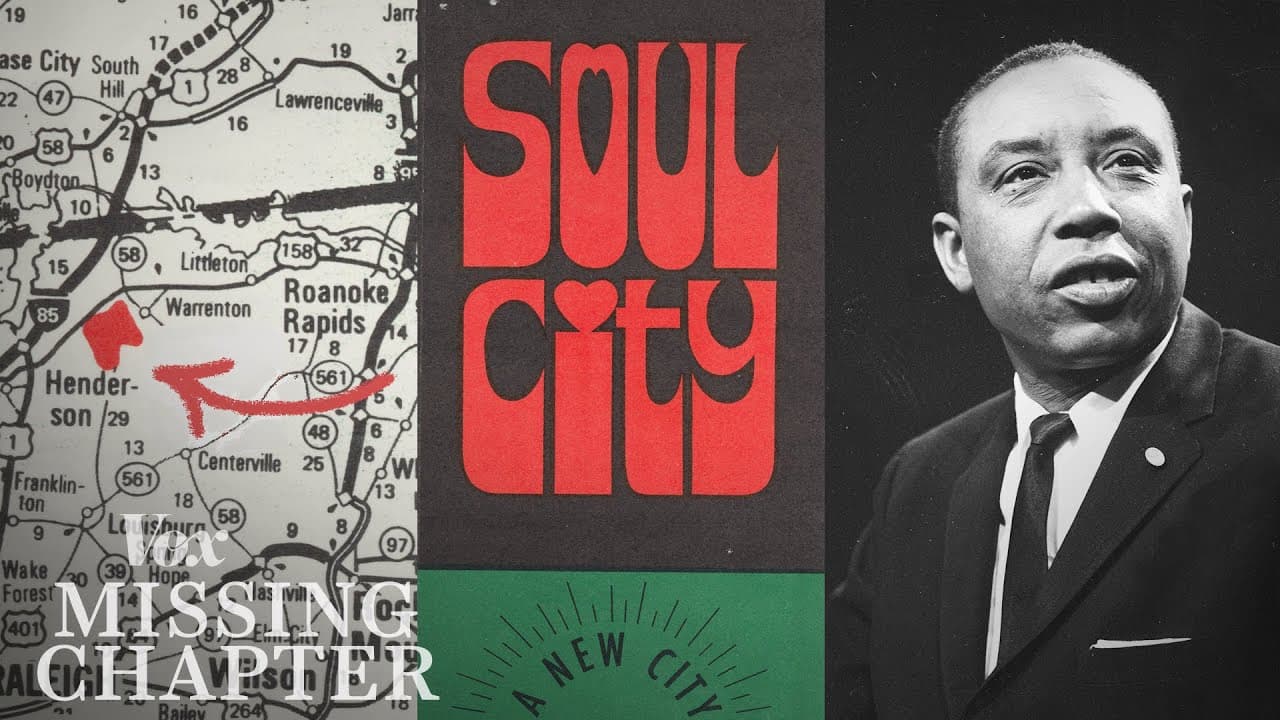
Soul City was a Black-led utopia that never fully materialized.
Transcript
I'm planning a trip to this place called Soul City. It's a town here at the edge of North Carolina that exists on Google Maps but is missing on many others. Back in the 70s... this was an ambitious and experimental town... built and led by Black Americans. A utopia on thousands of acres of former plantation land... that would help them gain so... Read More
Key Insights
- Soul City was an ambitious project led by civil rights activist Floyd McKissick, aiming to create a racially integrated and economically thriving town.
- The town was envisioned as a utopia, offering various facilities like sports complexes, parks, and an industrial hub to foster community development.
- Despite initial support from the federal government and President Nixon, Soul City faced significant challenges, including political opposition and economic downturns.
- Jesse Helms, a segregationist senator, played a crucial role in undermining the project by demanding a federal audit, which stalled funding and progress.
- The 1970s energy crisis and economic instability made it difficult for industries to commit to moving to Soul City, affecting its growth potential.
- The project's name and branding led to misconceptions about its purpose, as some viewed it as an all-Black town rather than a multiracial community.
- Despite its eventual downfall, Soul City left a lasting legacy, with some infrastructure still serving the community and sparking discussions on racial equality.
- The story of Soul City highlights the complexities of race, politics, and economics in America, offering lessons for future efforts in community building.
Install to Summarize YouTube Videos and Get Transcripts
Explore YouTube Video Summarizer or Get YouTube Transcript Extractor
Questions & Answers
Q: What was the main goal of Soul City?
The main goal of Soul City was to create a racially integrated and economically thriving community where people, especially racial minorities and the poor, could prosper. It aimed to provide various facilities and opportunities for residents to build businesses and foster economic growth, embodying the ideals of racial equality and Black capitalism.
Q: Who supported the Soul City project initially?
Initially, the Soul City project received support from the federal government, particularly through the Department of Housing and Urban Development (HUD), and from President Richard Nixon. Despite being a Republican, Nixon saw the project as aligning with his broader strategy of appealing to a diverse voter base, including Black activists interested in Black capitalism.
Q: What challenges did Soul City face in its development?
Soul City faced several challenges, including economic downturns during the 1970s energy crisis, which made industries hesitant to move to new areas. Additionally, political opposition from figures like Jesse Helms, who demanded a federal audit, stalled funding and progress. Misconceptions about the town's purpose and name also affected its growth potential.
Q: How did Jesse Helms impact the Soul City project?
Jesse Helms, a segregationist senator, significantly impacted the Soul City project by demanding a federal audit, which froze HUD funding and stalled progress for over a year. His attacks, along with negative media coverage, damaged the project's reputation, scaring away potential residents and businesses, ultimately contributing to its downfall.
Q: What remains of Soul City today?
Today, some remnants of Soul City still exist, including infrastructure such as roads, a park, a pool, and some residential homes. The industrial building Soultech 1 has been repurposed as a prison work complex. Although the town did not develop as envisioned, its legacy continues to influence discussions on racial equality and community building.
Q: What role did Floyd McKissick play in the civil rights movement?
Floyd McKissick was a prominent civil rights activist who played a significant role in the movement. He was the first Black law student at the University of North Carolina, defended activists arrested at protests, and led pivotal civil rights organizations. He was also one of the organizers of the 1963 March on Washington, standing alongside Martin Luther King Jr.
Q: Why was the name 'Soul City' problematic for some people?
The name 'Soul City' was problematic for some because it invoked the idea of an all-Black town, despite its branding as a multiracial community. People often perceived it as a racially homogenous project, which deterred some potential residents and businesses from engaging with the town, affecting its growth and development.
Q: What lessons can be learned from the Soul City project?
The Soul City project offers lessons on the complexities of race, politics, and economics in America. It highlights the challenges of building racially integrated communities and the impact of political opposition on social projects. The story underscores the importance of strategic alliances, clear branding, and sustained support to achieve ambitious community-building goals.
Summary & Key Takeaways
-
Soul City was a visionary project initiated by Floyd McKissick to create a racially integrated and economically prosperous town in North Carolina. Despite federal support and initial progress, the town faced numerous challenges, including political opposition and economic downturns, leading to its eventual decline.
-
The town's ambitious plans included various facilities like parks, sports complexes, and an industrial hub to foster community development. However, misconceptions about its purpose and name, along with political attacks, hindered its growth and led to its downfall.
-
Jesse Helms, a segregationist senator, played a pivotal role in undermining the project by demanding a federal audit, which stalled funding and progress. Despite its eventual failure, Soul City left a lasting legacy and sparked discussions on racial equality and community building.
Read in Other Languages (beta)
Share This Summary 📚
Summarize YouTube Videos and Get Video Transcripts with 1-Click
Try YouTube Summary with ChatGPT & Claude or YouTube Transcript Generator
Explore More Summaries from Vox 📚




Summarize YouTube Videos and Get Video Transcripts with 1-Click
Try YouTube Summary with ChatGPT & Claude or YouTube Transcript Generator