What Are Black Swan Events and Why Are They Unpredictable?

TL;DR
Black Swan events are unpredictable occurrences with significant consequences that often seem obvious in hindsight. They highlight the limitations of forecasting and the inherent uncertainty in various domains, such as economics and history. Recognizing the difference between rare extreme events and the more common occurrences is crucial for understanding the unpredictability of our world.
Transcript
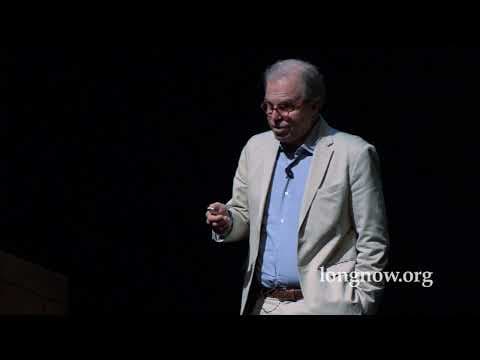
fora tv' the world is thinking good evening this is a long now foundation event my name is Stuart brand thank you for overflowing this wonderful theatre I should mention that later this month we have another speaker craig Venter who may also draw a large audience especially because he's creating life these days and in a sense this is a second in a ... Read More
Key Insights
- ✋ Predicting the future is inherently difficult due to the unpredictability of rare, high-impact events.
- 🥺 Relying on probabilistic predictions and forecasts can lead to false confidence and overlooking uncertainty.
- ❓ The limitations of human understanding and biases in decision-making contribute to the challenges of accurate forecasting.
- ❓ Recognizing the difference between mediocre Stan and extremists and events is crucial for understanding the limitations of forecasting in different domains.
- 🎙️ More videos with Nassim Nicholas Taleb:
Install to Summarize YouTube Videos and Get Transcripts
Explore YouTube Video Summarizer or Get YouTube Transcript Extractor
Questions & Answers
Q: What is the Black Swan event and why is it difficult to predict?
The Black Swan event is an unpredictable, high-impact event that has low predictability based on historical information. It is difficult to predict because it often challenges existing assumptions and knowledge, leading us to believe that it was foreseeable after it has occurred.
Q: What is the difference between mediocre Stan and extremists and as it relates to forecasting?
Mediocre Stan refers to events and phenomena that are familiar, have predictable patterns, and can be accurately forecasted using statistical models. Extremists and involve events that are rare, have low predictability, and cannot be accurately forecasted based on historical data alone.
Q: How does the illusion of control impact our ability to forecast events?
The illusion of control refers to our tendency to overestimate our ability to control or predict outcomes. This bias can lead to false confidence in our forecasting abilities, especially in complex or uncertain domains.
Q: Why is it important to consider knowledge without a cause in decision-making?
Knowledge without a cause involves recognizing the limits of our understanding and accepting uncertainty. By not relying solely on theories or models, we can make more informed and cautious decisions in the face of uncertainty.
Summary & Key Takeaways
-
Nassim Taleb emphasizes the difficulty of predicting the future, using the concept of the Black Swan event as an example of an unpredictable and impactful event.
-
He explains that Black Swan events have low predictability but high consequences, and that retrospectively, they often seem predictable.
-
Taleb criticizes disciplines that rely on prediction and probability, such as economics, arguing that their forecasts are often flawed due to the limitations of human understanding and the tendency to rely on past data.
Read in Other Languages (beta)
Share This Summary 📚
Summarize YouTube Videos and Get Video Transcripts with 1-Click
Try YouTube Summary with ChatGPT & Claude or YouTube Transcript Generator
Explore More Summaries from Long Now Seminars 📚


Summarize YouTube Videos and Get Video Transcripts with 1-Click
Try YouTube Summary with ChatGPT & Claude or YouTube Transcript Generator