More fiscal cliff analysis | American civics | US government and civics | Khan Academy
TL;DR
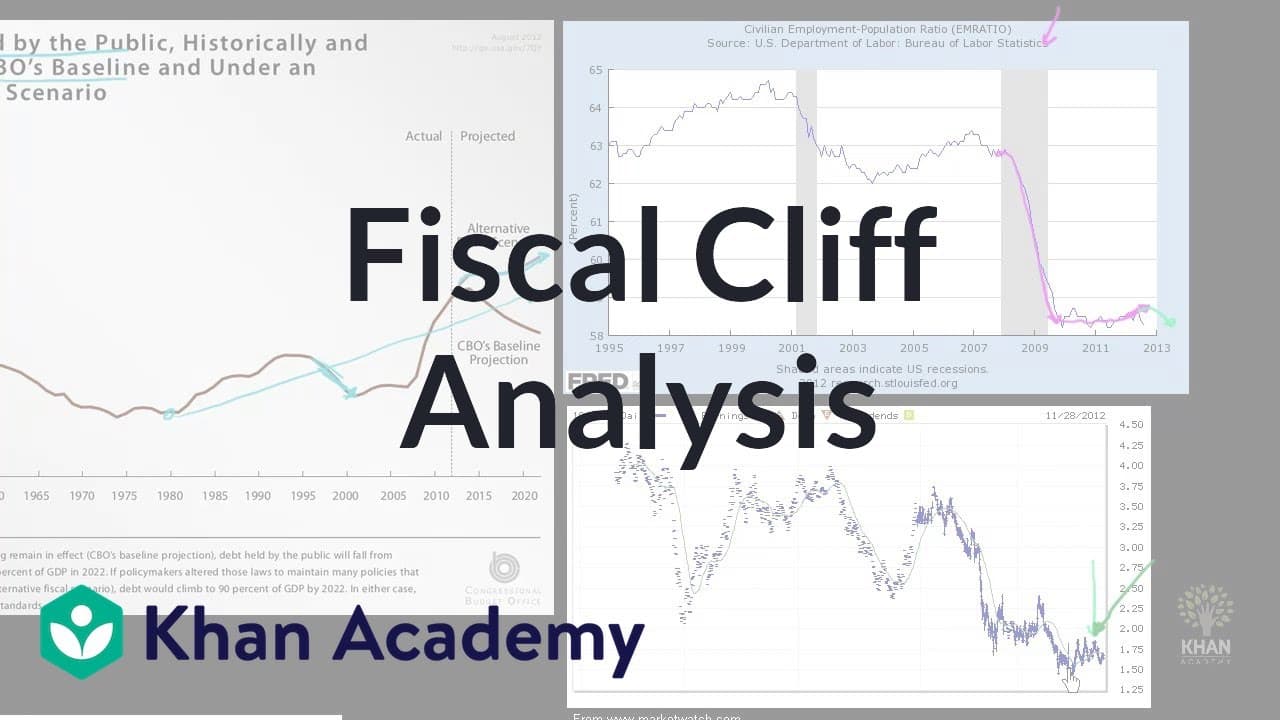
The fiscal cliff is a situation where both Republicans and the administration don't want to raise taxes or reduce spending. It could have a negative impact on the economy.
Transcript
In the last video, we gave a basic outline of the different scenarios that might play out in 2013. Or at least the different budgetary proposals on the table from the administration, from the Republicans, and what will happen if they don't come into agreement, which was the fiscal cliff. Which is this fairly unusual situation where the both parties... Read More
Key Insights
- 🐢 The fiscal cliff could lead to lower deficits and debt as a percentage of GDP, but it could also result in slower economic growth or a recession.
- 😘 The bond market indicates low interest rates and low inflation, suggesting that high debt levels may not be as dangerous as some believe.
- 💇 Democrats argue for increasing taxes on the wealthy and stimulating the economy through government spending, while Republicans advocate for spending cuts and reducing deficits.
Install to Summarize YouTube Videos and Get Transcripts
Explore YouTube Video Summarizer or Get YouTube Transcript Extractor
Questions & Answers
Q: What is the fiscal cliff?
The fiscal cliff is a situation where both Republicans and the administration don't want to raise taxes or reduce spending, but both outcomes would result from this scenario. It was set up to force an agreement on reducing the deficit.
Q: How would implementing the fiscal cliff affect the economy?
Implementing the fiscal cliff would lead to lower deficits and debt as a percentage of GDP. However, most economists predict a 2% hit to the economy, leading to slower growth or even a slight recession.
Q: Why is the bond market not concerned about deficits?
The bond market, which determines interest rates, indicates low rates and low inflation. This suggests that there is not enough demand in the economy and that the biggest risk is continued sluggish growth, rather than high deficits or inflation.
Q: What are the arguments for and against reducing the deficit?
Democrats argue that the highest income taxpayers can afford to pay more in taxes given historical tax rates. They also argue for stimulating the economy by giving money to the middle class and increasing government spending. On the other hand, Republicans argue for reducing deficits through spending cuts and view government as an inefficient spender of capital.
Summary & Key Takeaways
-
The fiscal cliff would automatically trigger a $500 billion reduction in the deficit in 2013, leading to lower deficits and debt as a percentage of GDP.
-
However, implementing the fiscal cliff could lead to slower economic growth and even a recession.
-
The bond market indicates low interest rates and low inflation, suggesting that high debt levels may not be as dangerous as some believe.
Read in Other Languages (beta)
Share This Summary 📚
Summarize YouTube Videos and Get Video Transcripts with 1-Click
Try YouTube Summary with ChatGPT & Claude or YouTube Transcript Generator
Explore More Summaries from Khan Academy 📚



Summarize YouTube Videos and Get Video Transcripts with 1-Click
Try YouTube Summary with ChatGPT & Claude or YouTube Transcript Generator