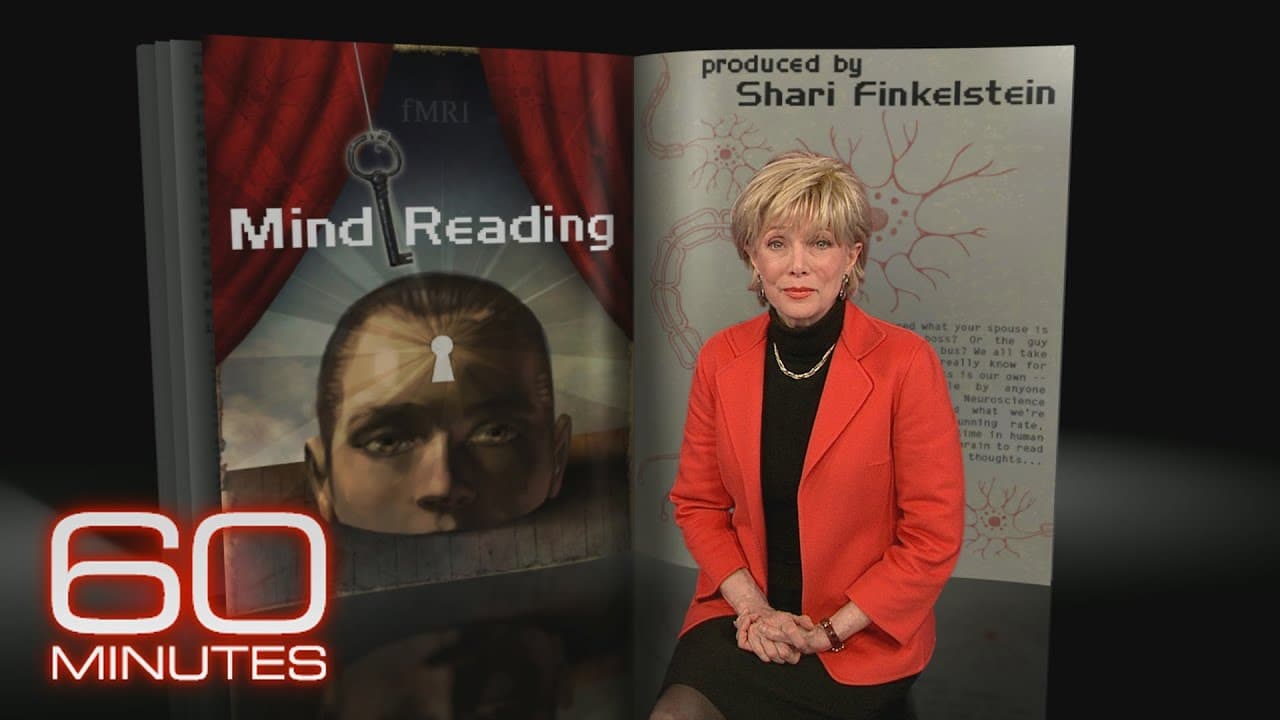
60 Minutes Rewind: 2009 report, "Mind Reading"
TL;DR
Neuroscience uses fMRI to read thoughts, intentions, and emotions, raising ethical concerns.
Transcript
60 minutes rewind how often have you wondered what your spouse is really thinking or your boss or the guy sitting across from you on the bus we all take as a given that we'll never really know for sure the content of our thoughts is our own private secret unknowable by anyone else until now that is neuroscience research into how we think and what w... Read More
Key Insights
- 💭 fMRI technology enables the identification of specific thoughts through brain patterns.
- 🫠 Ethical dilemmas emerge with the ability to read thoughts, intentions, and emotions.
- 🫠 Mind-reading advancements extend to commercial uses like neuro marketing.
- 😀 The legal system faces challenges on the admissibility of brain scans as evidence.
- 🧠 The essence of being human is reflected in brain patterns revealing emotions and intentions.
- 🫠 The potential for remote and covert mind-reading technologies raises concerns about privacy.
- 🫠 Mind-reading technology may evolve to decipher complex emotions and thoughts accurately.
Install to Summarize YouTube Videos and Get Transcripts
Explore YouTube Video Summarizer or Get YouTube Transcript Extractor
Questions & Answers
Q: How does functional MRI (fMRI) technology work in reading thoughts?
fMRI tracks brain activity patterns to identify specific thoughts by analyzing neuron firing levels.
Q: What are the potential applications of mind-reading technology?
Mind-reading technology can be used in lie detection, marketing, and potentially reading complex emotions or intentions.
Q: What ethical concerns arise from the ability to read minds?
The right to privacy of thoughts, potential coercion, and the implications on legal systems spark ethical debates.
Q: How accurate is current mind-reading technology?
Researchers have identified brain activity patterns for kindness, hypocrisy, and love, but the technology is still evolving.
Summary & Key Takeaways
-
Neuroscience uses fMRI to read brain activity while thinking.
-
Researchers can identify specific thoughts and intentions through brain patterns.
-
The ethical implications of mind-reading technology are vast and controversial.
Read in Other Languages (beta)
Share This Summary 📚
Summarize YouTube Videos and Get Video Transcripts with 1-Click
Try YouTube Summary with ChatGPT & Claude or YouTube Transcript Generator
Explore More Summaries from 60 Minutes 📚




Summarize YouTube Videos and Get Video Transcripts with 1-Click
Try YouTube Summary with ChatGPT & Claude or YouTube Transcript Generator