A Conversation With Yanis Varoufakis
TL;DR
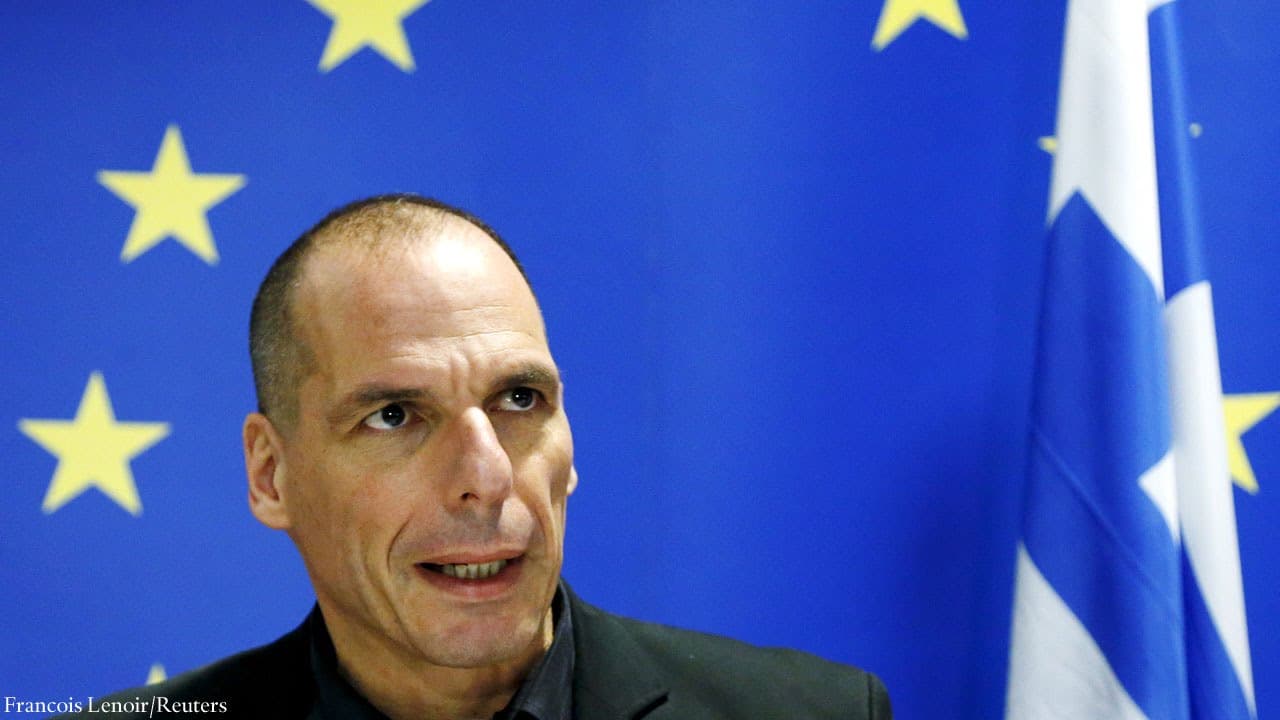
Yanis Varoufakis discusses Greece's economic crisis and Eurozone issues.
Transcript
SHEARD: Yanis Varoufakis is on the faculty of economic studies at the University of Athens, and of course, most notably, I think for this occasion, the former minister of finance of the Hellenic Republic, Greece. And I think it's fair to say, Yanis, that you had one of the most colorful and controversial tours of duty as a finance minister in the m... Read More
Key Insights
- Yanis Varoufakis highlights the disconnect between reported reality and actual events during his tenure as Greece's finance minister, emphasizing the media's role in shaping public perception.
- The Greek debt crisis roots back to 2010 when the state went bankrupt, and the European response was to treat it as a liquidity issue rather than insolvency, leading to unsustainable financial measures.
- Varoufakis criticizes the Eurozone's structure, describing it as a central bank without a state and states without a central bank, making it vulnerable to financial crises.
- He argues that the Eurozone's approach to the Greek crisis was a series of 'extend and pretend' loans, which only postponed the inevitable need for debt restructuring.
- Varoufakis's resignation followed a disagreement with Prime Minister Tsipras over accepting a Eurogroup deal, despite a referendum result supporting Varoufakis's stance.
- The refugee crisis in Europe, especially in Greece, should be handled separately from economic issues, with a focus on humanitarian response rather than economic calculations.
- Varoufakis proposes reforms including debt swaps, a development bank, and breaking down oligopolies, which were not considered by the Eurogroup.
- He advocates for a pan-European democratic movement to address the democratic deficit and economic instability within the EU, emphasizing the need for a new settlement.
Install to Summarize YouTube Videos and Get Transcripts
Explore YouTube Video Summarizer or Get YouTube Transcript Extractor
Questions & Answers
Q: What was the main reason for Yanis Varoufakis's resignation as Greece's finance minister?
Yanis Varoufakis resigned as Greece's finance minister following a disagreement with Prime Minister Tsipras over accepting a Eurogroup deal. Despite a referendum result where 62% of Greek voters supported Varoufakis's stance against the Eurogroup proposal, Tsipras decided to negotiate with the Eurogroup, which led Varoufakis to resign in protest.
Q: How does Varoufakis describe the Eurozone's structural issues?
Varoufakis describes the Eurozone as having a central bank without a state and states without a central bank, creating a vulnerable financial structure. This setup makes it easy to close down a member state's banking system and exacerbates crises. He argues that the Eurozone's approach to the Greek crisis was to extend and pretend, postponing the need for debt restructuring.
Q: What reforms did Varoufakis propose during his tenure?
During his tenure, Varoufakis proposed several reforms, including debt swaps to make Greek debt sustainable, creating an independent IRS, breaking down cartels and oligopolies, and establishing a development bank. These reforms aimed to stabilize the Greek economy and address underlying structural issues. However, these proposals were not discussed by the Eurogroup.
Q: Why does Varoufakis believe the refugee crisis should be handled separately from economic issues?
Varoufakis believes the refugee crisis should be handled separately from economic issues because it is primarily a humanitarian issue. He argues that when people are in dire need, such as refugees fleeing conflict, the response should be based on humanitarian grounds rather than economic calculations. He emphasizes that Europe is capable of handling the influx of refugees without significant economic disruption.
Q: What is Varoufakis's vision for a pan-European democratic movement?
Varoufakis envisions a pan-European democratic movement, called DIEM (Democracy in Europe Movement), to address the democratic deficit and economic instability within the EU. He believes that Europe needs a conversation about common threats and solutions, which has been lacking. The movement aims to foster dialogue and push for democratic reforms across Europe, countering the current trend of authoritarianism and lack of transparency.
Q: How does Varoufakis view the role of the media during the Greek debt crisis?
Varoufakis views the media as having played a significant role in shaping public perception during the Greek debt crisis. He highlights a major disconnect between reported reality and actual events, indicating that media coverage often did not accurately reflect the situation. This disconnect contributed to misunderstandings and misrepresentations of Greece's position and actions during the crisis.
Q: What was Varoufakis's stance on Greece exiting the Eurozone (Grexit)?
Varoufakis did not support using Grexit as a strategy for gaining leverage in negotiations. Despite his criticism of the euro's creation, he believed that exiting the Eurozone would be catastrophic for Greece due to the irreversible nature of the euro and the economic fallout of creating a new currency. He argued that the focus should be on restructuring debt and stabilizing the economy within the Eurozone framework.
Q: What impact did the troika have on Varoufakis's efforts to address tax evasion in Greece?
Varoufakis faced significant resistance from the troika and Greek oligarchs when attempting to address tax evasion. Despite forming a working group to tackle major tax evaders, the troika disbanded the unit after Varoufakis's resignation, hindering efforts to collect unpaid taxes. This resistance highlighted the challenges of implementing reforms against entrenched interests and the lack of support from Greece's creditors.
Summary & Key Takeaways
-
Yanis Varoufakis discusses the events leading up to his resignation as Greece's finance minister, emphasizing the disconnect between media reports and actual events. He highlights the Eurozone's structural issues and the need for debt restructuring.
-
Varoufakis criticizes the Eurozone's treatment of Greece's debt crisis as a liquidity issue rather than insolvency, leading to unsustainable financial measures. He advocates for reforms to address oligopolies and establish a development bank.
-
He emphasizes the importance of separating the refugee crisis from economic issues and calls for a pan-European democratic movement to address the EU's democratic deficit and economic instability.
Read in Other Languages (beta)
Share This Summary 📚
Summarize YouTube Videos and Get Video Transcripts with 1-Click
Try YouTube Summary with ChatGPT & Claude or YouTube Transcript Generator
Explore More Summaries from Council on Foreign Relations 📚

Summarize YouTube Videos and Get Video Transcripts with 1-Click
Try YouTube Summary with ChatGPT & Claude or YouTube Transcript Generator