Education as a force of convergence | Macroeconomics | Khan Academy
TL;DR
The dissemination of knowledge and the increasing value of knowledge work can potentially lead to greater leverage for labor and a shift in income distribution.
Transcript
- [Instructor] We talked about the dissemination of information being a force of convergence on the global scale. But what about on the individual scale? When we're talking about knowledge dissemination on an individual scale, we're really talking about education on some level. So once again, this is a topic very close to my heart. So let's just go... Read More
Key Insights
- 💁 Knowledge dissemination on an individual scale is a form of education and affects income generation.
- ⚖️ The balance between capital and labor influences income distribution.
- 🔬 The Information Age is characterized by industries that rely on highly skilled labor rather than capital-intensive operations.
- 💦 Knowledge work becoming more valuable may shift income distribution towards labor, but it may not fully offset the trend of capital accumulation.
- 🔬 The participation in high-value labor jobs requires a well-educated labor pool.
- 🥺 Improving education can lead to a larger percentage of people being capital owners and participating in high-value labor jobs.
- 🪛 Knowledge dissemination has the potential to drive income convergence and prevent a return to significant wealth inequality.
Install to Summarize YouTube Videos and Get Transcripts
Explore YouTube Video Summarizer or Get YouTube Transcript Extractor
Questions & Answers
Q: What are the two main factors required for income production?
Income production requires both capital and labor. Capital includes resources like land, animals, equipment, and computers. Labor refers to the people who operate and manage these resources.
Q: How does the increasing value of knowledge work affect income distribution?
If knowledge work becomes less of a commodity and more valuable, labor may gain greater leverage in income distribution. However, this may only happen in specific industries and may not be enough to offset the overall trend of income going to capital.
Q: How does the Gilded Age compare to the present Information Age in terms of income generation?
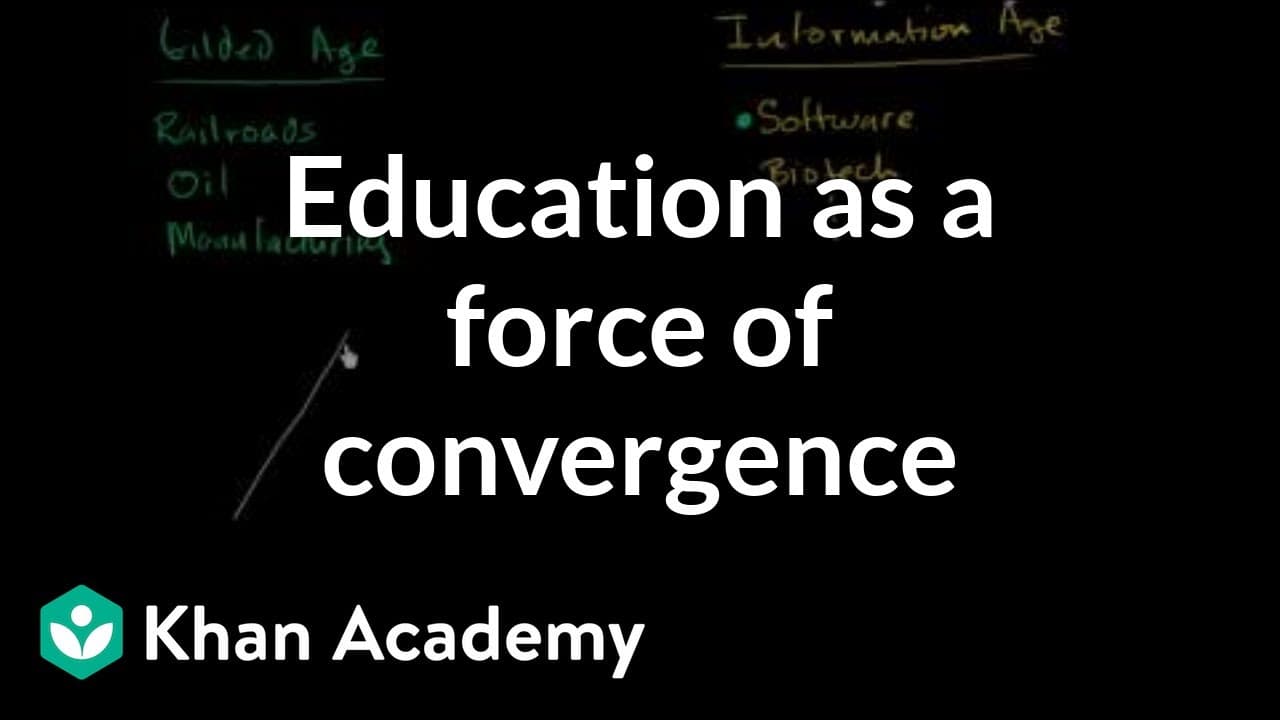
The Gilded Age saw income generated from capital-intensive industries like railroads and manufacturing, where labor was viewed as a commodity. In the Information Age, growth industries like software and biotech rely on highly skilled labor and are less capital-intensive.
Q: How can education influence income distribution in the Information Age?
Education plays a crucial role in expanding the pool of highly skilled labor. A larger and more educated labor pool can participate in high-value jobs, leading to increased income share for labor and the accumulation of capital.
Summary & Key Takeaways
-
Knowledge dissemination on an individual scale is closely tied to education and plays a significant role in income generation.
-
The distribution of income is influenced by the balance between capital and labor, with the value of knowledge work potentially giving more leverage to labor.
-
The present Information Age, characterized by industries like software and biotech, relies on highly skilled labor rather than capital-intensive operations, which may contribute to a more equitable income distribution.
Read in Other Languages (beta)
Share This Summary 📚
Summarize YouTube Videos and Get Video Transcripts with 1-Click
Try YouTube Summary with ChatGPT & Claude or YouTube Transcript Generator
Explore More Summaries from Khan Academy 📚



Summarize YouTube Videos and Get Video Transcripts with 1-Click
Try YouTube Summary with ChatGPT & Claude or YouTube Transcript Generator