Political polarization is making dating worse

TL;DR
Dating across political lines is increasingly difficult.
Transcript
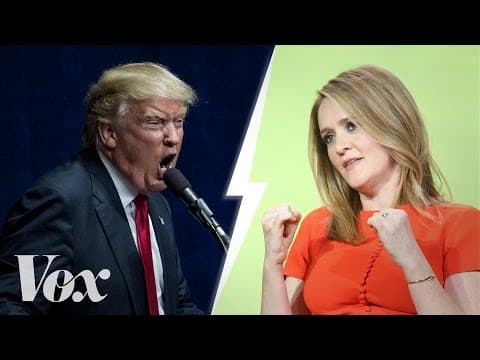
Would you guys date a Trump supporter? No. Absolutely not, sorry, no. A recent study by the dating website Plenty of Fish shows that only 33% of women on the site are willing to date a Trump supporter. And male Trump supporters are almost twice as likely to be blocked than non-Trump supporters. I wanted to bridge the partisan dating divide so I wen... Read More
Key Insights
- Political polarization significantly impacts dating preferences, with many unwilling to date those with opposing political views.
- A study shows only 33% of women on a dating site are open to dating Trump supporters, highlighting political divides.
- Male Trump supporters face more rejection, being blocked nearly twice as often as non-supporters on dating platforms.
- Despite political differences, some individuals find common ground, suggesting potential for cross-party relationships.
- Research indicates Americans perceive greater political differences than actually exist in moral judgments.
- Among younger married couples, only 40% share the same political party, compared to 71% among those over 80.
- Millennials' decreasing party affiliation may reduce the importance of political ideology in future relationships.
- The experiment at the Republican National Convention showed potential for connection despite political differences.
Install to Summarize YouTube Videos and Get Transcripts
Explore YouTube Video Summarizer or Get YouTube Transcript Extractor
Questions & Answers
Q: Why is dating across political lines challenging?
Dating across political lines is challenging due to the increasing polarization in political views. Many individuals are unwilling to date those with opposing political beliefs, as highlighted by studies showing significant rejection rates for Trump supporters. This polarization creates barriers to forming relationships across party lines.
Q: What does the study on dating preferences reveal about Trump supporters?
The study reveals that only 33% of women on a dating site are willing to date Trump supporters. Additionally, male Trump supporters are nearly twice as likely to be blocked compared to non-supporters. These findings underscore the challenges Trump supporters face in the dating scene due to political polarization.
Q: How do Americans perceive political differences, according to research?
Research indicates that Americans perceive political differences to be greater than they actually are. While liberals and conservatives may have differing moral worldviews, studies suggest they are more similar in their moral judgments than commonly believed. This misperception contributes to the challenges of cross-party relationships.
Q: What trends are observed among younger married couples regarding political affiliation?
Among younger married couples, only 40% share the same political party, compared to 71% among couples over 80. This trend suggests that younger generations may place less importance on political affiliation in their relationships, potentially reducing the impact of political polarization on future relationships.
Q: How does the video experiment at the Republican National Convention contribute to the discussion?
The experiment at the Republican National Convention aimed to bridge the partisan dating divide by facilitating a date between individuals with opposing political views. It demonstrated that despite political differences, individuals could find common ground and potentially form relationships, offering hope for overcoming political polarization in dating.
Q: What insights does the video provide about millennials' political affiliations?
The video suggests that a growing margin of millennials do not identify with either political party. This trend may lead to a decrease in the importance of political ideology in relationships, as younger generations may prioritize other factors over political affiliation when forming connections.
Q: What is the video's conclusion regarding love across political divides?
The video concludes on a hopeful note, suggesting that despite political differences, individuals can find common ground and potentially form relationships. The experiment showed that open-minded conversations could lead to understanding and connection, offering hope for love across political divides.
Q: How does the video's content relate to broader societal trends?
The video's content reflects broader societal trends of increasing political polarization and its impact on personal relationships. It highlights the challenges of dating across political lines and suggests that younger generations may help bridge these divides by placing less emphasis on political affiliation in their relationships.
Summary & Key Takeaways
-
The video explores the challenges of dating across political lines, particularly for Trump supporters, and highlights the impact of political polarization on relationships. It features an experiment conducted at the Republican National Convention to test the feasibility of bridging political divides in dating.
-
Research reveals that political differences are perceived to be greater than they are, with studies showing similarities in moral judgments across party lines. The video suggests that younger generations may place less importance on political affiliation in their relationships.
-
The video concludes with a hopeful note, indicating that despite political differences, individuals can find common ground and potentially form relationships. The experiment shows that open-minded conversations can lead to understanding and connection, offering hope for love across political divides.
Read in Other Languages (beta)
Share This Summary 📚
Summarize YouTube Videos and Get Video Transcripts with 1-Click
Try YouTube Summary with ChatGPT & Claude or YouTube Transcript Generator
Explore More Summaries from Vox 📚



Summarize YouTube Videos and Get Video Transcripts with 1-Click
Try YouTube Summary with ChatGPT & Claude or YouTube Transcript Generator