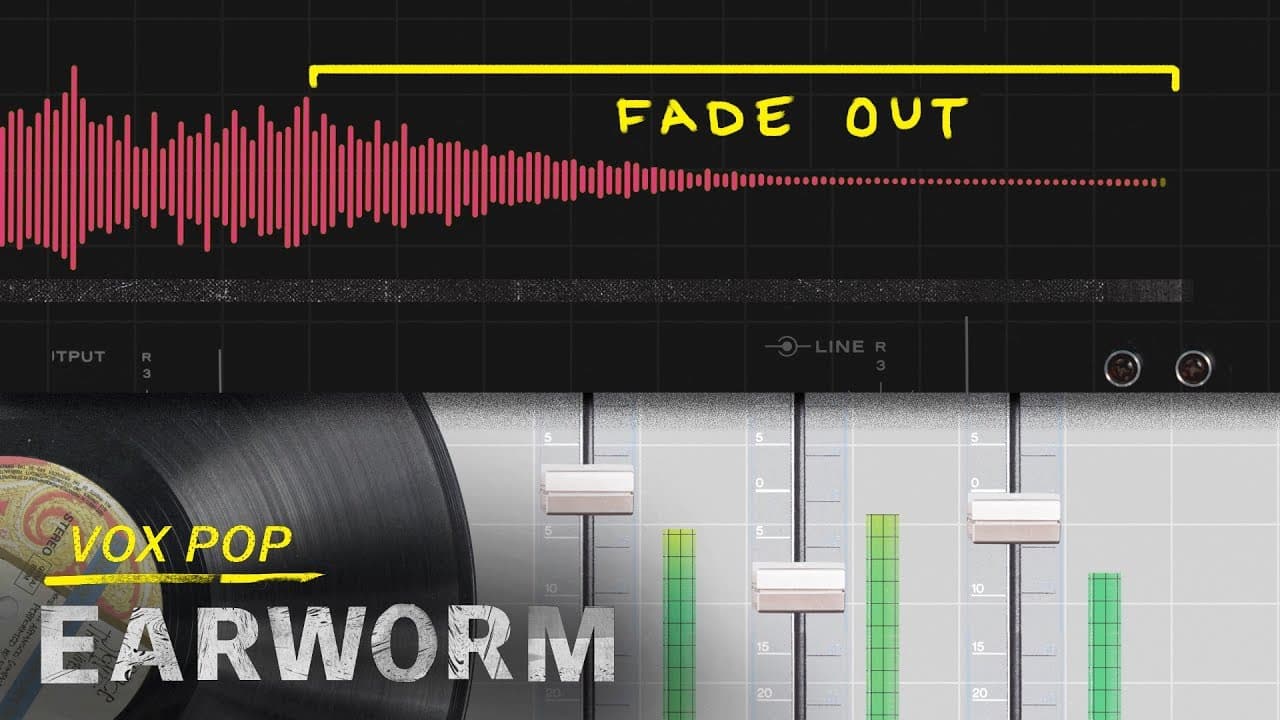
Why more pop songs should end with a fade out
TL;DR
Fade outs are crucial in music, yet underused today.
Transcript
A lot can be said about Rihanna and Drake's hit song work. It completely owned the charts in 2016. Its dance hall beat and endless repetition were the ultimate example of where the sound of pop was going. It did everything most top forties hits were doing - except for one thing - it faded out. Let me start by making a confession here, I used to hat... Read More
Key Insights
- Fade outs in music create a sense of continuity and timelessness, making songs feel as though they live on beyond their physical end.
- Originally used to convey distance in compositions like Gustav Holtz's 'The Planets,' fade outs became a staple in music production by the 1950s.
- The evolution of music technology in the 1950s and 60s transformed fade outs from a novelty into a creative and functional tool for producers.
- Fade outs help radio-friendly versions of songs fit time constraints and can also creatively fix imperfections in recordings.
- Psychological studies show that songs with fade outs engage listeners longer, as they continue tapping to the beat even after the music ends.
- Despite their past popularity, fade outs have declined in modern music, with abrupt endings becoming the norm.
- The decline of fade outs mirrors their effect, slowly disappearing from popular music without much notice.
- The reintroduction of fade outs could enhance modern music, providing a more satisfying and enduring listening experience.
Install to Summarize YouTube Videos and Get Transcripts
Explore YouTube Video Summarizer or Get YouTube Transcript Extractor
Questions & Answers
Q: Why were fade outs initially used in music?
Fade outs were initially used in music to convey distance and space, as exemplified by Gustav Holtz's composition 'The Planets.' Holtz used a fade out effect to create a sense of the vastness and mysteriousness of the cosmos, which was a novel concept in 1918. This technique allowed listeners to experience the music as if it extended beyond its physical boundaries.
Q: How did the role of fade outs change in the 1950s and 60s?
In the 1950s and 60s, the role of fade outs evolved from a novelty to a creative and functional tool in music production. As sound recording technology advanced, producers began using fade outs to meet radio time constraints, typically shortening longer album versions of songs. Fade outs also became a method for fixing recording imperfections, providing flexibility in the final mix.
Q: What did psychological studies reveal about the impact of fade outs on listeners?
Psychological studies revealed that fade outs have a significant impact on listener engagement. Songs with fade outs keep listeners tapping to the beat even after the music ends, indicating that the song continues to resonate in their minds. This suggests that fade outs create a lasting impression, making the music feel as though it lives on beyond its physical end.
Q: Why have fade outs become less common in modern music?
Fade outs have become less common in modern music due to changing production trends and preferences for more abrupt, electronic endings. This shift reflects a broader change in the music industry, where the emphasis on creating a lasting, continuous listening experience has diminished. As a result, fade outs are often overlooked in favor of more immediate and definitive song conclusions.
Q: What are some examples of songs that could benefit from fade outs?
Songs like Gotye's 'Somebody That I Used to Know' and Bruno Mars' '24k Magic' and 'That's What I Like' could benefit from fade outs. These tracks have abrupt endings that feel pasted on, and a fade out could enhance their overall listening experience by providing a smoother, more satisfying conclusion that resonates with listeners beyond the song's end.
Q: How did The Beatles use fade outs in their music?
The Beatles used fade outs creatively in their music, as seen in their song 'Hey Jude,' which features a fade out almost as long as their early singles. This technique allowed the band to extend the song's emotional impact without the need for live performance constraints. The fade out in 'Hey Jude' contributed to its epic feel, making it a memorable and enduring track.
Q: What challenges do producers face when creating a fade out?
Producers face the challenge of maintaining balance during a fade out, as our ears perceive frequencies differently at lower volumes. To achieve a seamless fade, producers must adjust the levels of bass, mid-range, and high-end frequencies carefully. This process, known as 'chasing the fade,' ensures that the fade out maintains the song's integrity and emotional impact.
Q: What is the future of fade outs in popular music?
The future of fade outs in popular music is uncertain, as they have largely faded from mainstream hits. However, their potential for enhancing the listening experience remains significant. Reintroducing fade outs could offer a more satisfying and enduring conclusion to songs, encouraging producers to reconsider their use as a valuable tool in their creative arsenal.
Summary & Key Takeaways
-
Fade outs in music are an often overlooked but crucial tool that gives songs a sense of continuity and timelessness. Initially used to convey distance, they became a staple in music production by the mid-20th century, helping songs fit radio time constraints and creatively fixing recording imperfections.
-
Psychological studies reveal that fade outs keep listeners engaged longer, as they continue interacting with the music even after it physically ends. Despite their past prevalence in top hits, fade outs have become rare in modern music, replaced by abrupt endings.
-
The decline of fade outs in popular music has been gradual and largely unnoticed, mirroring their effect. Reintroducing fade outs could enhance the listening experience by providing a more satisfying and enduring conclusion to songs, encouraging continued engagement with the music.
Read in Other Languages (beta)
Share This Summary 📚
Summarize YouTube Videos and Get Video Transcripts with 1-Click
Try YouTube Summary with ChatGPT & Claude or YouTube Transcript Generator
Explore More Summaries from Vox 📚



Summarize YouTube Videos and Get Video Transcripts with 1-Click
Try YouTube Summary with ChatGPT & Claude or YouTube Transcript Generator