Phase diagrams | States of matter and intermolecular forces | Chemistry | Khan Academy
TL;DR
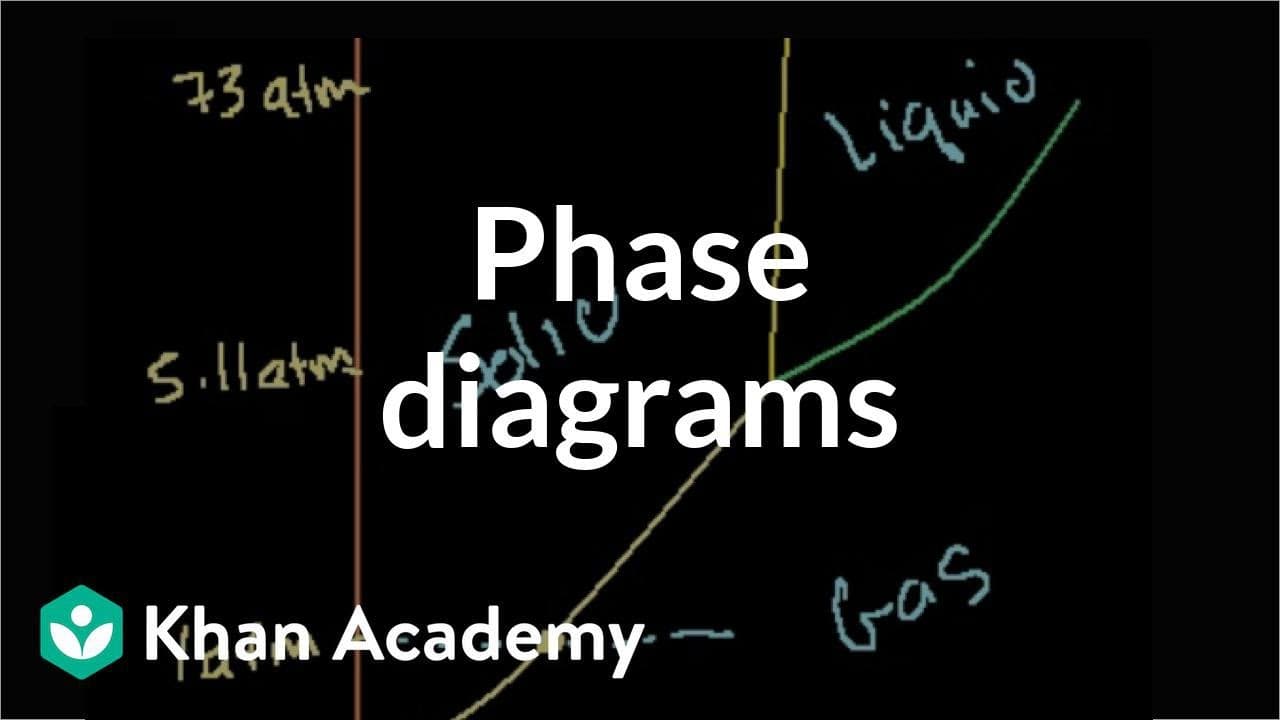
Phase diagrams explain how different substances transition between solid, liquid, and gas states based on temperature and pressure.
Transcript
All of the phase changes we've been doing so far have been under constant pressure conditions, and, in particular, with the problems that I've been doing with water phase changes in the last couple of videos, it was at atmospheric pressure, at least at sea level atmospheric pressure, or at 1 atmosphere. So it was done-- well, I'll explain this diag... Read More
Key Insights
- ❓ Phase diagrams demonstrate the relationship between temperature, pressure, and the states of matter.
- 🥶 Changes in pressure can significantly impact the freezing and boiling points of substances.
- 🤪 The concept of sublimation, where a solid goes directly to a gas, is possible under certain temperature and pressure conditions.
- 🫢 Supercritical fluids, found above the critical point on a phase diagram, have properties of both liquids and gases.
Install to Summarize YouTube Videos and Get Transcripts
Explore YouTube Video Summarizer or Get YouTube Transcript Extractor
Questions & Answers
Q: How do phase diagrams help us understand phase changes?
Phase diagrams provide a visual representation of how substances transition between solid, liquid, and gas states based on temperature and pressure.
Q: What happens to freezing and boiling points of substances when pressure increases?
When pressure increases, the freezing and boiling points of substances decrease, allowing them to transition from a solid to a liquid or from a liquid to a gas at lower temperatures.
Q: How does lowering pressure affect the freezing and boiling points of substances?
Lowering pressure increases the freezing point and decreases the boiling point of substances, making it easier for them to transition from a solid to a gas or from a liquid to a gas.
Q: What is the significance of the triple point in phase diagrams?
The triple point represents the conditions at which a substance can exist simultaneously as a solid, liquid, and gas. Small changes in pressure or temperature can cause a substance to transition from one state to another.
Summary & Key Takeaways
-
Phase diagrams illustrate the states of matter and their transitions based on temperature and pressure.
-
Changes in pressure can affect the freezing and boiling points of substances.
-
Lowering pressure makes it easier for substances to transition from a solid to a gas.
Read in Other Languages (beta)
Share This Summary 📚
Summarize YouTube Videos and Get Video Transcripts with 1-Click
Try YouTube Summary with ChatGPT & Claude or YouTube Transcript Generator
Explore More Summaries from Khan Academy 📚



Summarize YouTube Videos and Get Video Transcripts with 1-Click
Try YouTube Summary with ChatGPT & Claude or YouTube Transcript Generator