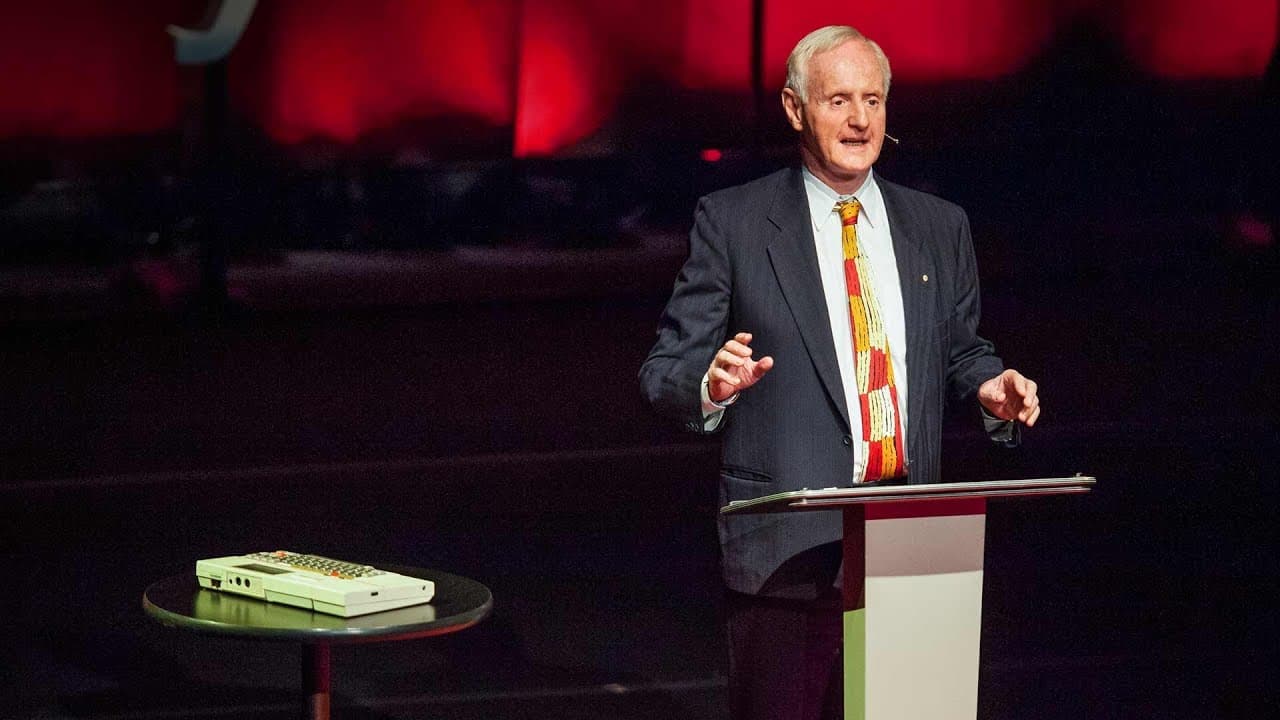
Ron McCallum: How technology allowed me to read
TL;DR
This content explores the journey of a blind individual and the impact of computer-based adaptive technology on their ability to read.
Transcript
When I was about three or four years old, I remember my mum reading a story to me and my two big brothers, and I remember putting up my hands to feel the page of the book, to feel the picture they were discussing. And my mum said, "Darling, remember that you can't see and you can't feel the picture and you can't feel the print on the page." And I t... Read More
Key Insights
- 📖 Technology has revolutionized the lives of blind people, allowing them to read and access information in ways that were previously impossible or difficult.
- 🌍 The majority of blind individuals who have benefited from technological advancements come from developed countries, such as North America, Europe, and Japan.
- 🔎 Braille, a system of raised dots that blind individuals can feel with their fingers, has been an important tool for reading and learning for blind people.
- 🎙️ Tape recorders played a crucial role in blind individuals' access to information and education, as they could have others read material to them and listen to it repeatedly.
- 💻 Computers and adaptive technology have had a profound impact on the lives of blind people, allowing them to access information, read, and communicate more independently.
- 📘 Optical character recognition (OCR) technology, such as the Kurzweil reader, has enabled blind individuals to scan and read printed material using synthetic speech.
- 📚 Accessible books for the blind, including talking books and braille, are essential resources, but copyright laws and geographic restrictions limit their availability across borders.
- 🌐 There are still barriers to internet accessibility for blind people, such as inaccessible websites and lack of standardized accessibility standards, but efforts are being made to address these issues.
Install to Summarize YouTube Videos and Get Transcripts
Explore YouTube Video Summarizer or Get YouTube Transcript Extractor
Questions & Answers
Q: How did the speaker first become interested in reading?
When the speaker was three or four years old, their mother read a story to them and their two older brothers. The speaker wanted to feel the page and picture in the book, even though they couldn't see. This ignited their love for stories and their desire to read.
Q: What is the speaker's condition that resulted in their blindness?
The speaker was born premature by about 10 weeks, which led to their blindness. The specific condition is known as retrolental fibroplasia, which is now very rare in developed countries.
Q: How have computers impacted the lives of blind people?
According to the speaker, computers have had a significant impact on the lives of blind people. They believe that blind individuals have been affected more than any other group. Computers, along with adaptive technology, have allowed blind individuals to access information and engage with the world in ways that were previously inaccessible.
Q: How did the speaker access books when they were in school?
When the speaker was in school, books were transcribed into braille by volunteers. These transcribers would punch each dot into paper, allowing the speaker to read the volumes of braille material. This method of creating braille books had been ongoing since the late 19th century, mainly carried out by volunteer women.
Q: What was the speaker's first experience with a computer for blind people?
The speaker's first encounter with a computer designed for blind people was in 1987 when they saw their first blind computer. This computer, the Keynote Gold 84k, had no screen and had speech synthesis capabilities. It allowed the speaker to read back what they had typed and marked their entry into the world of computers.
Q: What were some of the early technological advancements that helped blind people access written material?
In 1974, the American inventor Ray Kurzweil developed a machine that could scan books and read them out using synthetic speech. This machine, although the size of a washing machine, was a breakthrough in accessibility for blind individuals. The speaker saw their first Kurzweil in 1989 and found it revolutionary for their ability to read books independently.
Q: Who are some of the inventors and technologies that have played a role in improving accessibility for blind people?
Russell Smith, a passionate inventor from New Zealand, created the speaker's first blind computer in 1987, which had speech synthesis capabilities. Another influential figure is Ted Henter, who in 1989 worked with Bill Joyce to develop JAWS (Job Access With Speech), a program that reads out what is on a computer screen. These advancements have significantly improved accessibility for blind individuals.
Q: What barriers still exist for people with disabilities, particularly blind individuals?
The speaker highlights that there are still barriers in place for people with disabilities, particularly in terms of web accessibility. Many websites are not compatible with screen reader technologies, making them inaccessible to blind individuals. There are also legal and copyright barriers that prevent the transportation of accessible books across borders, limiting access to literature for blind people in certain countries. Efforts are being made to establish cross-border treaties to address this issue.
Summary & Key Takeaways
-
The speaker, who is blind, had a strong desire to read from a young age and technology has allowed this dream to come true for blind people around the world.
-
Computers and adaptive technology have had a significant impact on the lives of blind people, allowing them to read, access information, and participate in the technological revolution.
-
The speaker highlights the importance of volunteers, passionate inventors, and technology in enabling blind people to overcome barriers and achieve their goals.
Read in Other Languages (beta)
Share This Summary 📚
Summarize YouTube Videos and Get Video Transcripts with 1-Click
Try YouTube Summary with ChatGPT & Claude or YouTube Transcript Generator
Explore More Summaries from TED 📚


Summarize YouTube Videos and Get Video Transcripts with 1-Click
Try YouTube Summary with ChatGPT & Claude or YouTube Transcript Generator