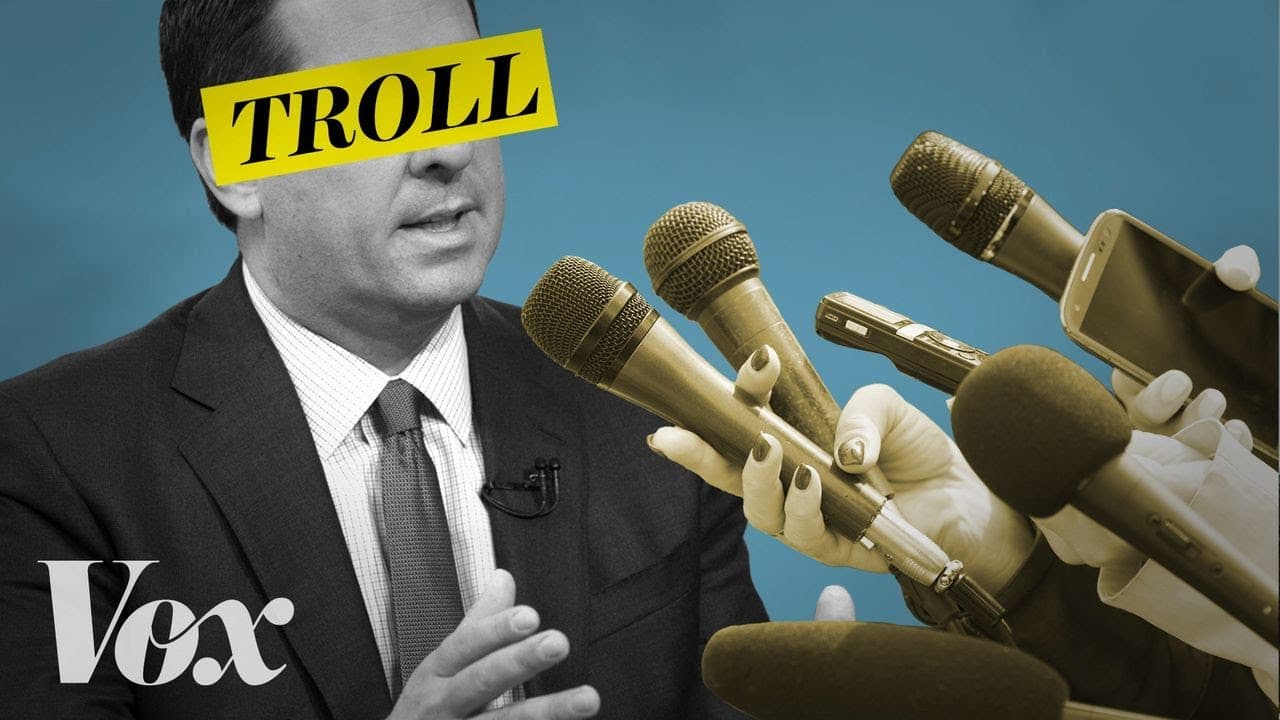
How politicians troll the media
TL;DR
Politicians use trolling to manipulate media and public perception.
Transcript
You probably imagine anonymous internet commenter, or a shock jockey, or a partisan hack. You probably don't imagine the Senate Majority Leader, or the Speaker of the House of Representatives or the Chairman of the House Intelligence Committee. But maybe you should, because if the past few months of batshit political coverage have shown us anything... Read More
Key Insights
- Politicians, including high-ranking officials, are engaging in trolling to manipulate media narratives and public perception.
- Trolling involves provoking a reaction, often by making exaggerated or false claims that the media feels compelled to cover.
- The Nunes memo was a prime example of political trolling, where a much-hyped document turned out to be inconsequential.
- This tactic distracts media from more serious issues, such as reports about Trump considering firing Mueller.
- Even after a claim is debunked, its initial impact can linger, creating 'belief echoes' that affect public opinion.
- Media coverage often exacerbates the issue by repeating debunked claims, thus reinforcing misinformation.
- Politicians like Nunes continue to use this strategy because it successfully generates media attention and public doubt.
- Journalists need to exercise restraint and critically assess whether such stories are genuine news or manipulative bait.
Install to Summarize YouTube Videos and Get Transcripts
Explore YouTube Video Summarizer or Get YouTube Transcript Extractor
Questions & Answers
Q: What is the main tactic used by politicians to manipulate the media?
Politicians use trolling as a main tactic to manipulate the media. This involves making exaggerated or false claims to provoke a reaction from journalists, leading to extensive media coverage. The aim is to distract from more serious issues and influence public perception, even when the claims are later debunked.
Q: How did the Nunes memo serve as an example of political trolling?
The Nunes memo was a classic example of political trolling. It was hyped as a significant revelation by Republican lawmakers, leading to extensive media coverage. However, when released, it turned out to be inconsequential. Despite this, it successfully distracted attention from other issues and sowed doubt about the FBI's integrity.
Q: What are 'belief echoes' and how do they affect public opinion?
Belief echoes refer to the lingering impact of debunked claims on public opinion. Even after a false claim is corrected, its initial negative impression can persist, affecting people's attitudes towards the subject. This phenomenon is exacerbated by media coverage that repeats the debunked claims, reinforcing misinformation.
Q: Why do politicians continue to use trolling tactics despite being debunked?
Politicians continue to use trolling tactics because they effectively generate media attention and influence public perception. Even when claims are debunked, the initial impact can create doubt and skepticism, particularly regarding political opponents or institutions. This strategy is seen as beneficial for advancing political agendas.
Q: How can journalists mitigate the impact of political trolling?
Journalists can mitigate the impact of political trolling by exercising restraint and critically assessing the validity of claims before extensively covering them. Treating such stories as potential bait rather than genuine news can prevent overreaction and reduce the spread of misinformation, ultimately protecting the integrity of the news cycle.
Q: What are the consequences of media overreacting to political trolling?
When the media overreacts to political trolling, it can lead to a distraction from more important issues and contribute to the spread of misinformation. This overreaction can also reinforce negative perceptions and create 'belief echoes,' where public opinion is influenced by debunked claims, ultimately benefiting those who initiated the trolling.
Q: How do trolling tactics distract from more serious news stories?
Trolling tactics distract from more serious news stories by dominating media coverage with sensationalized claims. This shifts attention away from pressing issues, such as significant political developments or investigations. By focusing on these exaggerated claims, the media inadvertently aids in diverting public discourse from critical topics.
Q: In what ways does political trolling incentivize bad faith in news coverage?
Political trolling incentivizes bad faith in news coverage by rewarding sensationalism and misinformation with extensive media attention. This creates an environment where false claims are amplified, even after being debunked, leading to a cycle of misinformation. Journalists feel pressured to cover these stories, despite their dubious nature, to maintain relevance.
Summary & Key Takeaways
-
Politicians are increasingly using trolling tactics, similar to internet provocateurs, to manipulate media coverage and public perception. This involves making exaggerated claims to bait the media into overreacting, even when these claims are eventually debunked.
-
The Nunes memo exemplifies political trolling, where a document heavily hyped by Republican lawmakers turned out to be a dud. Despite this, it successfully distracted media from more pressing issues and sowed doubt about the FBI.
-
The persistence of debunked claims in media coverage contributes to 'belief echoes,' where public opinion is negatively influenced even after the truth is revealed. This incentivizes politicians to continue using trolling tactics to manipulate narratives.
Read in Other Languages (beta)
Share This Summary 📚
Summarize YouTube Videos and Get Video Transcripts with 1-Click
Try YouTube Summary with ChatGPT & Claude or YouTube Transcript Generator
Explore More Summaries from Vox 📚

Summarize YouTube Videos and Get Video Transcripts with 1-Click
Try YouTube Summary with ChatGPT & Claude or YouTube Transcript Generator