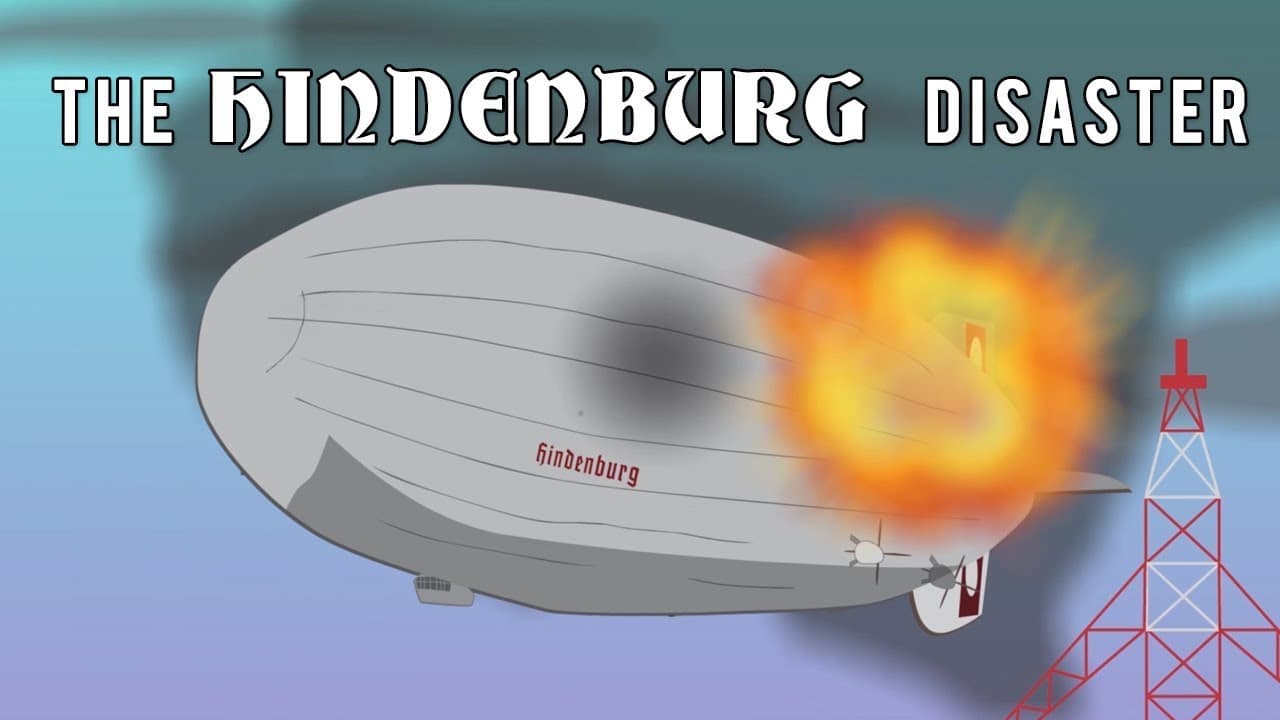
The Hindenburg Disaster (1937)
TL;DR
The Hindenburg disaster was a catastrophic event that marked the end of the airship era, with the exact cause remaining unknown.
Transcript
the Hindenburg disaster may 6th 1937 it's the early hours of September 3rd 1916 high above st. Albans deep in the English countryside a giant silhouette silently seeks cover in the clouds and suddenly a massive search lights light up the sky moments later an aircraft of the British Home Defense Force targets the Zeppelin Raider that is attempting t... Read More
Key Insights
- 🙈 The Hindenburg disaster marked the end of an era in which airships were seen as a potential military tool and luxurious mode of travel.
- 🥺 Germany's confidence in airship technology led them to build the Hindenburg, which became a symbol of their engineering prowess.
- 🤨 The disaster raised questions about the safety of hydrogen as a floatation source for airships, leading to the loss of public and military confidence in the concept.
- ❓ The exact cause of the disaster remains unknown, with various theories but no conclusive evidence.
- 📻 The tragic event was witnessed by many and recorded, with a famous radio broadcast capturing the shocking moments.
- 🍃 The Hindenburg disaster has left a significant legacy, both in terms of advancements in aviation safety and the public's perception of airship travel.
- 🫢 Lessons from the disaster have contributed to the development of safer methods of aviation and the use of alternative materials and gases for buoyancy.
Install to Summarize YouTube Videos and Get Transcripts
Explore YouTube Video Summarizer or Get YouTube Transcript Extractor
Questions & Answers
Q: What were the main reasons airships were ineffective as military weapons?
Airships, such as the Zeppelin, were unable to carry a significant bomb load and were too fragile, often crashing or exploding. Additionally, their use of highly flammable hydrogen made them vulnerable to disasters.
Q: Why did Germany continue to develop airships despite other nations' abandonment of the concept?
Germany, having pioneered airship technology, believed that advanced technology could overcome the flaws experienced by other nations. The success of the LZ 127 Graf Zeppelin further boosted their confidence.
Q: What was the Hindenburg made of, and why did it use hydrogen instead of helium?
The Hindenburg was constructed with a new copper aluminum alloy called duralumin, known for its strength and durability. Initially intended to use helium, it was switched to hydrogen due to the unavailability of helium for export from the United States.
Q: What were the various theories regarding the cause of the Hindenburg disaster?
Theories included sabotage, lightning, engine problems, static charge, airship hull puncture, and diesel fuel leak. None of these theories were proven conclusively, and the exact cause remains unknown.
Summary & Key Takeaways
-
The Hindenburg disaster occurred on May 6th, 1937, when the airship burst into flames and crashed to the ground, resulting in the loss of many lives.
-
Airships, while ineffective as military tools, caused terror during World War I and were later attempted for luxury travel and reconnaissance purposes.
-
The Hindenburg was intended to be a symbol of German engineering prowess, with sophisticated safety features and luxurious amenities, but ultimately met a tragic fate.
Read in Other Languages (beta)
Share This Summary 📚
Summarize YouTube Videos and Get Video Transcripts with 1-Click
Try YouTube Summary with ChatGPT & Claude or YouTube Transcript Generator
Explore More Summaries from Simple History 📚





Summarize YouTube Videos and Get Video Transcripts with 1-Click
Try YouTube Summary with ChatGPT & Claude or YouTube Transcript Generator