Futures fair value in the pre-market | Finance & Capital Markets | Khan Academy
TL;DR
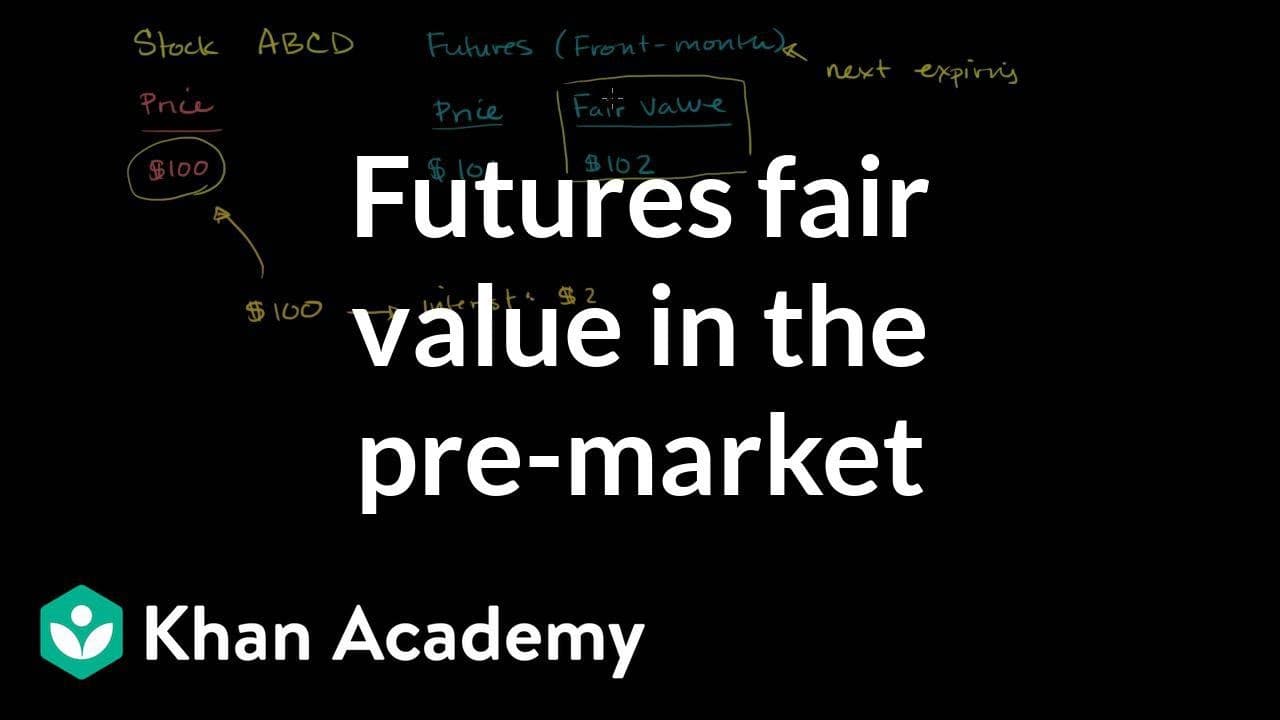
The fair value of a futures contract is the price at which buyers and sellers are neutral between trading on the exchange or entering into a futures contract.
Transcript
Voiceover: The fair value of a futures contract is the price of the contract at which a buyer of the stock would be neutral between buying it on in an actual stock exchange and actually buying the stock and agreeing to buy the futures contract. Or a seller of the stock would be neutral between selling it right now in the actual exchange versus agre... Read More
Key Insights
- 🧚 The fair value of a futures contract is determined by weighing the cost of buying or selling on the current exchange against the potential benefits of entering into a futures contract.
- 🤑 Factors such as interest earned on money while waiting for the contract to expire and the presence of dividends impact the fair value.
- 🤗 The fair value is an indicator of market expectations and can influence trading decisions before the market opens.
- 👻 Futures markets have longer trading hours compared to traditional stock markets, allowing for pricing discrepancies between the futures contract and the actual stock.
- 🧚 Buyers and sellers consider the fair value when deciding whether to trade on the exchange or enter into a futures contract.
- 🧚 The fair value helps determine if there is a potential advantage in buying or selling the stock through a futures contract compared to trading on the exchange.
- 🧚 Dividends can affect the fair value, as traders may be willing to pay less for a futures contract if they will not receive the dividend.
Install to Summarize YouTube Videos and Get Transcripts
Explore YouTube Video Summarizer or Get YouTube Transcript Extractor
Questions & Answers
Q: What is the fair value of a futures contract?
The fair value of a futures contract is the price at which buyers and sellers are indifferent between trading on the actual stock exchange or entering into a futures contract. It takes into account factors such as interest earned and dividends.
Q: How is the fair value determined?
The fair value is typically quoted for the front month or next expiring futures contract and is influenced by factors such as interest rates, dividends, and market expectations. Buyers and sellers analyze these factors to determine the fair value.
Q: Why would someone prefer to buy a futures contract instead of buying the stock on the exchange?
Buyers may prefer to enter into a futures contract if they can earn interest on their money while waiting for the contract to expire. If the interest earned is higher than the difference in price between the futures contract and the current stock price, it is more advantageous to buy the futures contract.
Q: How does the fair value indicate market expectations?
If the price of a futures contract is trading below its fair value, it suggests that many traders are expecting the stock price to decrease when the market opens. Conversely, if the price is above the fair value, it indicates expectations of a price increase.
Summary & Key Takeaways
-
The fair value of a futures contract is the price at which buyers and sellers are neutral between buying or selling the stock on the actual exchange or entering into a futures contract.
-
The fair value is typically quoted for the front month or next expiring futures contract.
-
Buyers and sellers consider factors such as interest earned, dividends, and future expectations when determining the fair value.
Read in Other Languages (beta)
Share This Summary 📚
Summarize YouTube Videos and Get Video Transcripts with 1-Click
Try YouTube Summary with ChatGPT & Claude or YouTube Transcript Generator
Explore More Summaries from Khan Academy 📚



Summarize YouTube Videos and Get Video Transcripts with 1-Click
Try YouTube Summary with ChatGPT & Claude or YouTube Transcript Generator