How Does Hemoglobin Improve Blood Flow?
TL;DR
Hemoglobin enhances blood flow by being stored in red blood cells, which prevents blood from becoming thick and viscous. This design allows for better oxygen transport and more efficient circulation throughout the body.
Transcript
Where I left off in the last video, we talked about how the hemoglobin in red blood cells is what sops up all of the oxygen so that it increases the diffusion gradient-- or it increases the incentive, we could say, for the oxygen to go across the membrane. We know that the oxygen molecules don't know that there's less oxygen here, but if you watch ... Read More
Key Insights
- 🖐️ Hemoglobin plays a crucial role in increasing the diffusion gradient for oxygen.
- 🩸 Storing hemoglobin within red blood cells improves blood flow and prevents the blood from becoming thick.
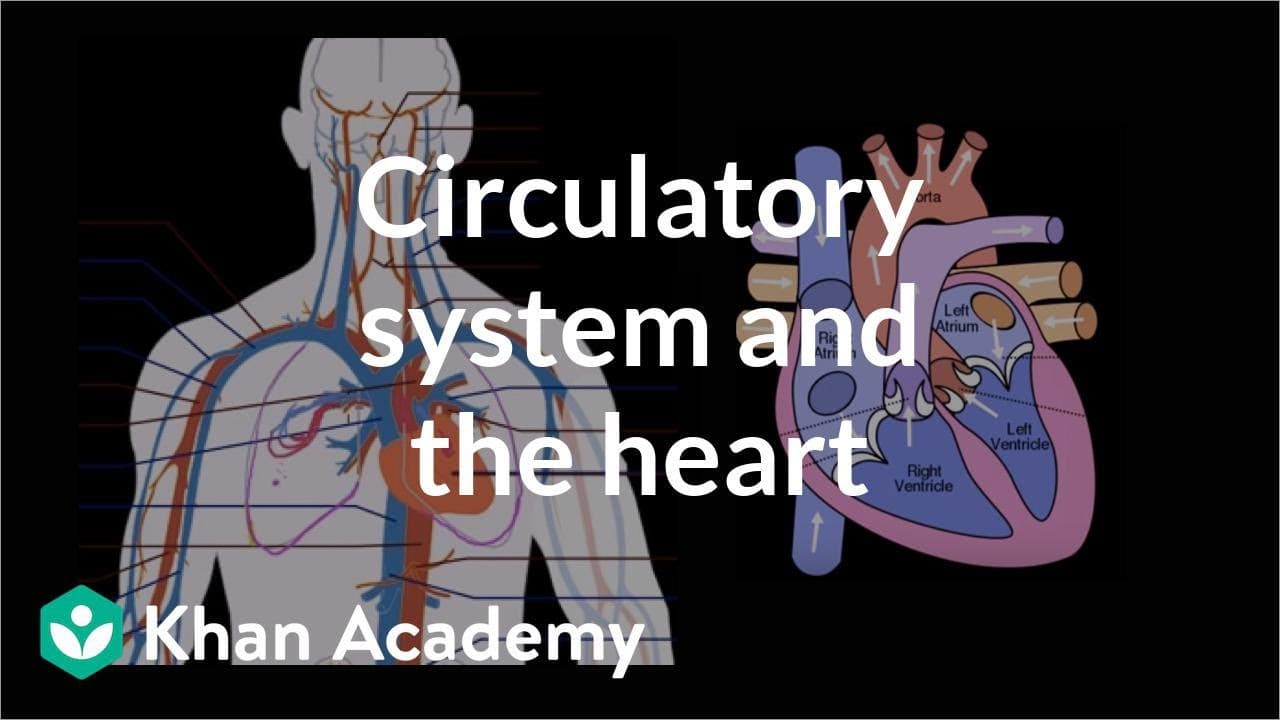
- 🥰 The circulatory system involves the heart, lungs, and blood vessels, working together to transport oxygen and nutrients throughout the body.
- ↩️ Deoxygenated blood from the body flows into the right side of the heart, travels to the lungs to become oxygenated, and then returns to the left side of the heart to be pumped out to the rest of the body.
- 🚚 The circulatory system operates as a continuous loop, ensuring the proper delivery of oxygen and nutrients to all body tissues.
- 🥰 The aorta is the main artery that carries oxygenated blood from the heart to the rest of the body.
- 👻 Blood flow is optimized by the branching of arteries and capillaries, allowing for efficient distribution of oxygen and nutrients.
Install to Summarize YouTube Videos and Get Transcripts
Explore YouTube Video Summarizer or Get YouTube Transcript Extractor
Questions & Answers
Q: Why does hemoglobin need to reside within red blood cells instead of freely floating in the blood plasma?
Hemoglobin is stored within red blood cells to prevent the blood from becoming thick and viscous. This allows for better blood flow, as the oxygenated blood can flow more smoothly through the blood vessels.
Q: How does oxygenation occur in the lungs?
Oxygenation occurs in the lungs through the process of diffusion. Deoxygenated blood from the body is pumped into the lungs through the pulmonary artery, and as it passes by the alveoli, oxygen from the air diffuses into the blood, turning it into oxygenated blood.
Q: How does blood flow from the heart to the rest of the body?
Blood flows from the heart to the rest of the body through the aorta, which is a large artery. The left ventricle of the heart pumps oxygenated blood into the aorta, which then branches out into smaller arteries, delivering oxygen and nutrients to various parts of the body.
Q: What is the purpose of the circulatory system?
The circulatory system is responsible for transporting oxygen, nutrients, hormones, and other vital substances throughout the body. It also helps remove waste products and regulates body temperature.
Summary & Key Takeaways
-
Hemoglobin in red blood cells increases the diffusion gradient for oxygen to cross cell membranes more efficiently.
-
Hemoglobin is stored in red blood cells to prevent the blood from becoming thick and viscous, allowing for better blood flow.
-
The circulatory system involves the heart, lungs, and blood vessels and is responsible for the transportation of oxygen and nutrients throughout the body.
Read in Other Languages (beta)
Share This Summary 📚
Summarize YouTube Videos and Get Video Transcripts with 1-Click
Try YouTube Summary with ChatGPT & Claude or YouTube Transcript Generator
Explore More Summaries from Khan Academy 📚



Summarize YouTube Videos and Get Video Transcripts with 1-Click
Try YouTube Summary with ChatGPT & Claude or YouTube Transcript Generator