The colleges where the American dream is still alive
TL;DR
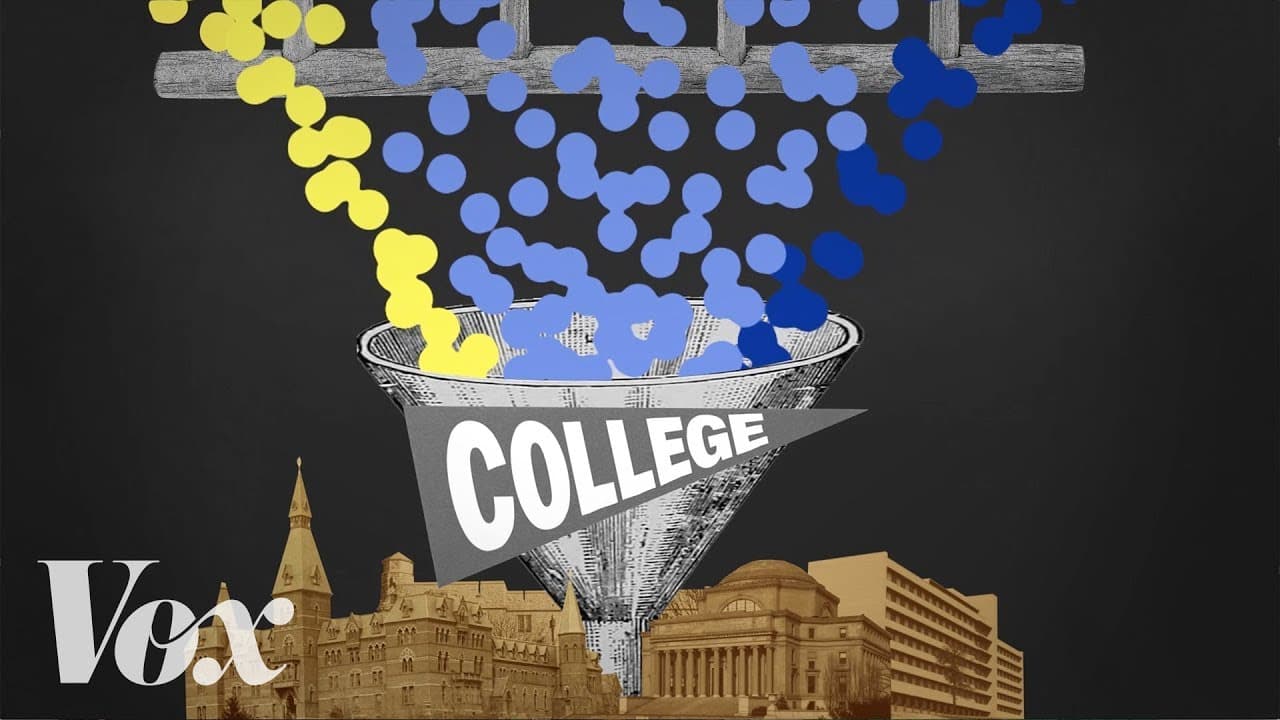
Less selective colleges excel at lifting low-income students.
Transcript
Elite universities love to market themselves as engines of upward mobility. Elite and egalitarian. And for low income students they do offer incredibly generous financial aid. I found out that for a family like ours, we wouldn't have to worry about affording Harvard. I'm really grateful because I wouldn't have been able to get here were it not for ... Read More
Key Insights
- Elite universities like Harvard and Yale provide substantial financial aid but admit very few low-income students, limiting their impact on upward mobility.
- Research by the Equality of Opportunity project analyzed 10.8 million people, revealing the disparity in income mobility among college graduates.
- Low-income students attending elite universities often achieve significant upward mobility, moving from the bottom 20% to the top 20% of income earners.
- Despite available financial aid, many qualified low-income students do not apply to elite universities, indicating a problem of outreach rather than affordability.
- Colleges like Cal State LA and PACE University, though less prestigious, effectively promote upward mobility by admitting and advancing many low-income students.
- Cal State LA enrolls a high percentage of low-income students, with half reaching the top income quintile, showcasing its effectiveness in social mobility.
- PACE University also demonstrates strong upward mobility outcomes, with over half of its low-income students moving to the top income quintile.
- These 'Great Working-Class Colleges' excel in providing access and upward mobility for low-income students, despite lacking the prestige of elite institutions.
Install to Summarize YouTube Videos and Get Transcripts
Explore YouTube Video Summarizer or Get YouTube Transcript Extractor
Questions & Answers
Q: How do elite universities contribute to upward mobility?
Elite universities contribute to upward mobility by providing significant financial aid to low-income students who are admitted. These students often move from the bottom 20% to the top 20% of income earners. However, the impact is limited because these institutions admit a relatively small number of low-income students, restricting their overall influence on social mobility.
Q: What is the main issue preventing low-income students from attending elite universities?
The main issue preventing low-income students from attending elite universities is not the lack of financial aid but rather inadequate outreach. Many qualified low-income students do not apply to these institutions, often due to a lack of awareness or encouragement. This suggests that elite universities need to improve their outreach efforts to attract talented students from diverse economic backgrounds.
Q: Which colleges are most effective at promoting upward mobility for low-income students?
Colleges such as Cal State Los Angeles and PACE University are most effective at promoting upward mobility for low-income students. These institutions enroll a high percentage of students from the bottom income quintile, and many of these students achieve significant economic advancement, reaching the top income quintile after graduation. Their success is attributed to their focus on access and support for low-income students.
Q: What role does financial aid play in the upward mobility of low-income students?
Financial aid plays a crucial role in the upward mobility of low-income students by making higher education more accessible and affordable. Elite universities offer generous financial aid packages, allowing admitted low-income students to attend without financial burden. However, the broader issue is ensuring that more low-income students apply and gain admission to such institutions to benefit from these opportunities.
Q: How does the outreach problem affect the representation of low-income students at elite universities?
The outreach problem results in the underrepresentation of low-income students at elite universities. Despite the availability of financial aid, many qualified students from low-income backgrounds do not apply to these institutions. This lack of representation means that fewer students from disadvantaged backgrounds can access the resources and opportunities that elite universities offer, thereby limiting their potential for upward mobility.
Q: What are 'Great Working-Class Colleges' and why are they important?
'Great Working-Class Colleges' refer to institutions like Cal State LA and PACE University, which are effective at promoting upward mobility for low-income students. They are important because they provide access to higher education for a significant number of students from the bottom income quintile, helping them achieve economic advancement. These colleges focus on inclusivity and support, making them crucial for social mobility.
Q: What findings did the Equality of Opportunity project reveal about college mobility?
The Equality of Opportunity project revealed that elite universities are effective at moving low-income students up the income ladder, but they admit very few such students. In contrast, less selective colleges, like Cal State LA and PACE University, admit more low-income students and have a significant impact on their upward mobility, highlighting the importance of access and support for these students.
Q: How do less selective colleges compare to elite universities in terms of social mobility?
Less selective colleges, such as Cal State LA and PACE University, outperform elite universities in terms of social mobility for low-income students. While elite universities have the resources to support upward mobility, their limited admission of low-income students restricts their overall impact. In contrast, less selective colleges enroll more low-income students and effectively support their economic advancement, making them crucial for social mobility.
Summary & Key Takeaways
-
Elite universities often claim to promote upward mobility, yet they admit few low-income students, limiting their impact. Research shows that while these schools are effective for those admitted, the majority of low-income students do not apply, highlighting an outreach issue rather than a financial aid problem.
-
A study of 10.8 million people revealed that less selective colleges like Cal State LA and PACE University excel in promoting upward mobility. These institutions enroll a significant number of low-income students, many of whom achieve top income quintile status after graduation.
-
The 'Great Working-Class Colleges' are praised for their ability to lift low-income students into higher income brackets. Unlike elite universities, they focus on access and upward mobility, providing opportunities for students from the bottom income quintile to succeed.
Read in Other Languages (beta)
Share This Summary 📚
Summarize YouTube Videos and Get Video Transcripts with 1-Click
Try YouTube Summary with ChatGPT & Claude or YouTube Transcript Generator
Explore More Summaries from Vox 📚




Summarize YouTube Videos and Get Video Transcripts with 1-Click
Try YouTube Summary with ChatGPT & Claude or YouTube Transcript Generator