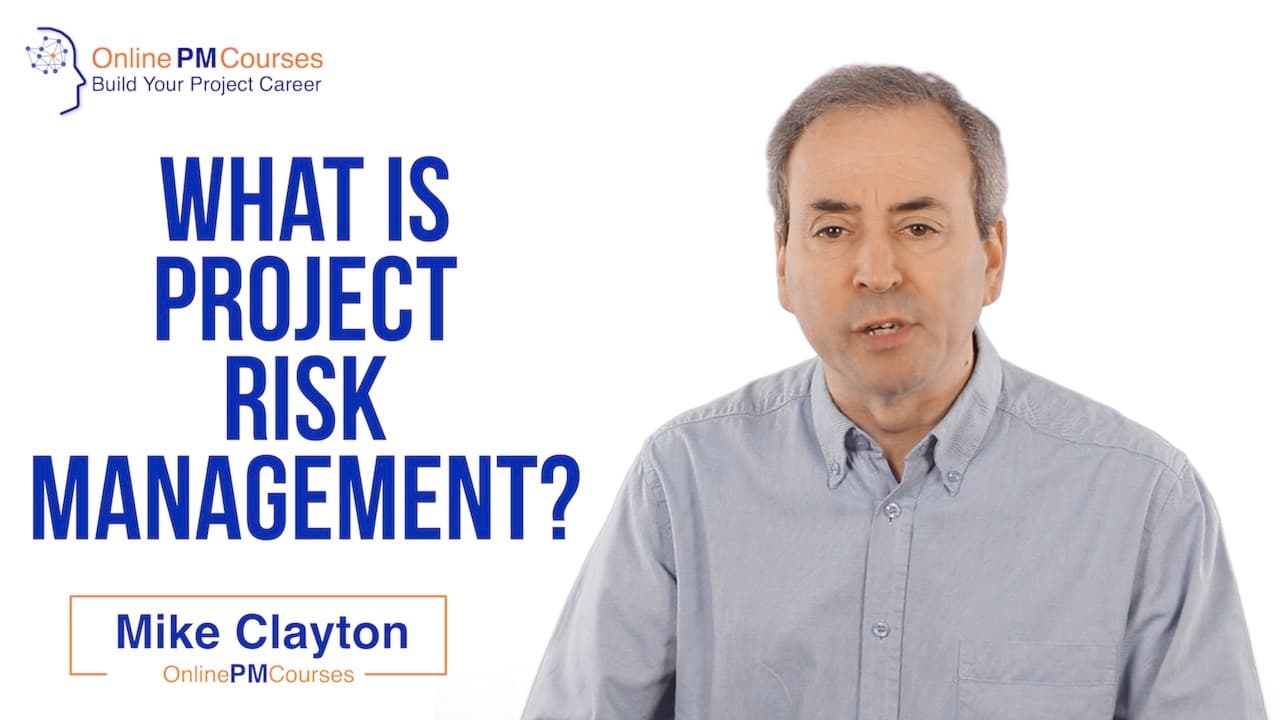
What is Project Risk Management? Project Management in Under 5
TL;DR
Project risk management is the process of identifying, analyzing, prioritizing, and managing risks in order to increase the chances of project success.
Transcript
in this video I want to answer the question what is project risk management before I answer the question what is project risk management we need to understand two things and the first of them is to understand what a risk is and a risk is defined as uncertainty that can affect outcome consequently risks are characterized by two things they're charac... Read More
Key Insights
- 🎚️ Risks in project management are characterized by their probability and impact, which determine their level of uncertainty.
- 👶 Projects are inherently risky due to the nature of being new, constrained by resources and time, and involving coordination of various tasks and activities.
- 📽️ Project risk management involves identifying, analyzing, prioritizing, and managing risks to increase the chances of project success.
- ✳️ The four-step process of project risk management includes risk identification, analysis, planning, and action.
- 🥡 Taking appropriate actions is crucial for the success of project risk management.
- 🥡 Risk management processes involve monitoring, reviewing, reporting, and controlling the effects of actions taken.
- 📽️ Project risk management helps in reducing the level of risk and increasing the likelihood of project success.
Install to Summarize YouTube Videos and Get Transcripts
Explore YouTube Video Summarizer or Get YouTube Transcript Extractor
Questions & Answers
Q: What is project risk management?
Project risk management is the process of systematically identifying, analyzing, prioritizing, and managing uncertainties or risks that could affect project outcomes.
Q: Why are projects inherently risky?
Projects are risky because they involve undertaking something new, have limited resources and time, and require coordination of multiple tasks and activities with potentially different stakeholders.
Q: What are the steps involved in project risk management?
The four steps of project risk management are risk identification, risk analysis, risk planning, and risk action. These steps involve identifying risks, analyzing their likelihood and impact, prioritizing them, planning strategies to handle them, and taking appropriate actions.
Q: How does project risk management contribute to project success?
Project risk management reduces the level of risk by identifying and analyzing potential risks, prioritizing them, and developing strategies to mitigate or handle them. By doing so, it increases the likelihood of delivering the project on time, within budget, and meeting the specified requirements.
Summary & Key Takeaways
-
Risks are uncertainties that can impact the outcome of a project, characterized by their probability and impact.
-
Projects are inherently risky due to their newness, resource constraints, time limitations, and coordination requirements.
-
Project risk management involves four steps: identifying risks, analyzing them, planning strategies, and taking action.
Read in Other Languages (beta)
Share This Summary 📚
Summarize YouTube Videos and Get Video Transcripts with 1-Click
Try YouTube Summary with ChatGPT & Claude or YouTube Transcript Generator
Explore More Summaries from Online PM Courses - Mike Clayton 📚





Summarize YouTube Videos and Get Video Transcripts with 1-Click
Try YouTube Summary with ChatGPT & Claude or YouTube Transcript Generator