What Are the Causes and Consequences of American Imperialism?
TL;DR
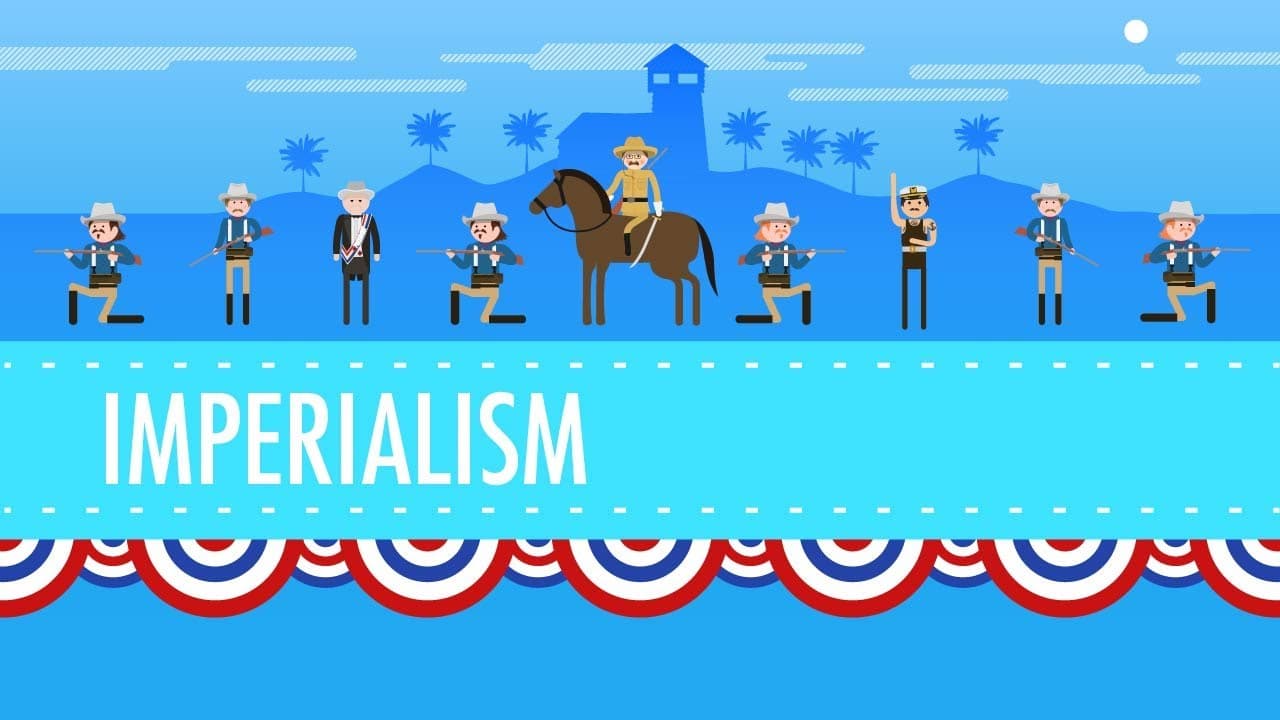
American imperialism in the late 19th and early 20th centuries stemmed from economic needs and a desire for new markets. Key territories acquired included the Philippines, Puerto Rico, and Guam following the Spanish-American War, while anti-imperialist sentiments highlighted the contradictions between imperialism and democratic ideals.
Transcript
Episode 28: American Imperialism Hi, I’m John Green, this is CrashCourse U.S. History and today we’re gonna talk about a subject near and dear to my white, male heart: imperialism. So, here at CrashCourse we occasionally try to point out that the U.S., much as we hate to admit it, is actually part of a larger world. Mr. Green, Mr. Green, you mean l... Read More
Key Insights
- American imperialism in the late 19th and early 20th centuries was driven by economic needs and the desire for new markets.
- The United States acquired territories like the Philippines, Puerto Rico, and Guam following the Spanish-American War.
- The annexation of Hawaii was a strategic move to secure naval bases and resources like sugar and pineapples.
- The Spanish-American-Cuban-Filipino War highlighted America's transition into an imperial power with overseas colonies.
- Anti-imperialism sentiment existed, with critics arguing that imperialism contradicted democratic ideals.
- The Platt Amendment allowed the U.S. to intervene in Cuban affairs, demonstrating the complexities of American imperialism.
- The Philippine-American War resulted in significant casualties and highlighted the racial motivations behind American atrocities.
- Economic motivations, such as the need for new markets in Asia, were central to the U.S.'s imperialistic pursuits.
Install to Summarize YouTube Videos and Get Transcripts
Explore YouTube Video Summarizer or Get YouTube Transcript Extractor
Questions & Answers
Q: What were the main motivations behind American imperialism?
American imperialism was primarily motivated by economic needs, such as finding new markets for products and securing resources. Additionally, there was a desire to establish the U.S. as a global power, driven by nationalism and the influence of figures like Captain Alfred Thayer Mahan, who advocated for naval dominance.
Q: How did the Spanish-American War impact U.S. territorial expansion?
The Spanish-American War resulted in the U.S. acquiring several territories, including the Philippines, Puerto Rico, and Guam. It marked a significant shift in American foreign policy, as the U.S. became an imperial power with overseas colonies. This expansion was justified by economic and strategic interests, despite opposition from anti-imperialists.
Q: What role did Hawaii play in American imperialism?
Hawaii was strategically important for the U.S. due to its location in the Pacific, providing a naval base at Pearl Harbor and resources like sugar. The annexation of Hawaii in 1898 was part of America's broader imperial strategy, allowing for greater military and economic influence in the Pacific region.
Q: What were the consequences of the Philippine-American War?
The Philippine-American War was a brutal conflict resulting in over 100,000 Filipino and 4,200 American deaths. It highlighted the racial motivations and atrocities committed by American forces, such as torture and concentration camps. The war spurred anti-imperialist sentiment in the U.S., with critics like Mark Twain speaking out against imperialism.
Q: How did anti-imperialists view American expansion?
Anti-imperialists argued that imperialism was incompatible with democratic values, as it involved the political domination of other peoples. They feared it would lead to increased diversity and opposed the idea of America as an imperial power, advocating for domestic focus over overseas expansion.
Q: What was the significance of the Platt Amendment?
The Platt Amendment, included in the Cuban Constitution, allowed the U.S. to intervene in Cuban affairs and established a permanent naval base at Guantanamo Bay. It exemplified the complexities of American imperialism, as the U.S. exerted control over Cuba without formally annexing it, maintaining influence in the region.
Q: Why was the annexation of Hawaii significant?
The annexation of Hawaii was significant because it provided the U.S. with a strategic naval base in the Pacific and access to valuable resources like sugar. It also demonstrated America's willingness to expand its territory beyond the continental U.S., marking a key moment in the country's imperialistic endeavors.
Q: How did economic motivations drive American imperialism?
Economic motivations were central to American imperialism, as the U.S. sought new markets for its surplus goods and resources. The desire to compete globally and establish trade routes, particularly in Asia, was a driving force behind the U.S.'s expansionist policies, as articulated by figures like Senator Albert Beveridge.
Summary & Key Takeaways
-
The episode discusses American imperialism during the late 19th and early 20th centuries, highlighting the economic and strategic motivations behind the U.S.'s expansionist policies. It explores the acquisition of territories like the Philippines, Puerto Rico, and Hawaii, and the impact of the Spanish-American War.
-
John Green explains how the U.S. engaged in imperialism, driven by economic needs and national pride. The acquisition of territories like Guam and Puerto Rico and the annexation of Hawaii were part of the U.S.'s strategy to become a global power.
-
The video also addresses anti-imperialist sentiments and the contradictions between imperialism and democratic ideals. It highlights the consequences of American imperialism, including the Philippine-American War and the ongoing debate over the U.S.'s role as an imperial power.
Read in Other Languages (beta)
Share This Summary 📚
Summarize YouTube Videos and Get Video Transcripts with 1-Click
Try YouTube Summary with ChatGPT & Claude or YouTube Transcript Generator
Explore More Summaries from CrashCourse 📚




Summarize YouTube Videos and Get Video Transcripts with 1-Click
Try YouTube Summary with ChatGPT & Claude or YouTube Transcript Generator