How to Calculate Molar Mass Practice Problems
TL;DR
Learn how to calculate the molar mass of chemical compounds by analyzing their formulas and the weights of the atoms involved.
Transcript
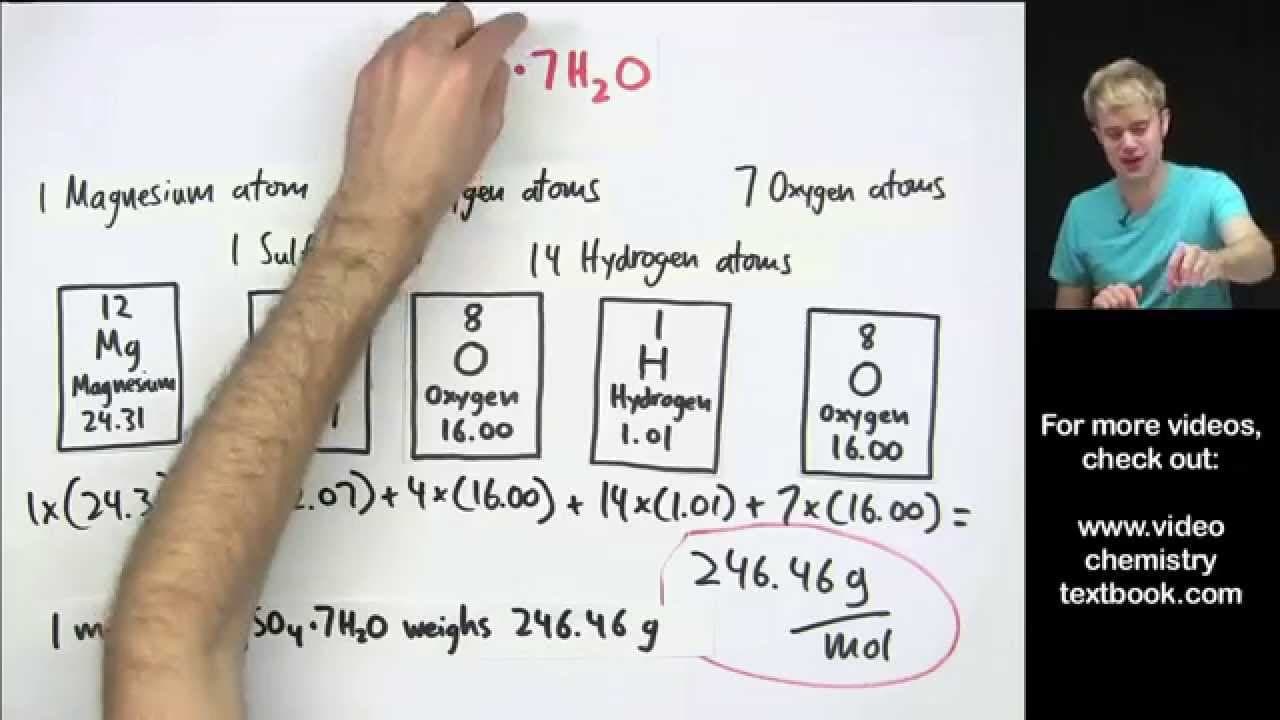
in this lesson we're going to learn how to calculate molar mass for a chemical compound by looking at its formula now your teacher or textbook might use one of these other names instead of molar mass but the good thing is these are all pretty much just different names for the same thing so what we're going to learn here is going to work no matter w... Read More
Key Insights
- 💆 Molar mass is a fundamental concept in chemistry that allows for conversions between moles and mass.
- 🫀 The molar mass of a compound is determined by adding up the masses of the individual atoms in its formula.
- 🫀 Parentheses indicate a repeating group of atoms, and the molar mass calculation treats them as a separate unit.
- 💦 Hydrates, which contain water molecules, add an additional component to the molar mass calculation.
- 👻 The molar mass provides valuable information about the weight of one mole of a substance, allowing for various calculations and comparisons.
- 🫀 The periodic table provides atomic weights that are necessary for calculating molar mass accurately.
- 💆 Practice problems and examples help solidify the understanding and application of molar mass calculations.
Install to Summarize YouTube Videos and Get Transcripts
Explore YouTube Video Summarizer or Get YouTube Transcript Extractor
Questions & Answers
Q: What is molar mass and why is it important in chemistry?
Molar mass is the mass of one mole of a substance and is an essential concept in chemistry because it allows us to convert between mass and moles, which is crucial for stoichiometry calculations and determining the amount of a substance in a chemical reaction.
Q: How do you calculate the molar mass of a compound?
To calculate the molar mass, you need to determine the number of atoms for each element in the compound's formula and find their atomic weights on the periodic table. Multiply the number of atoms for each element by its atomic weight and sum up the results to obtain the molar mass.
Q: What is the significance of parentheses in a chemical formula?
Parentheses in a chemical formula indicate a group of atoms that are repeated a certain number of times. When calculating the molar mass, you treat the atoms within parentheses as a separate unit and multiply their weights by the number outside the parentheses.
Q: How do hydrates affect the calculation of molar mass?
A hydrate is a compound that contains water molecules. The number of water molecules is indicated after a dot in the formula. When calculating the molar mass of a hydrate, you consider the water molecules as separate entities and include their weights in the overall calculation.
Summary & Key Takeaways
-
Molar mass is calculated by determining the number of each type of atom in a chemical formula and finding their respective weights on the periodic table.
-
Examples are provided to demonstrate the process, starting with simple compounds and progressing to more complex ones.
-
Parentheses and hydrates add additional complexity to the calculations, but the same principles apply.
Read in Other Languages (beta)
Share This Summary 📚
Summarize YouTube Videos and Get Video Transcripts with 1-Click
Try YouTube Summary with ChatGPT & Claude or YouTube Transcript Generator
Explore More Summaries from Tyler DeWitt 📚




Summarize YouTube Videos and Get Video Transcripts with 1-Click
Try YouTube Summary with ChatGPT & Claude or YouTube Transcript Generator