Why Did Manhattan Choose a Grid Plan for Its Streets?
TL;DR
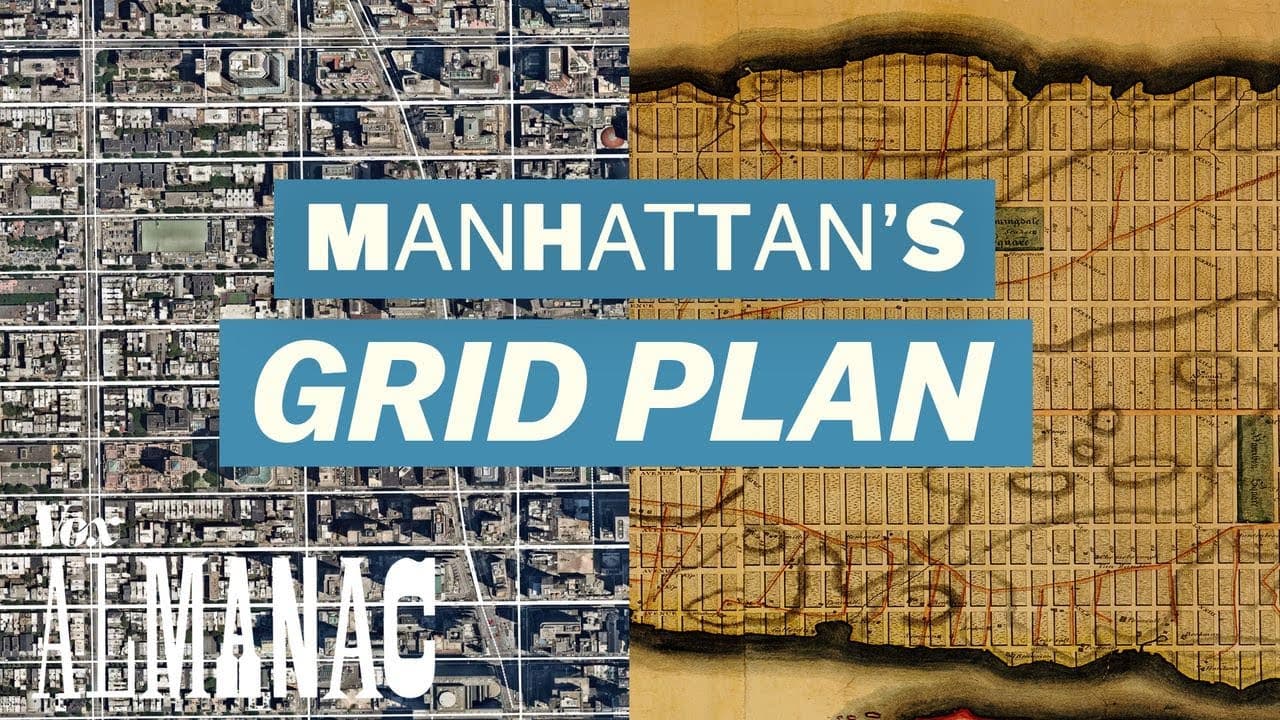
Manhattan adopted a grid plan in the early 1800s to manage rapid population growth and ensure efficient city development. This decision prioritized practicality and cost-effectiveness over aesthetics, reflecting the city's values of speed and functionality, in contrast to the more artistic plans seen in cities like Philadelphia and Washington, DC.
Transcript
At first, this looks like a perfectly normal map of New York City. You zoom in and there’s Broadway, and Bowery. But then you realize that the map is...wrong. Streets run diagonally and the map adds land beyond the edge of the island. That’s because this wasn’t a map. It was a plan that was rejected. And this one — the one with the perfect grid we ... Read More
Key Insights
- Manhattan's grid plan was chosen for practicality and efficiency, not for aesthetic reasons, reflecting the city's need for rapid development.
- William Penn's design for Philadelphia in 1681 was influenced by American ideals and Quaker beliefs, emphasizing morally right angles and common areas.
- Savannah's Oglethorpe Plan, from 1733, was influenced by the Enlightenment, focusing on balance and controlled growth with common squares.
- Washington, DC's 1791 plan by Pierre L’enfant included diagonal avenues and grand squares, but deviated over time, retaining some original elements.
- New York's chaotic street layout before the grid was due to private development and frequent changes, lacking a cohesive plan.
- The 1797 plan by Mangin and Goerck was rejected for being too slow to implement; a faster, more practical solution was needed.
- The 1811 grid plan was chosen for its predictability and ease of development, aligning with New York's values of rapid building.
- City plans reflect cultural values and shape future development; New York's grid plan prioritized efficiency over artistic design.
Install to Summarize YouTube Videos and Get Transcripts
Explore YouTube Video Summarizer or Get YouTube Transcript Extractor
Questions & Answers
Q: Why was Manhattan's grid plan chosen over other designs?
Manhattan's grid plan was chosen for its practicality, efficiency, and ability to accommodate rapid development. The grid allowed for predictable and straightforward construction, making it easier for developers to build quickly and cheaply. This decision reflected New York's values of rapid growth and efficiency, prioritizing practicality over aesthetic considerations.
Q: How did Philadelphia's city plan differ from Manhattan's?
Philadelphia's city plan, designed by William Penn in 1681, was influenced by American ideals and Quaker beliefs, emphasizing morally right angles and common areas to preserve a sense of a country town. In contrast, Manhattan's grid was chosen for its practicality and efficiency, reflecting the city's need for rapid development rather than aesthetic or moral considerations.
Q: What influenced the design of Savannah's city plan?
Savannah's city plan, known as the Oglethorpe Plan, was influenced by the Enlightenment, emphasizing balance and controlled growth. The plan included common squares where people could congregate and commons that limited the grid's expansion. This design aimed to create an elegant and balanced city layout, differing from Manhattan's focus on efficiency.
Q: What were some key features of Pierre L’enfant’s plan for Washington, DC?
Pierre L’enfant’s 1791 plan for Washington, DC, included diagonal avenues slicing across the city, circles to add variety to the grid, and grand squares representing each of the then-15 states. Although the city deviated from his design over time, some of these elements survived, providing a more artistic and varied city layout compared to Manhattan's uniform grid.
Q: What was New York City's condition before the grid plan?
Before the grid plan, New York City had a chaotic street layout characterized by curved streets and irregularities. This disorder resulted from nearly 150 years of European settlement, with private developments frequently changing the city's layout. The lack of a cohesive plan made it difficult to manage the city's growth and development efficiently.
Q: Why was the 1797 city plan for New York rejected?
The 1797 city plan by Joseph Mangin and Casimir Goerck was rejected because it was too slow to implement. Although it proposed widening streets and adding to the waterfront, the city needed a faster and more practical solution to accommodate its rapid growth. The plan was deemed too graceful and not aligned with the city's urgent needs.
Q: What was the significance of the 1811 grid plan for New York?
The 1811 grid plan was significant for New York because it provided a practical and efficient layout to accommodate the city's rapid growth. The grid allowed for predictable and straightforward construction, making it easier for developers to build quickly and cheaply. It reflected New York's values of rapid development and efficiency, prioritizing practicality over aesthetic considerations.
Q: How do city plans reflect cultural values?
City plans reflect cultural values by embodying the priorities and ideals of the time. For example, Philadelphia's plan emphasized moral and communal values, Savannah's plan focused on balance and elegance, and Manhattan's grid prioritized efficiency and rapid development. These plans not only shape the physical layout of cities but also influence their cultural and social dynamics.
Summary & Key Takeaways
-
The video explores the history of Manhattan's grid, highlighting its selection for practical reasons over aesthetic ones. It contrasts this with other city plans like Philadelphia's and Savannah's, which were influenced by different ideals. Ultimately, New York's grid reflects the city's values of rapid development and efficiency.
-
Manhattan's grid was chosen in the early 1800s to accommodate the city's rapid growth and need for order. The decision was influenced by the desire for a predictable and efficient layout, contrasting with more artistic plans like those in Washington, DC, which included diagonal avenues and grand squares.
-
The video discusses the rejection of a 1797 city plan for New York in favor of a more practical grid plan in 1811. The grid was designed to facilitate rapid development and was chosen for its simplicity and cost-effectiveness, reflecting New York's focus on growth and efficiency.
Read in Other Languages (beta)
Share This Summary 📚
Summarize YouTube Videos and Get Video Transcripts with 1-Click
Try YouTube Summary with ChatGPT & Claude or YouTube Transcript Generator
Explore More Summaries from Vox 📚




Summarize YouTube Videos and Get Video Transcripts with 1-Click
Try YouTube Summary with ChatGPT & Claude or YouTube Transcript Generator