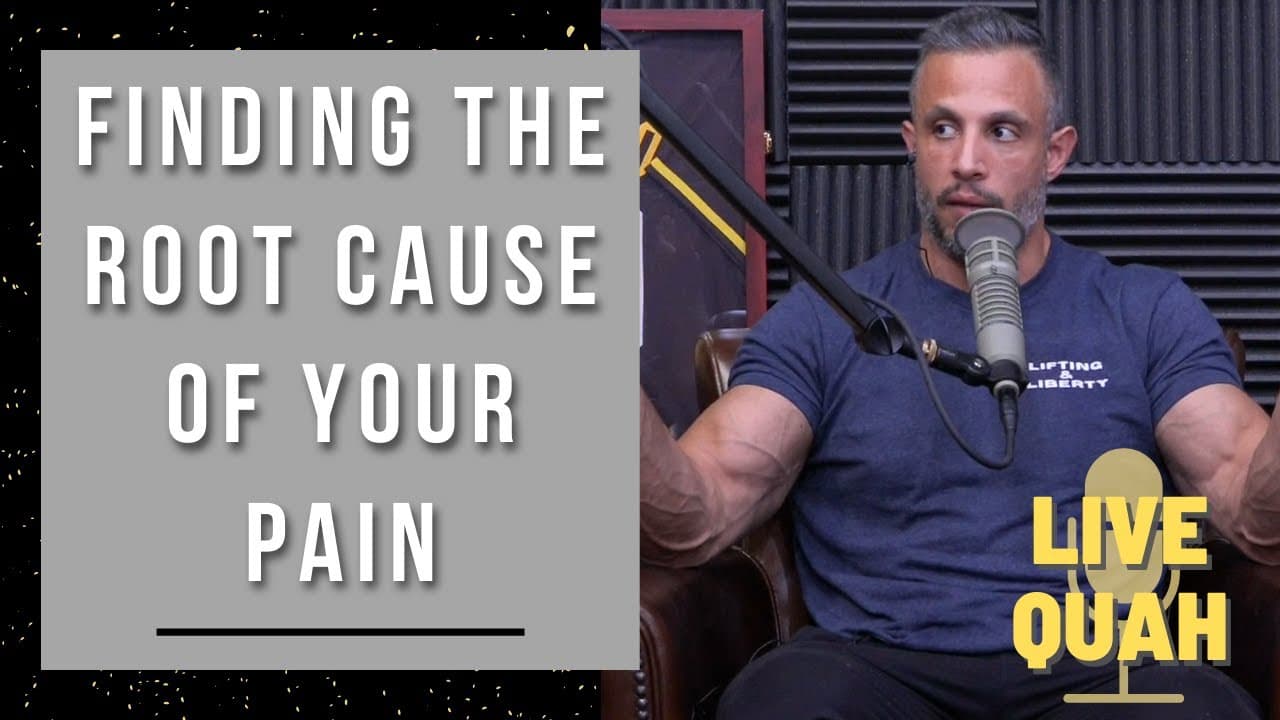
Fixing the Root Cause of Pain
TL;DR
Focus on mobility to address root causes of pain.
Transcript
our next caller is sir haad from california hey what's up sirhot how can we help you hey guys how's it going good we're at so a few months ago i had this lower back pain and funny enough just a day later my shoulder pain and i wasn't able to tell exactly on how it happened it was probably due to repetitive exercising and a little bit over doing it ... Read More
Key Insights
- Repetitive exercise without addressing pain can lead to chronic issues; it's crucial to identify and treat the root cause of pain rather than just avoiding painful movements.
- Mobility is not just about range of motion; it's also about control and stability during movements, which can prevent injuries and improve performance.
- A comprehensive approach to pain includes exercises targeting specific areas like shoulder and hip mobility, as well as overall body stability.
- Cardio can be beneficial for maintaining muscle mass, but it's important to balance it with strength training and mobility work to avoid muscle loss.
- Corrective exercises and mobility work should be prioritized over traditional workouts when dealing with pain, as they address the underlying issues.
- Professional assessment can be invaluable; subtle movement issues may not be apparent without expert evaluation, which can prevent chronic pain.
- Incorporating correctional exercise-based workouts, such as fortification sessions, can help regain control and stability, reducing pain over time.
- Diet and calorie intake should be managed carefully; focus on maintenance or slight surplus until pain issues are resolved to avoid unwanted body composition changes.
Install to Summarize YouTube Videos and Get Transcripts
Explore YouTube Video Summarizer or Get YouTube Transcript Extractor
Questions & Answers
Q: How can I address pain from repetitive exercise?
Addressing pain from repetitive exercise involves identifying and treating the root cause rather than avoiding painful movements. This requires focusing on mobility work, which includes exercises that enhance control and stability, not just range of motion. Professional assessment may be necessary to pinpoint subtle movement issues that contribute to pain.
Q: What role does mobility play in preventing injuries?
Mobility plays a crucial role in preventing injuries by ensuring that movements are performed with proper control and stability. It goes beyond just having a good range of motion; it involves how muscles interact and stabilize joints during movement. Improved mobility reduces the risk of injury and enhances overall performance.
Q: How should I manage my workout routine when dealing with pain?
When dealing with pain, prioritize corrective exercises and mobility work over traditional workouts. Focus on exercises that target specific areas of pain, such as shoulder and hip mobility, and incorporate overall body stability exercises. This approach helps address the underlying issues causing pain and aids in recovery.
Q: What is the importance of professional assessment in pain management?
Professional assessment is vital in pain management as it helps identify subtle movement issues that may not be apparent to the untrained eye. Experts can provide tailored solutions and corrective exercises to address these issues, preventing chronic pain and ensuring effective rehabilitation.
Q: How can I balance cardio and strength training while addressing pain?
Balancing cardio and strength training while addressing pain involves maintaining muscle mass through careful exercise selection. Cardio can be beneficial, but it should be complemented with strength training and mobility work to prevent muscle loss and address the root causes of pain effectively.
Q: How should I manage my diet during rehabilitation?
During rehabilitation, manage your diet by maintaining or slightly increasing calorie intake to support healing. Avoid drastic changes that could lead to unwanted body composition changes. Focus on nutrient-dense foods that aid recovery and consult with professionals for personalized dietary guidance.
Q: What are fortification sessions, and how do they help?
Fortification sessions are correctional exercise-based workouts that focus on regaining control and stability in movements. They are designed to address specific areas of pain, such as shoulder or hip issues, and help improve mobility and reduce pain over time. These sessions are crucial for effective rehabilitation.
Q: Why is it important not to avoid painful movements without rehabilitation?
Avoiding painful movements without rehabilitation can lead to chronic pain and further complications. It's essential to address the root cause of pain through targeted exercises and mobility work. This approach ensures long-term health and performance improvements, preventing chronic issues from developing.
Summary & Key Takeaways
-
Addressing the root cause of pain is essential for long-term health and performance. Mobility work, focusing on control and stability, is crucial to prevent injuries and improve movement quality. Avoiding painful movements without rehabilitation can lead to chronic issues.
-
Corrective exercises should take precedence over traditional workouts when pain is present. A professional assessment may be necessary to identify subtle movement issues. Balancing cardio and strength training is important to maintain muscle mass while addressing pain.
-
Diet management is crucial during rehabilitation. It's recommended to maintain or slightly increase calorie intake to support healing without causing unwanted body composition changes. Professional guidance can offer tailored solutions for effective rehabilitation.
Read in Other Languages (beta)
Share This Summary 📚
Summarize YouTube Videos and Get Video Transcripts with 1-Click
Try YouTube Summary with ChatGPT & Claude or YouTube Transcript Generator
Explore More Summaries from Mind Pump Show 📚




Summarize YouTube Videos and Get Video Transcripts with 1-Click
Try YouTube Summary with ChatGPT & Claude or YouTube Transcript Generator