How to Study Pancreatic Cancer with Organoids
TL;DR
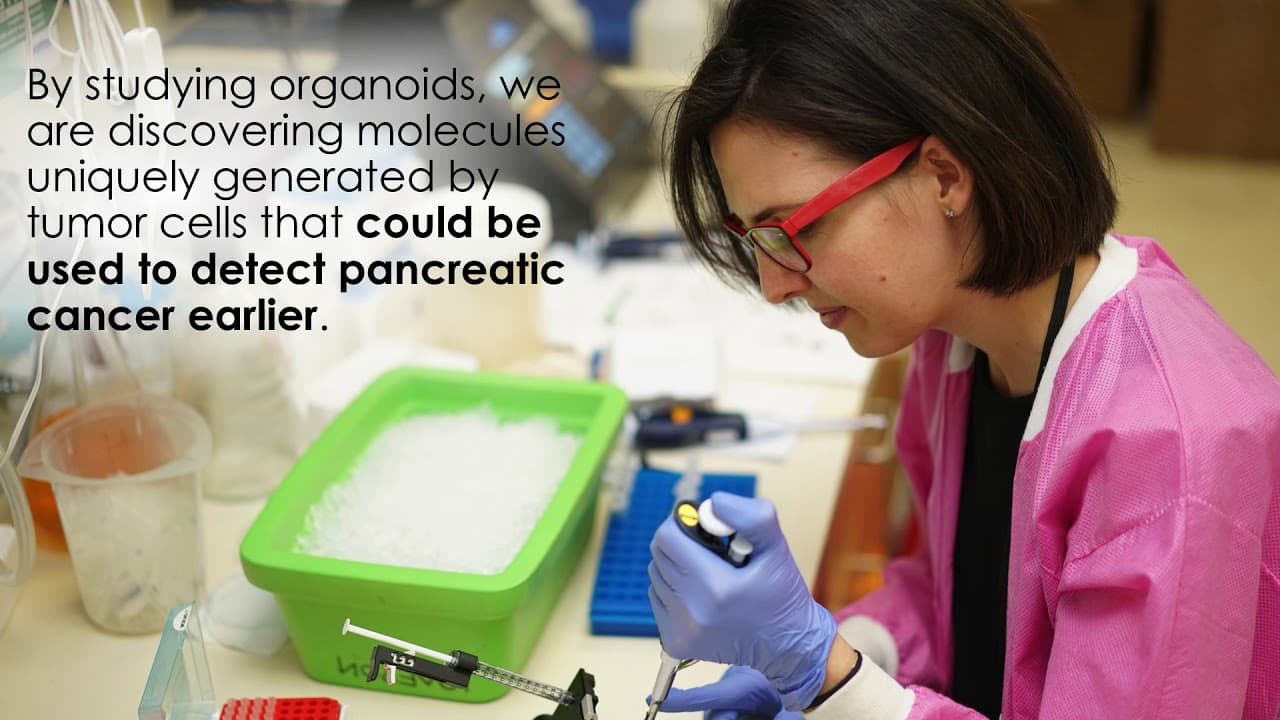
Organoids provide a groundbreaking method to study pancreatic cancer by mimicking the 3D structure of tumors, allowing for more accurate research. This approach enables researchers to compare cancerous and healthy cells, identify unique cancer markers, and test potential treatments, offering hope for earlier diagnosis and personalized medicine.
Transcript
thank you for the introduction as you heard I'm in the Tuveson lab we're located in the Quick building which is right next door and I wanted to thank everybody for coming out today to see what we do here at Cold Spring Harbor Laboratory in the Tuveson lab we're uniquely focused on studying pancreatic cancer so that's what I'm going to talk to you a... Read More
Key Insights
- Pancreatic cancer is one of the deadliest cancers, with a low survival rate, especially if diagnosed late.
- The pancreas has two main functions: releasing hormones like insulin and producing digestive enzymes.
- Pancreatic ductal adenocarcinoma is the most common form of pancreatic cancer, originating in the ducts of the pancreas.
- Organoids are 3D cultures of cancer cells that better replicate the tumor environment compared to traditional 2D cultures.
- Organoids allow for side-by-side comparisons of healthy and cancerous pancreatic cells to identify cancer-specific markers.
- Stromal cells, recruited by cancer cells, play a significant role in tumor development and are a target for new treatments.
- Patient-derived organoids offer a platform for personalized medicine, enabling drug testing specific to individual tumors.
- A high-throughput screening method using organoids and a repurposed inkjet printer technology allows rapid testing of multiple drugs.
Install to Summarize YouTube Videos and Get Transcripts
Explore YouTube Video Summarizer or Get YouTube Transcript Extractor
Questions & Answers
Q: How do organoids improve pancreatic cancer research?
Organoids enhance pancreatic cancer research by providing a three-dimensional culture system that closely mimics the tumor environment in the human body. This allows researchers to study the complex interactions between cancer cells and their surroundings, identify unique cancer markers, and test potential treatments more effectively than traditional two-dimensional cultures.
Q: What makes pancreatic cancer so deadly?
Pancreatic cancer is particularly deadly due to its aggressive nature and the difficulty in diagnosing it early. Often, by the time symptoms appear and the cancer is detected, it has already spread beyond the pancreas. This late diagnosis significantly reduces survival rates, making early detection and effective treatment strategies critical.
Q: What role do stromal cells play in pancreatic tumors?
Stromal cells are non-cancerous cells recruited by pancreatic tumors to support their growth and survival. They contribute to the tumor microenvironment by interacting with cancer cells, providing structural support, and facilitating tumor progression. Understanding these interactions is crucial for developing therapies that target the supportive role of stromal cells in cancer.
Q: How does the organoid system facilitate personalized medicine?
The organoid system enables personalized medicine by allowing researchers to create patient-specific cancer models. Tumor samples from patients are used to grow organoids, which are then tested against various drugs to determine the most effective treatment options. This approach tailors therapy to the individual's cancer profile, potentially improving treatment outcomes.
Q: What are the functions of the pancreas?
The pancreas serves two primary functions: it releases hormones like insulin that regulate blood sugar levels, and it produces digestive enzymes that aid in breaking down food in the small intestine. These functions are crucial for maintaining metabolic balance and efficient digestion, but dysfunctions can lead to conditions like diabetes and contribute to cancer development.
Q: What is pancreatic ductal adenocarcinoma?
Pancreatic ductal adenocarcinoma (PDAC) is the most common type of pancreatic cancer, originating in the ducts of the pancreas. It is characterized by its aggressive growth and tendency to spread quickly, making it challenging to treat. PDAC's high lethality underscores the importance of research focused on early detection and effective therapies.
Q: How do organoids help in drug screening?
Organoids assist in drug screening by providing a platform for high-throughput testing of multiple drugs on patient-derived cancer models. Using advanced technology, researchers can test different drugs on organoids in parallel, quickly identifying which treatments are most effective against a specific patient's tumor, thus informing personalized treatment strategies.
Q: Why is early detection of pancreatic cancer important?
Early detection of pancreatic cancer is crucial because it significantly improves treatment outcomes. When diagnosed early, treatments are more likely to be successful, and patients have a higher chance of survival. Early detection allows for surgical intervention and targeted therapies before the cancer spreads, which is key to improving prognosis in this aggressive disease.
Summary & Key Takeaways
-
Organoids offer a more realistic model for studying pancreatic cancer by replicating the tumor's 3D structure. This innovation allows researchers to identify unique cancer markers and test new treatments more effectively than traditional methods. By comparing healthy and cancerous cells, scientists aim to develop early diagnostic tools and personalized therapies.
-
The pancreas plays a critical role in regulating blood sugar and digestion, but pancreatic cancer, particularly ductal adenocarcinoma, is highly lethal. The Tuveson lab focuses on early diagnosis and effective treatments. Organoids, developed from patient cancer cells, enable detailed study of tumor biology and drug response.
-
Stromal cells, recruited by pancreatic tumors, contribute to cancer progression. Understanding their interaction with cancer cells is crucial for developing new treatments. Patient-derived organoids facilitate personalized medicine by allowing for high-throughput drug screening, potentially guiding tailored treatment strategies for individual patients.
Read in Other Languages (beta)
Share This Summary 📚
Summarize YouTube Videos and Get Video Transcripts with 1-Click
Try YouTube Summary with ChatGPT & Claude or YouTube Transcript Generator
Explore More Summaries from Cold Spring Harbor Laboratory 📚



Summarize YouTube Videos and Get Video Transcripts with 1-Click
Try YouTube Summary with ChatGPT & Claude or YouTube Transcript Generator