Napoleon's missing hand, explained
TL;DR
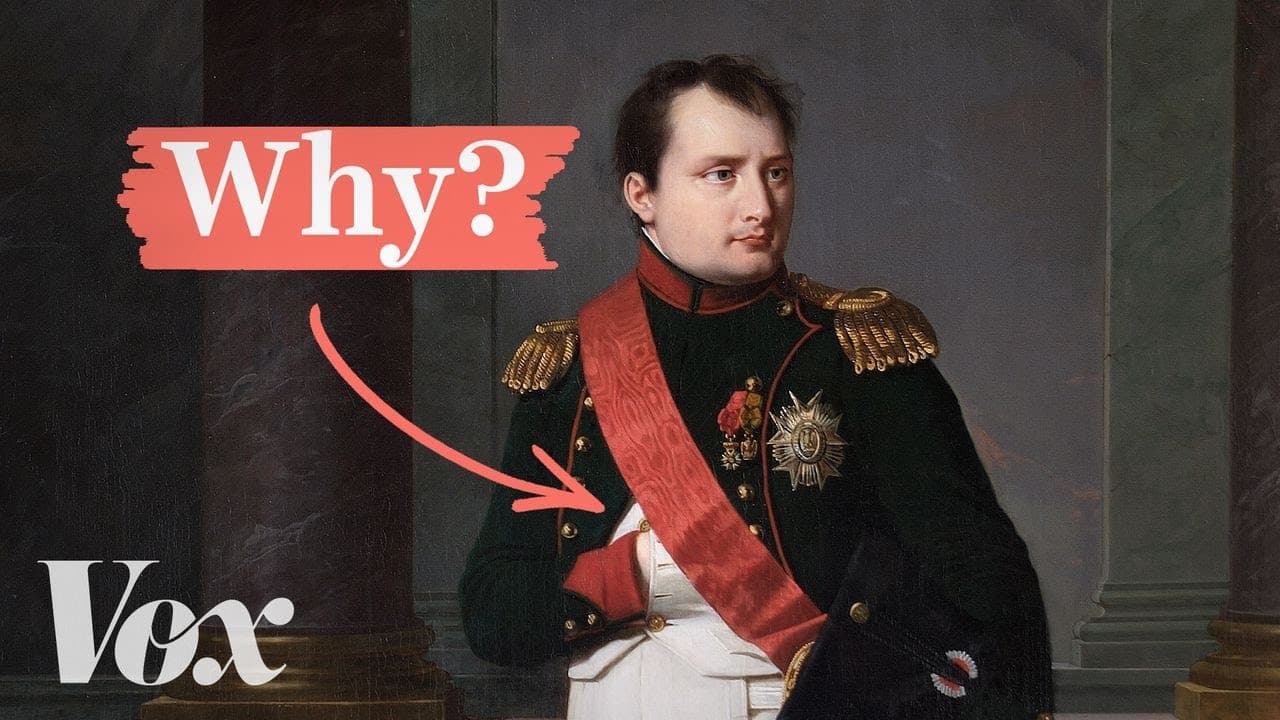
Napoleon's hand-in-coat pose signified gentlemanly restraint, rooted in historical portraiture clichés.
Transcript
Okay I read this book back in grade school. The title says it all: “Dear Napoleon, I Know you’re dead, but…” It’s about a kid who writes letters to Napoleon Bonaparte, who is, of course, dead. The cover design is classic ‘90s chapter book, and shows something the main character is obsessed with. This weird thing Napoleon seemed to always do: Pose w... Read More
Key Insights
- Napoleon Bonaparte is often depicted with one hand concealed inside his coat, a pose associated with nobility and gentlemanly restraint.
- The pose's origins trace back to Ancient Greece, where it was considered proper public speaking etiquette by the orator Aeschines.
- The gesture became a popular portraiture cliché in the mid-1700s, symbolizing modesty and boldness, and was adopted by many historical figures.
- Napoleon's use of the pose was a form of propaganda, portraying him as a modest, hardworking leader despite his tyrannical reputation outside France.
- Jacques-Louis David's 1812 painting of Napoleon in his study is a significant example of this propaganda, emphasizing Napoleon's dedication and leadership.
- The hand-in-coat pose continued into early photography, providing a dignified look and helping subjects remain still during long exposure times.
- The pose's association with Napoleon has led to its frequent appearance in caricatures and impressions, often focusing on his perceived vanity and short stature.
- The legacy of the pose extends beyond Napoleon, appearing in portraits of figures like Karl Marx and soldiers in the American Civil War.
Install to Summarize YouTube Videos and Get Transcripts
Explore YouTube Video Summarizer or Get YouTube Transcript Extractor
Questions & Answers
Q: Why is Napoleon often depicted with his hand in his coat?
Napoleon is frequently depicted with his hand in his coat as it was a common portraiture cliché symbolizing gentlemanly restraint and nobility. The gesture's origins trace back to Ancient Greece, and it became a popular way to portray leaders and influential figures, emphasizing modesty and boldness.
Q: What is the historical significance of the hand-in-coat pose?
The hand-in-coat pose has historical significance as it symbolizes gentlemanly restraint and nobility, originating from Ancient Greece. It was considered proper etiquette for public speaking and became a popular portraiture cliché in the 18th century, used to visually align individuals with respectable and noble qualities.
Q: How did Jacques-Louis David's painting contribute to Napoleon's image?
Jacques-Louis David's 1812 painting of Napoleon in his study significantly contributed to Napoleon's image by portraying him as a modest, hardworking leader. The painting used the hand-in-coat gesture as propaganda, emphasizing Napoleon's dedication and leadership, contrasting with his tyrannical reputation outside France.
Q: Why did the hand-in-coat pose remain popular in early photography?
The hand-in-coat pose remained popular in early photography because it provided a dignified and restrained appearance, aligning with its historical associations with nobility. Additionally, the pose helped subjects remain still during the long exposure times required by early photography, preventing blurred images.
Q: What misconceptions exist about Napoleon's hand-in-coat gesture?
Misconceptions about Napoleon's hand-in-coat gesture include beliefs that it was due to a physical deformity or chronic stomach pain. In reality, the gesture was a portraiture cliché used to convey gentlemanly restraint and nobility, unrelated to any health issues Napoleon may have had.
Q: How did the hand-in-coat gesture affect Napoleon's legacy?
The hand-in-coat gesture affected Napoleon's legacy by becoming a defining element of his public image, symbolizing leadership and restraint. It contributed to the perception of Napoleon as a dignified and powerful figure, despite his controversial reputation, and continued to influence portrayals of him long after his death.
Q: What role did caricatures play in Napoleon's depiction?
Caricatures played a significant role in Napoleon's depiction, often exaggerating his physical features and perceived vanity. They frequently included the hand-in-coat gesture, highlighting its association with Napoleon and using it to mock his ambitions and personality, contrasting with the dignified image portrayed in official portraits.
Q: Why is the hand-in-coat pose considered a portraiture cliché?
The hand-in-coat pose is considered a portraiture cliché because it was widely used in the 18th and 19th centuries to signify nobility and restraint. Its frequent use made it a standardized element in portraits, and it became associated with influential figures like Napoleon, further cementing its status as a cliché.
Summary & Key Takeaways
-
Napoleon Bonaparte is frequently depicted with one hand concealed inside his coat, a gesture rooted in historical portraiture clichés. This pose, signifying gentlemanly restraint and nobility, dates back to Ancient Greece and was popularized in the 18th century.
-
Jacques-Louis David's 1812 painting of Napoleon in his study used this gesture as propaganda, portraying Napoleon as a modest and hardworking leader. Despite his tyrannical reputation outside France, the pose became a common way to depict him.
-
The hand-in-coat gesture persisted into early photography, offering a dignified look and aiding in maintaining stillness during long exposures. Its association with Napoleon has made it a staple in caricatures and impressions of the historical figure.
Read in Other Languages (beta)
Share This Summary 📚
Summarize YouTube Videos and Get Video Transcripts with 1-Click
Try YouTube Summary with ChatGPT & Claude or YouTube Transcript Generator
Explore More Summaries from Vox 📚


Summarize YouTube Videos and Get Video Transcripts with 1-Click
Try YouTube Summary with ChatGPT & Claude or YouTube Transcript Generator