What Is Physical Intelligence and Its Future Impact?
TL;DR
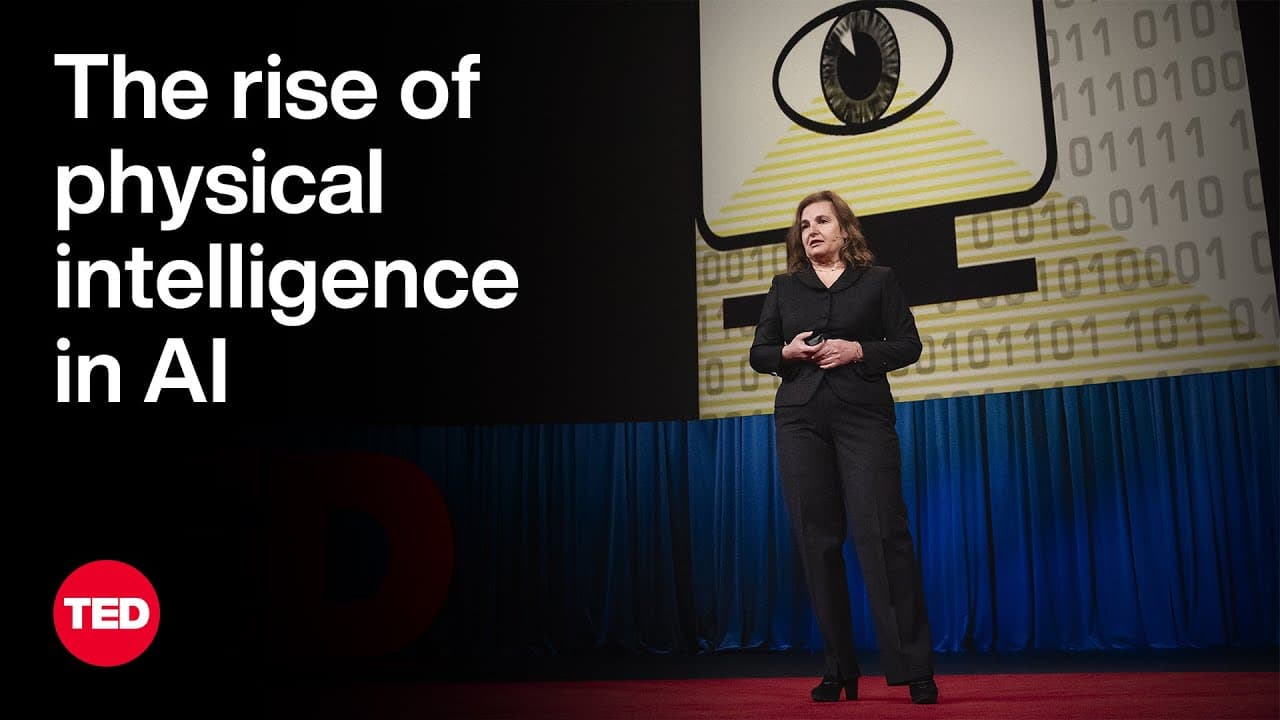
Physical intelligence is the merging of AI with robotics, allowing machines to learn from data and perform real-world tasks more effectively. This innovation relies on 'liquid networks,' which use fewer but more complex computational units, improving adaptability and understanding. The potential applications include smarter personal assistants and new prototypes created from text or images, revolutionizing how we interact with technology.
Transcript
When I was a student studying robotics, a group of us decided to make a present for our professor's birthday. We wanted to program our robot to cut a slice of cake for him. We pulled an all-nighter writing the software, and the next day, disaster. We programmed this robot to cut a soft, round sponge cake, but we didn't coordinate well. And instead,... Read More
Key Insights
- 🌍 The physical world is more challenging than the digital world, requiring the merging of AI and robotics to create physical intelligence.
- 😑 Physical intelligence allows AI to operate in the real world and make pre-programmed robots perform tasks more efficiently.
- 👶 Liquid networks offer a new approach to AI that is more understandable, adaptable, and computationally efficient.
- 🎰 Physical intelligence enables the transformation of text and images into functional machines and allows machines to learn from humans.
- 🤖 The opportunities and benefits of physical intelligence are vast, including personal assistants, bespoke machines, and robots that can enhance our lives.
Install to Summarize YouTube Videos and Get Transcripts
Explore YouTube Video Summarizer or Get YouTube Transcript Extractor
Questions & Answers
Q: What is physical intelligence?
Physical intelligence is when AI's digital intelligence is used to make real-world machines smarter by combining it with the mechanical abilities of robots.
Q: How is physical intelligence different from traditional AI?
Physical intelligence allows AI to move beyond the confines of the computer screen and interact in the physical world, while traditional AI remains confined to computers.
Q: How do liquid networks improve AI solutions?
Liquid networks, inspired by the neural structure of the worm C. elegans, use differential equations and wired neuron connections to create more compact, understandable, and adaptable AI models.
Q: How does physical intelligence enable faster innovation cycles?
By using text and image-to-robot approaches, the time and resources needed to prototype and test new products are reduced, speeding up the innovation process.
Summary & Key Takeaways
-
Robotics students attempt to program a robot to cut a sponge cake but fail and learn that the physical world is more demanding than the digital world.
-
MIT's Computer Science and AI lab is fusing AI with robotics to create physical intelligence.
-
Physical intelligence allows AI to make pre-programmed robots perform tasks better by using knowledge from data.
Read in Other Languages (beta)
Share This Summary 📚
Summarize YouTube Videos and Get Video Transcripts with 1-Click
Try YouTube Summary with ChatGPT & Claude or YouTube Transcript Generator
Explore More Summaries from TED 📚





Summarize YouTube Videos and Get Video Transcripts with 1-Click
Try YouTube Summary with ChatGPT & Claude or YouTube Transcript Generator