What Are JavaScript Promises and How Do They Work?
TL;DR
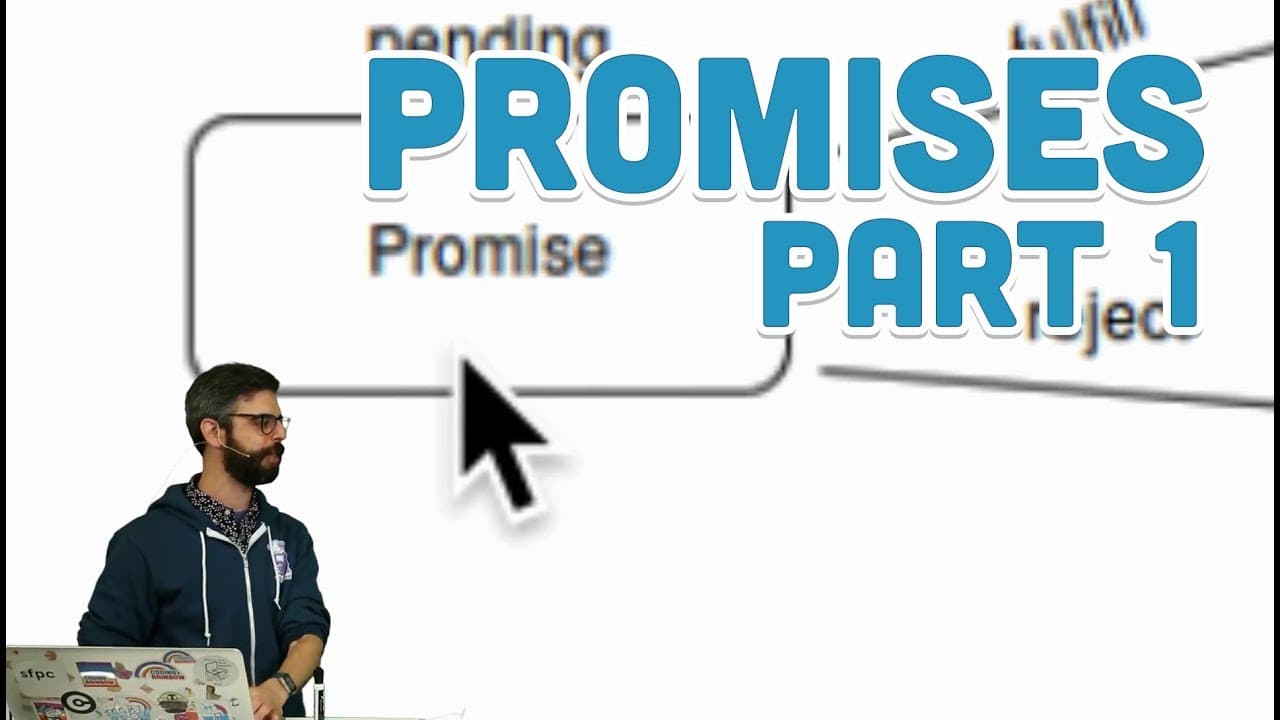
JavaScript promises are objects that simplify asynchronous code management by allowing you to handle multiple tasks in sequence without falling into callback hell. They enable easier error handling and cleaner code organization through methods like then for successful operations and catch for errors, making them essential for efficiently managing API requests and responses.
Transcript
hello I have a promise to make sure by the end of this video I am hopeful that you and I together will understand what the how this promises thing is in JavaScript because me I'm a person who programs in JavaScript with callbacks but there has been for quite a while something called a promise in JavaScript and it used to be something that was part ... Read More
Key Insights
- 👨💻 JavaScript Promises simplify asynchronous code execution, making it easier to handle multiple asynchronous tasks.
- 👻 Promises allow for error handling, ensuring robustness in asynchronous operations.
- 👨💻 Chaining promises enables sequential execution of tasks, improving code organization and readability.
- 🆘 The
thenandcatchmethods in Promises help manage successful and failed asynchronous operations efficiently. - 🍵 JavaScript Promises are essential for handling API requests, managing data retrieval, and processing responses effectively.
- 🖐️ Promises play a crucial role in modern JavaScript development, providing a cleaner approach to asynchronous programming.
- 🤝 Using Promises can significantly enhance the performance and readability of JavaScript code, especially when dealing with complex asynchronous logic.
Install to Summarize YouTube Videos and Get Transcripts
Explore YouTube Video Summarizer or Get YouTube Transcript Extractor
Questions & Answers
Q: What is a JavaScript Promise and why is it important?
A JavaScript Promise is an object representing the eventual completion or failure of an asynchronous operation. It helps manage asynchronous tasks, avoiding callback hell and improving code readability.
Q: How do JavaScript Promises simplify asynchronous code execution?
JavaScript Promises allow you to chain asynchronous calls, ensuring sequential execution of tasks. This avoids callback hell, making code more readable and maintainable.
Q: How can JavaScript Promises handle errors in asynchronous operations?
Promises have built-in error handling through the catch method, which allows you to catch and handle errors that occur during asynchronous operations, improving the overall robustness of your code.
Q: What are the benefits of using JavaScript Promises over traditional callback functions?
JavaScript Promises provide a cleaner and more manageable way to handle asynchronous code by avoiding nested callback functions and callback hell. Promises make code more readable, maintainable, and error-tolerant.
Summary & Key Takeaways
-
JavaScript Promises are native to modern JavaScript, simplifying asynchronous code execution.
-
Promises help manage asynchronous tasks sequentially, avoiding callback hell or nested callback functions.
-
Promises can handle multiple API requests efficiently, allowing error handling and sequential execution.
Read in Other Languages (beta)
Share This Summary 📚
Summarize YouTube Videos and Get Video Transcripts with 1-Click
Try YouTube Summary with ChatGPT & Claude or YouTube Transcript Generator
Explore More Summaries from The Coding Train 📚





Summarize YouTube Videos and Get Video Transcripts with 1-Click
Try YouTube Summary with ChatGPT & Claude or YouTube Transcript Generator