Meet the designer cats with wild blood
TL;DR
Breeders create domestic cats resembling wild counterparts through selective breeding.
Transcript
This story is about small cats... ...that look like big cats... and the people that made that possible. But before we get there, let’s back up a bit. We went to an event at the Westminster Dog Show and this year cats were invited. So we went to film them, and we weren’t the only ones. In the middle of a crowd there was a man, holding his pet cat ca... Read More
Key Insights
- Anthony Hutcherson's dream of owning a pet leopard led him to breed domestic cats resembling wild cats, inspired by outdated library books.
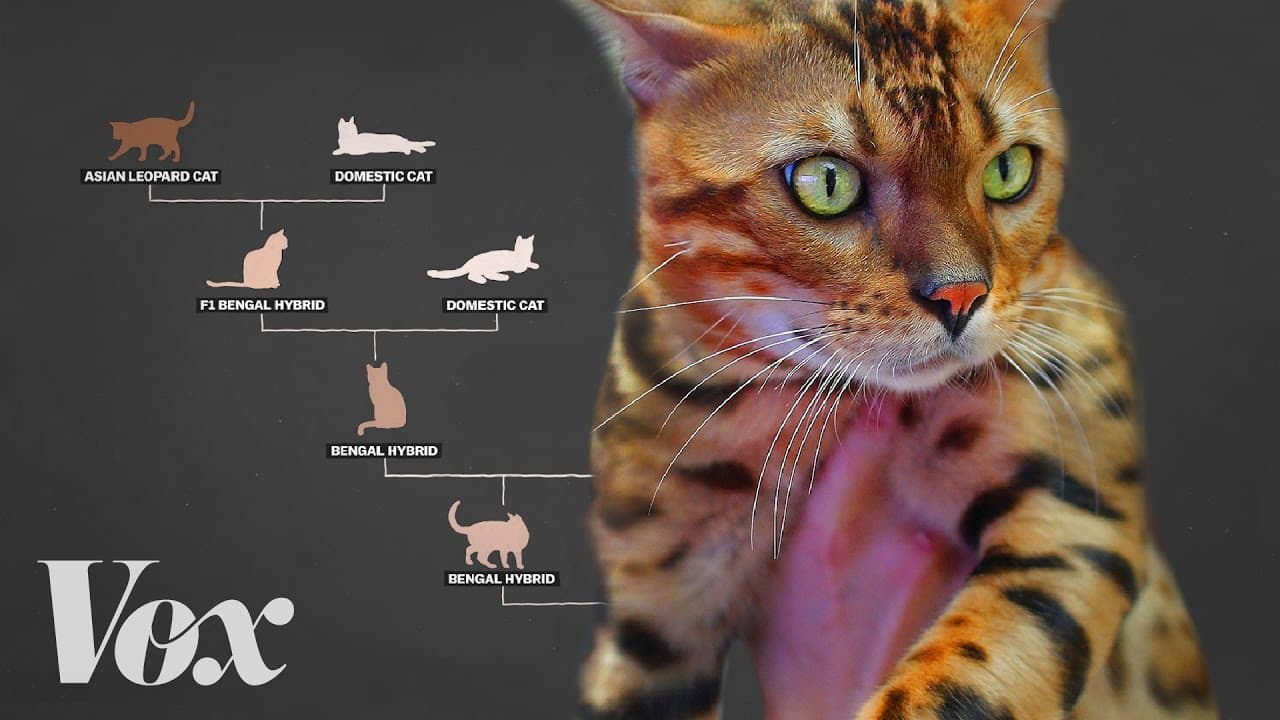
- Jean Mill, the first American Bengal breeder, developed the breed by crossing domestic cats with Asian leopard cats, creating a hybrid with wild markings.
- Selective breeding involves choosing specific traits to develop in cats, like rosettes, while avoiding inbreeding through a diverse gene pool.
- Bengals, recognized by The International Cat Association in 1986, require four generations from the Asian leopard cat to be considered domestic.
- Savannah cats, a newer breed, result from crossing domestic cats with servals, and their legality varies by location due to hybrid status.
- Toygers, unlike Bengals and Savannahs, are not hybrids but are selectively bred domestic cats to resemble tigers, initiated by Judy Sugden.
- Breeding programs face ethical considerations regarding the number of cats bred versus rescue cats needing homes, but breeders justify their work by the unique traits developed.
- The cat breeding community is small, with breeders like Anthony and Judy inspired by their mentors, continuing to refine breeds to achieve their visions of wild-like domestic cats.
Install to Summarize YouTube Videos and Get Transcripts
Explore YouTube Video Summarizer or Get YouTube Transcript Extractor
Questions & Answers
Q: What inspired Anthony Hutcherson to start breeding Bengals?
Anthony Hutcherson was inspired by his childhood dream of owning a pet leopard or ocelot, fueled by outdated library books that made exotic pet ownership seem feasible. When he learned about Jean Mill's work with Bengals, he saw an opportunity to create domestic cats that looked like wild cats.
Q: How did Jean Mill contribute to the development of Bengal cats?
Jean Mill was the first American breeder to create Bengals by crossing domestic cats with Asian leopard cats, producing a hybrid with wild features. Her work began with an F1 kitten from Dr. Willard Centerwall and involved selective breeding to establish the Bengal breed recognized in 1986.
Q: What challenges do breeders face in maintaining genetic diversity?
Breeders face the challenge of avoiding inbreeding while developing specific traits. This requires a large gene pool and careful selection of breeding partners. Breeders often exchange cats at shows to introduce new traits and ensure genetic diversity, preventing health issues associated with inbreeding.
Q: Why are Savannah cats subject to legal restrictions?
Savannah cats, hybrids of domestic cats and servals, face legal restrictions due to their wild ancestry. Earlier generations, like F1 Savannahs, can be expensive and are often illegal in certain areas, such as New York City, due to concerns about their behavior and safety compared to fully domestic cats.
Q: How are Toygers different from Bengals and Savannahs?
Toygers, unlike Bengals and Savannahs, are not hybrids. Developed by Judy Sugden, they are the result of selective breeding among domestic cats to achieve a tiger-like appearance. This breed showcases the potential of selective breeding to create wild-looking traits without crossing with wild species.
Q: What ethical considerations do breeders face?
Breeders face ethical considerations related to the number of cats bred versus the availability of rescue cats needing homes. While critics argue against breeding more cats, breeders justify their work by highlighting the unique traits and characteristics developed in their breeds, contributing to biodiversity.
Q: What role does selective breeding play in developing these cat breeds?
Selective breeding involves choosing specific traits to enhance in cats, such as wild markings or coat patterns. Breeders like Anthony and Judy carefully select breeding partners to achieve desired appearances while avoiding health issues from inbreeding, leading to the development of distinctive breeds like Bengals and Toygers.
Q: How did Judy Sugden's background influence her work with Toygers?
Judy Sugden, daughter of Jean Mill, was influenced by her mother's pioneering work with Bengals. Inspired by the success of creating a leopard-like domestic cat, Judy pursued her vision of developing Toygers, aiming to create a domestic cat with tiger-like features through selective breeding, reflecting her family's legacy in cat breeding.
Summary & Key Takeaways
-
Anthony Hutcherson's passion for owning a wild-like pet cat led him to breed Bengals, inspired by outdated books and Jean Mill's pioneering work. Selective breeding and hybridization with Asian leopard cats created this breed, recognized for its wild appearance.
-
Savannah cats, developed by crossing domestic cats with servals, are a newer hybrid breed with legal restrictions in some areas. Breeders like Anthony and Judy Sugden selectively breed these cats, aiming for specific wild-like traits while avoiding inbreeding.
-
Judy Sugden, inspired by her mother Jean Mill, developed Toygers by selectively breeding domestic cats to resemble tigers. This non-hybrid breed showcases the dedication and vision of breeders who aim to create domestic cats with wild aesthetics.
Read in Other Languages (beta)
Share This Summary 📚
Summarize YouTube Videos and Get Video Transcripts with 1-Click
Try YouTube Summary with ChatGPT & Claude or YouTube Transcript Generator
Explore More Summaries from Vox 📚


Summarize YouTube Videos and Get Video Transcripts with 1-Click
Try YouTube Summary with ChatGPT & Claude or YouTube Transcript Generator