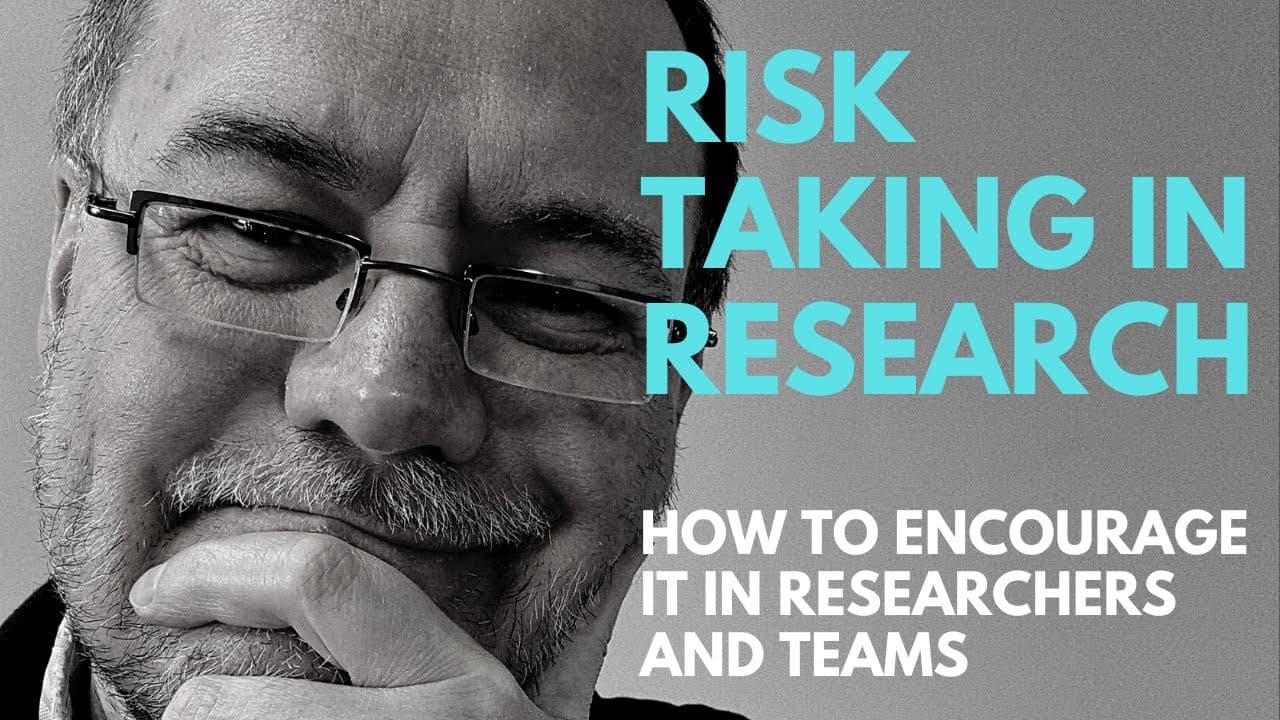
Risk-taking in research: how can we encourage it in researchers and teams? #phdlife #postdoc #phd
TL;DR
Taking greater risks in research is crucial for innovation, but teams need to create an environment that values and supports failure as part of the process.
Transcript
how to encourage risk taking in research meaning how can you take greater risks and how can we as teams encourage people to take greater risks when they plan research now in science and research we're typically terrified of failure and of course high risk means by necessity and by definition the possibility of failure We Fear failure of course for ... Read More
Key Insights
- 😨 Failure is often feared in research due to the waste of time, resources, and the potential for negative repercussions.
- 💦 There are two types of failure in research—routine work mistakes and failures resulting from attempting something new.
- 🏃 Universities can encourage risk-taking by incorporating the possibility of failure into lab exercises.
- 😤 Teams should value and share failures to create a culture that supports risk-taking.
- 📽️ Side projects offer researchers the opportunity to pursue high-risk questions without jeopardizing main projects.
- 🍳 Creativity can be enhanced by creating breaks and integrating downtime into researchers' routines.
- ✋ High-risk projects are essential for driving scientific advancement and pushing the boundaries of knowledge.
Install to Summarize YouTube Videos and Get Transcripts
Explore YouTube Video Summarizer or Get YouTube Transcript Extractor
Questions & Answers
Q: How can teams encourage risk-taking in research?
Teams can create an environment that values and supports failure by acknowledging and sharing unsuccessful attempts. They should change the focus of lab meetings to include failures as part of the learning process.
Q: Why are high-risk projects important in research?
High-risk projects are crucial for driving innovation and pushing the boundaries of knowledge. They have the potential to bring about significant advancements in science.
Q: How can universities promote risk-taking in research?
Universities can introduce the concept of productive failure by allowing students to explore new and untested ideas during lab exercises. This helps students understand that failure is a normal part of the scientific process and should be embraced.
Q: What are some benefits of side projects in research?
Side projects provide researchers with an opportunity to explore high-risk questions without impeding progress on main projects. These projects can foster creativity and allow researchers to think outside the box.
Summary & Key Takeaways
-
In research, failure can be divided into routine work mistakes and failures that occur when attempting something fundamentally new.
-
To encourage risk-taking, universities should introduce the concept of productive failure during lab exercises.
-
Teams should value and share unsuccessful attempts, changing the focus of lab meetings to include failures and learning from them.
-
Side projects can provide space for exploring high-risk questions without impeding progress on main projects.
Read in Other Languages (beta)
Share This Summary 📚
Summarize YouTube Videos and Get Video Transcripts with 1-Click
Try YouTube Summary with ChatGPT & Claude or YouTube Transcript Generator
Explore More Summaries from Life in academia 📚






Summarize YouTube Videos and Get Video Transcripts with 1-Click
Try YouTube Summary with ChatGPT & Claude or YouTube Transcript Generator