Why Use AWS Lambda for Serverless Application Deployment?
TL;DR
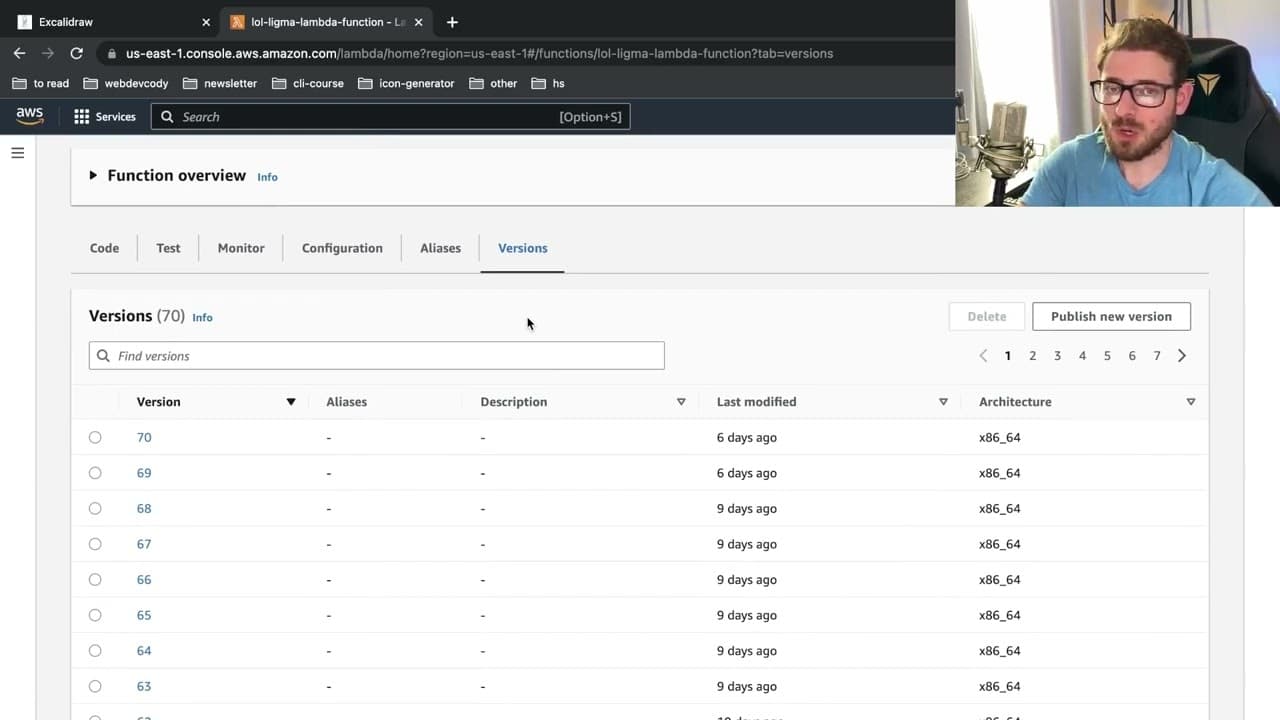
AWS Lambda allows for serverless application deployment, enabling functions to run in isolated environments that improve resilience against individual failures. It provides automatic scaling, built-in logging, and monitoring, significantly reducing operational overhead. Though there are some limitations on package sizes, using Lambda generally offers cost-effective solutions, charging only for actual usage.
Transcript
I wound up having a little talking video about like why I really like using serverless and Lambda functions we've been using Lambda at work for the past like four or five years to deploy basically our entire application right all the apis deployed with lambdas all of our like asynchronous functions that do long running executions running lambdas an... Read More
Key Insights
- ♻️ Lambda functions execute in isolated environments, improving resilience by minimizing the impact of individual function failures on overall application availability.
- 🧑🦽 The automatic scaling capabilities of Lambda handle varying traffic loads without requiring manual intervention from developers.
- 🥳 Built-in logging and monitoring features streamline the process of tracking application performance and identifying issues, reducing reliance on third-party solutions.
- 👻 Developers can manage Lambda configurations, such as memory allocation and timeout settings, allowing for optimization according to application needs.
- 😒 While the functionality of AWS Lambda is robust, limitations on package sizes can restrict the use of certain libraries, necessitating workarounds.
- 🥶 Monitoring cold starts is essential for performance-critical applications, although they may not significantly impact users in high-traffic scenarios.
- 🛟 AWS Lambda's pricing structure is favorable for applications with variable workloads, as it avoids costs associated with idle server resources.
Install to Summarize YouTube Videos and Get Transcripts
Explore YouTube Video Summarizer or Get YouTube Transcript Extractor
Questions & Answers
Q: What are the primary advantages of using AWS Lambda for deployment?
AWS Lambda offers numerous benefits, including built-in scaling that allows automatic adjustment to traffic demands, isolation for each function execution, which minimizes the impact on other requests during errors, and automatic monitoring and logging, reducing the operational overhead on developers when compared to traditional server setups.
Q: How does Lambda handle concurrent requests effectively?
When multiple requests hit a Lambda function simultaneously, each request is processed in its own isolated environment. This means that if one execution encounters an error, it will not affect the other running instances, thus enhancing the overall resilience of the application and ensuring that users do not experience service disruptions.
Q: What challenges might developers face when using AWS Lambda?
Developers may encounter issues like cold starts, where the initial execution of a Lambda function takes longer due to the time needed to spin up resources. Additionally, there are limitations on package size (250 MB), which can restrict the use of certain libraries or frameworks that require more resources, necessitating a fallback to alternative deployment strategies.
Q: Can AWS Lambda integrate with other AWS services efficiently?
Yes, AWS Lambda seamlessly integrates with other AWS services, like API Gateway for REST APIs, S3 for storage, and CloudWatch for logging and metrics. This integration allows developers to build robust applications that leverage the full suite of AWS capabilities without requiring extensive custom configurations.
Q: How does cost management work with AWS Lambda?
AWS Lambda operates on a pay-per-invocation pricing model, meaning costs are incurred only when the function is called. This typically results in lower long-term expenses compared to maintaining dedicated servers. However, developers need to be mindful of usage patterns that may lead to unexpectedly high costs, like frequent invocation during automated tasks.
Q: What are "cold starts" in the context of AWS Lambda, and how do they impact performance?
Cold starts occur when a Lambda function is invoked after a period of inactivity, requiring AWS to initialize new execution resources. This can lead to latency, typically several seconds. For high-traffic applications, this delay is often negligible, but it can present performance issues for latency-sensitive use cases.
Q: How can developers monitor the performance of their Lambda functions?
AWS provides built-in monitoring tools such as CloudWatch, which offers logs, metrics on execution duration, error rates, and overall function performance. Developers can access detailed insights directly from the AWS Management Console, enabling them to troubleshoot and optimize their Lambda functions effectively.
Summary & Key Takeaways
-
The speaker discusses the advantages of using AWS Lambda for deploying applications, specifically emphasizing its ability to handle multiple requests in isolation without server crashes affecting all users.
-
Traditional deployment methods for web servers, like Express, require extensive setup for monitoring, maintaining uptime, and scaling, which can be burdensome for developers.
-
Lambda functions offer built-in scaling, logging, and monitoring features, reducing operational overhead and providing a cost-effective solution by charging based on usage.
Read in Other Languages (beta)
Share This Summary 📚
Summarize YouTube Videos and Get Video Transcripts with 1-Click
Try YouTube Summary with ChatGPT & Claude or YouTube Transcript Generator
Explore More Summaries from Web Dev Cody 📚

Summarize YouTube Videos and Get Video Transcripts with 1-Click
Try YouTube Summary with ChatGPT & Claude or YouTube Transcript Generator