How to read a document | The historian's toolkit | US History | Khan Academy
TL;DR
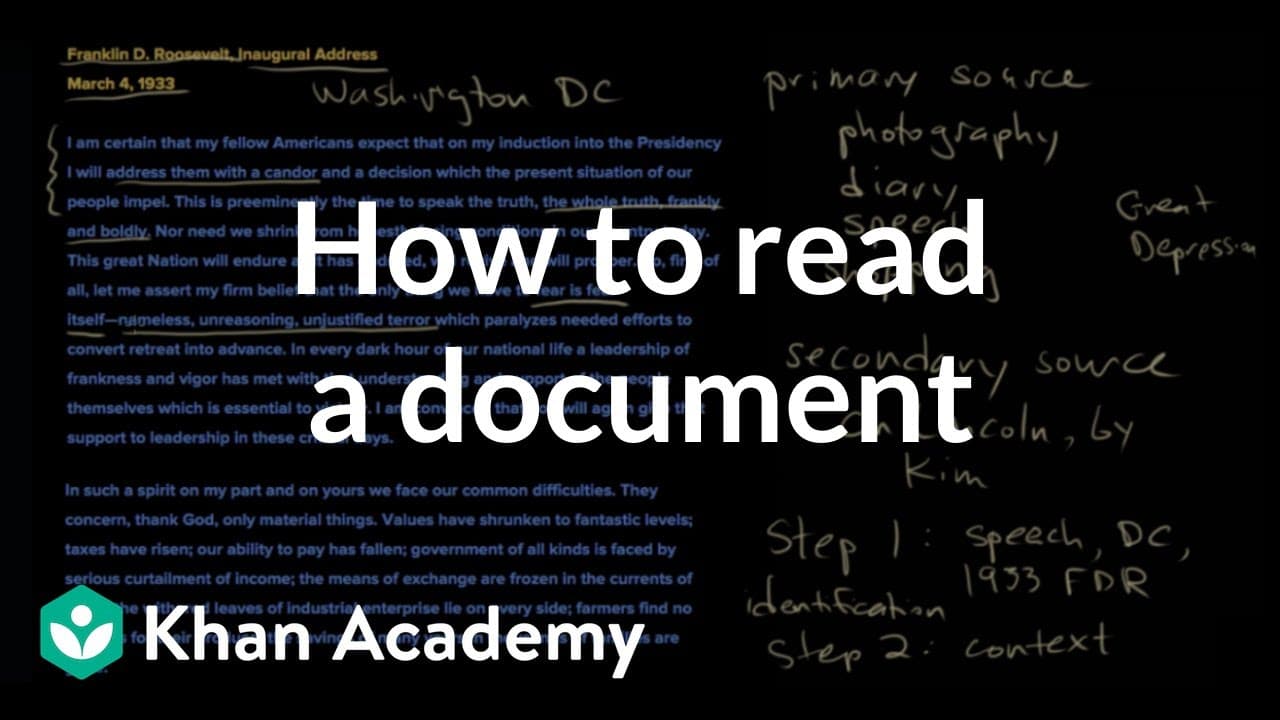
Franklin Delano Roosevelt's inauguration speech in 1933 addresses the Great Depression, urging Americans to face the truth and conquer their fears.
Transcript
- [Voiceover] Hello David. - [Voiceover] Hello Kim. - [Voiceover] So today what we're doing is taking a look at this speech by one of my favorite Presidents, Franklin Delano Roosevelt which he gave at his inauguration in 1933. And I think what's really important about looking at a speech like this is not only that we can learn to analyze this as a ... Read More
Key Insights
- ℹ️ Primary sources, such as Roosevelt's inaugural address, provide valuable insights into historical events by offering perspectives from those who experienced them.
- ℹ️ Understanding the difference between primary and secondary sources is crucial for accurate historical analysis.
- 😯 Roosevelt's inauguration speech in 1933 addressed the Great Depression by acknowledging the severity of the situation, emphasizing honesty, and instilling hope for recovery.
- 😨 His famous quote, "the only thing we have to fear is fear itself," encourages Americans to overcome their fears and work together to conquer the challenges they face.
Install to Summarize YouTube Videos and Get Transcripts
Explore YouTube Video Summarizer or Get YouTube Transcript Extractor
Questions & Answers
Q: What is the difference between a primary and a secondary source?
A primary source provides firsthand information from someone present during an event, while a secondary source offers interpretations or analysis of primary sources by historians or researchers.
Q: How does Roosevelt address the Great Depression in his speech?
Roosevelt acknowledges the grim reality of the depression and emphasizes the importance of addressing the challenges honestly. He urges Americans to work together and overcome fear to initiate positive change.
Q: What does Roosevelt mean by "the only thing we have to fear is fear itself"?
Roosevelt means that irrational fear and panic worsen the situation. He encourages Americans to maintain confidence and face the challenges with courage, emphasizing the need for collective action and positive mindset.
Q: How does Roosevelt propose to turn "retreat into advance"?
Roosevelt calls for national unity, vigor, and dedication to tackle the depression. He presents his New Deal policies as a means to address the problems honestly and initiate a recovery that would lead the nation towards progress.
Summary & Key Takeaways
-
FDR's inaugural speech, a primary source, was delivered in 1933 at the height of the Great Depression.
-
Roosevelt acknowledges the severity of the situation and emphasizes the need for honesty in addressing the country's challenges.
-
He instills hope by urging Americans to confront their fears and work together to overcome the crisis.
Read in Other Languages (beta)
Share This Summary 📚
Summarize YouTube Videos and Get Video Transcripts with 1-Click
Try YouTube Summary with ChatGPT & Claude or YouTube Transcript Generator
Explore More Summaries from Khan Academy 📚



Summarize YouTube Videos and Get Video Transcripts with 1-Click
Try YouTube Summary with ChatGPT & Claude or YouTube Transcript Generator