Evidence for evolution | Biology | Khan Academy
TL;DR
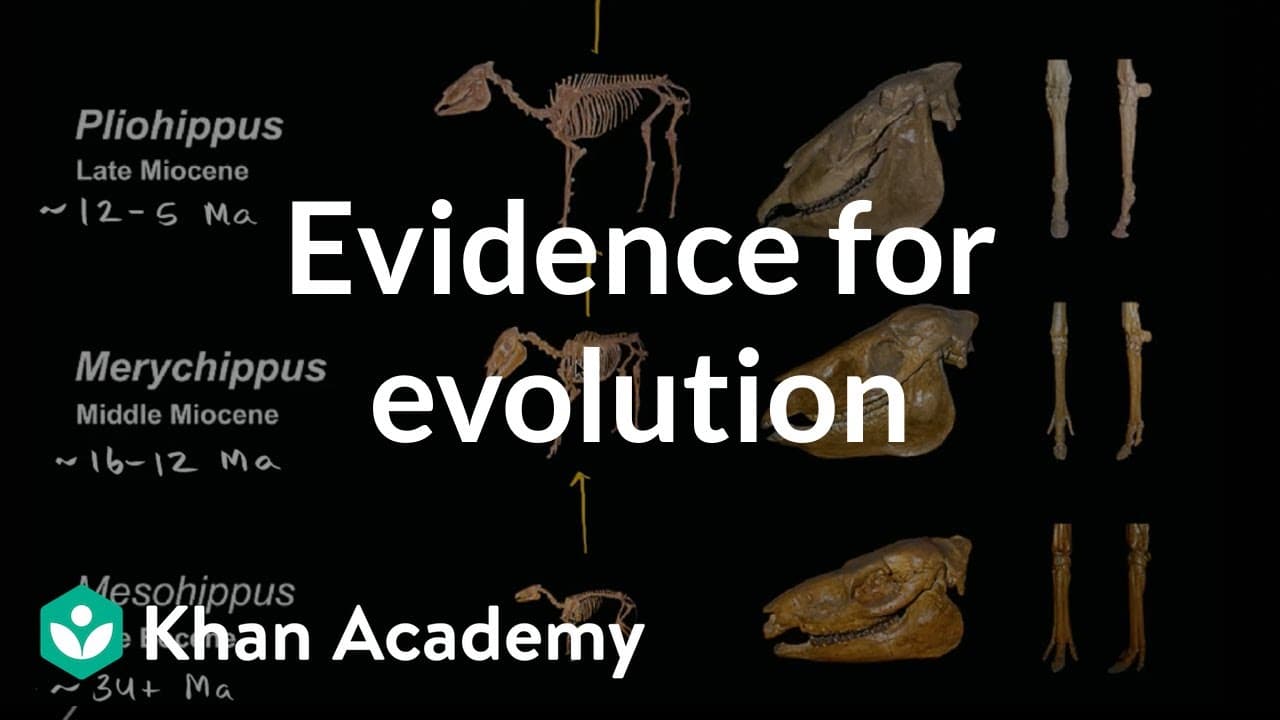
This video explores the evidence for evolution and natural selection, highlighting structural similarities, the fossil record, embryonic development, microbiological similarities, and direct observations.
Transcript
- [Voiceover] We've done many videos on Khan Academy on evolution and natural selection explaining them, but I thought I would do a video going a little bit more in depth in evidence for evolution and natural selection. And I started with this quote "Nothing in biology makes sense except in the light of evolution." This is by Theodus Dobzhansky, wh... Read More
Key Insights
- ❓ Understanding evolution and natural selection is crucial for comprehending biology.
- 💪 Homologous structures and embryonic development provide strong evidence for a shared ancestry among different species.
- ⌛ The fossil record showcases the gradual changes in species over time, supporting the theory of evolution.
- 🧬 Microbiological similarities, such as DNA and protein structures, further support the concept of common ancestry.
- 📁 Direct observations, like antibiotic resistance, demonstrate the ongoing process of natural selection on a human scale.
Install to Summarize YouTube Videos and Get Transcripts
Explore YouTube Video Summarizer or Get YouTube Transcript Extractor
Questions & Answers
Q: What is the significance of the quote "Nothing in biology makes sense except in the light of evolution"?
The quote emphasizes the importance of understanding and appreciating evidence for evolution, as it provides the foundation for all progress in biology.
Q: How does the concept of homologous structures support the theory of evolution?
Homologous structures, such as the bone structure of forelimbs in humans, dogs, birds, and whales, suggest a common ancestry and a gradual divergence of species.
Q: How does the fossil record provide evidence for evolution?
By studying various rock strata and dating their fossils, scientists can observe the gradual changes in species over time, supporting the theory of evolution.
Q: What is the significance of Haeckel's embryonic development drawings?
Despite some controversy surrounding Haeckel, his drawings show the striking similarities of embryonic development among various species, indicating a shared ancestry.
Q: How does microbiology contribute to the evidence for evolution?
The existence of DNA, protein similarities, and genetic commonalities among different life forms provide compelling evidence for evolution and common ancestry.
Q: How is direct evidence of natural selection observed?
Direct observations, such as the evolution of drug-resistant bacteria or the need for new flu vaccines each year, demonstrate the impact of natural selection on a human scale.
Summary & Key Takeaways
-
Evolution and natural selection are crucial for understanding biology and its progress.
-
Structural evidence, such as homologous structures, suggests a common ancestry among different species.
-
The fossil record provides strong evidence of gradual change over time.
-
Embryonic development shows similarities across different species, supporting the theory of evolution.
-
Microbiology reveals DNA and protein similarities among different life forms.
-
Direct observations of natural selection happening on a human scale, like antibiotic resistance, further support evolution.
Read in Other Languages (beta)
Share This Summary 📚
Summarize YouTube Videos and Get Video Transcripts with 1-Click
Try YouTube Summary with ChatGPT & Claude or YouTube Transcript Generator
Explore More Summaries from Khan Academy 📚



Summarize YouTube Videos and Get Video Transcripts with 1-Click
Try YouTube Summary with ChatGPT & Claude or YouTube Transcript Generator