What Is the Sunk Cost Fallacy Actually?
TL;DR
Sunk cost refers to past investments that cannot be recovered and should not guide future decisions. The sunk cost fallacy occurs when people justify continued investment due to prior costs instead of focusing on the potential value of future expenses. Recognizing that sunk costs are irrecoverable can lead to more effective decision-making.
Transcript
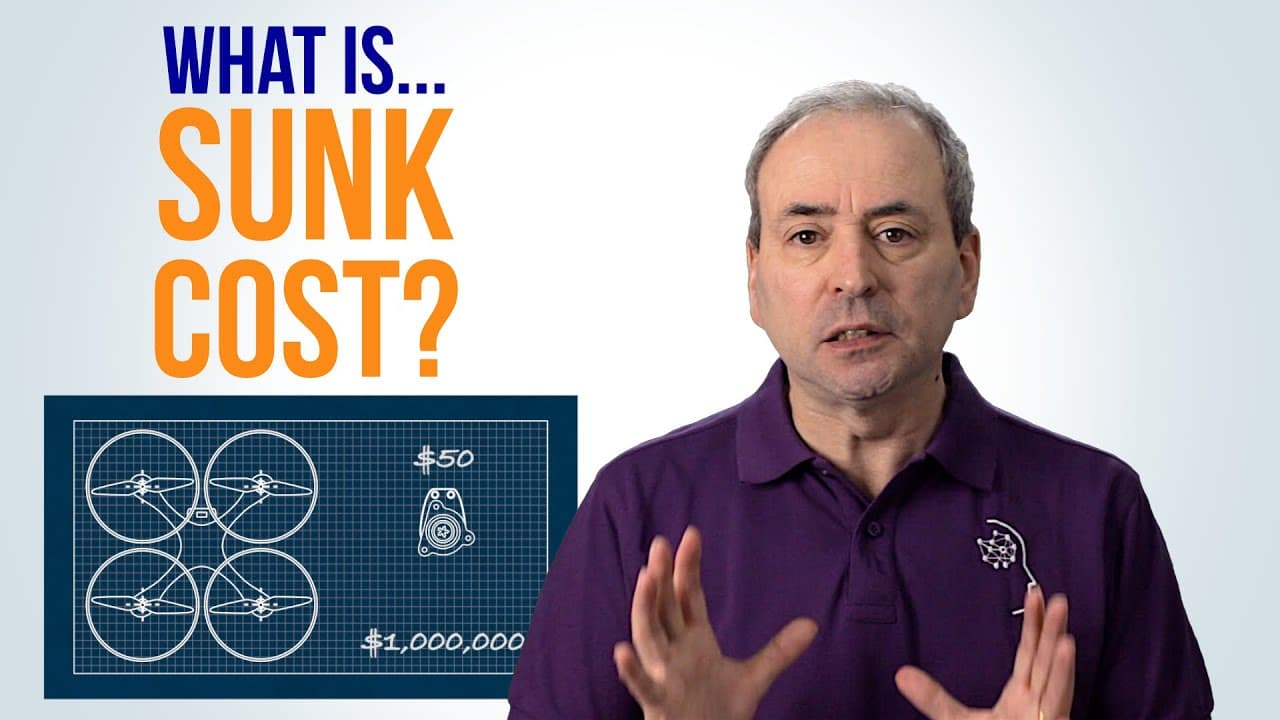
in this video I'm going to answer the question what is sunk cost and I'll also look at the sunk cost trap or sunk cost fallacy sunk cost in the investment of money time or resources that you've already made and can no longer recover in the sense that you can no longer recover them the costs are sunk we can compare sunk cost with future cost future ... Read More
Key Insights
- 🍝 Sunk costs are investments made in the past that cannot be recovered and should not influence decision-making.
- 🇨🇷 Future costs can be influenced by decisions, while sunk costs are fixed and cannot be changed.
- 🇨🇷 The sunk cost trap is the fallacy of considering sunk costs when making decisions about future investments.
- 🥺 Incorporating sunk costs in decision-making often leads to wasteful spending.
- 🇨🇷 Decision-making should solely focus on the potential value of future costs, disregarding sunk costs.
- 😚 The sunk cost trap is driven by psychological factors such as fear of losing face or emotional commitment to a project.
- 🥺 Avoiding the sunk cost trap leads to better decision-making and project outcomes.
Install to Summarize YouTube Videos and Get Transcripts
Explore YouTube Video Summarizer or Get YouTube Transcript Extractor
Questions & Answers
Q: What is sunk cost?
Sunk cost refers to investments (money, time, or resources) that have already been made and cannot be recovered.
Q: How does sunk cost differ from future cost?
Sunk costs are fixed and cannot be changed, while future costs can be influenced by decisions.
Q: What is the sunk cost trap?
The sunk cost trap is the mistake of incorporating sunk costs in decisions about future investments, using past investments to justify future ones.
Q: How can the sunk cost trap be avoided?
The sunk cost trap can be avoided by focusing solely on the potential value of future costs and disregarding sunk costs in decision-making.
Summary & Key Takeaways
-
Sunk cost refers to investments made in the past which cannot be recovered and should not influence future decisions.
-
The sunk cost trap is the fallacy of considering sunk costs when making decisions about future investments.
-
The only key factor in decision-making should be the potential value of future costs, not the sunk costs.
Read in Other Languages (beta)
Share This Summary 📚
Summarize YouTube Videos and Get Video Transcripts with 1-Click
Try YouTube Summary with ChatGPT & Claude or YouTube Transcript Generator
Explore More Summaries from Online PM Courses - Mike Clayton 📚





Summarize YouTube Videos and Get Video Transcripts with 1-Click
Try YouTube Summary with ChatGPT & Claude or YouTube Transcript Generator