Small Group Work With "I Choose"
TL;DR
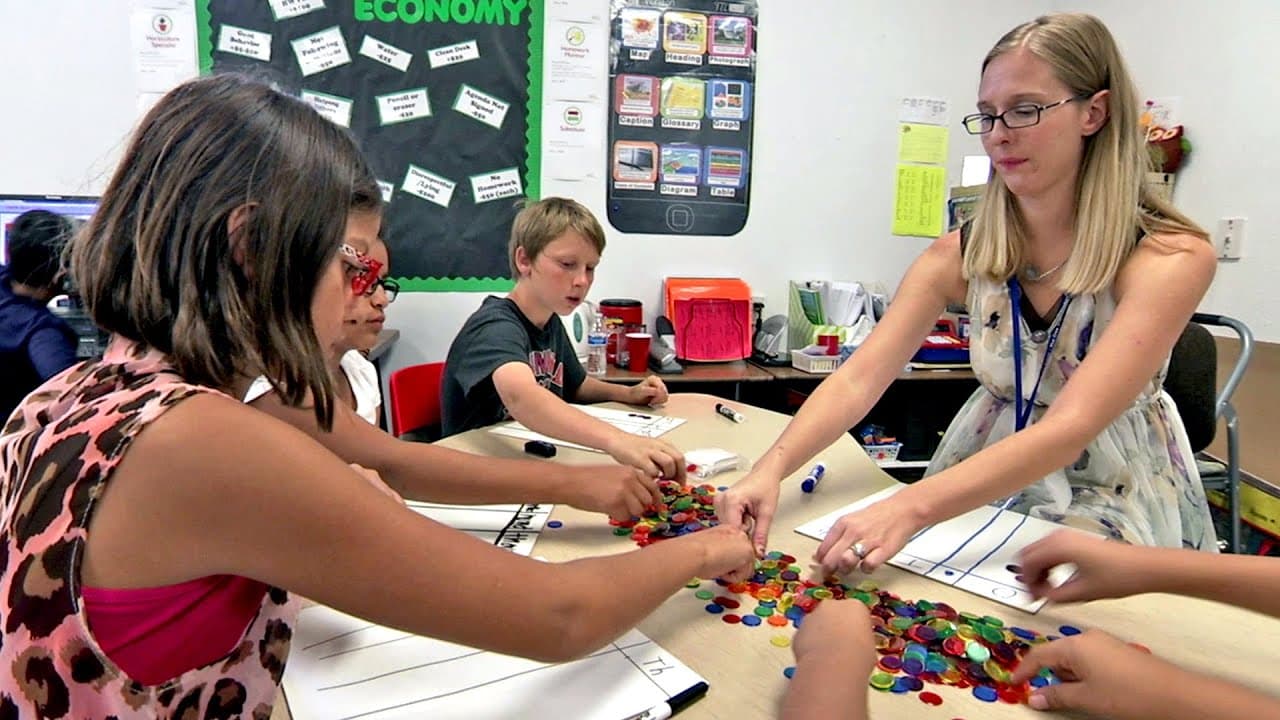
Implementing dedicated time for small group differentiation in classrooms leads to improved student growth and engagement.
Transcript
Jamy: It's all about time. Good teachers know that they need to differentiate. It's just something that we have to do, but finding the time and carving that time out of the day to meet with those small groups can be very, very difficult. >>Jamy: So to have it actually built into our day where there's a set time for half an hour to pull those smal... Read More
Key Insights
- ⌛ Implementing dedicated time for small group differentiation addresses the challenge of finding time for individualized instruction.
- 🧑🎓 Students benefit from the opportunity to choose activities and engage in targeted support during small group differentiation.
- 😒 Teachers can effectively use formative assessments to determine which students require additional support.
- 💦 By addressing skill gaps through small group differentiation, teachers work towards making students proficient and successful.
- 🥺 Small group differentiation has led to increased student engagement and attention in the classroom.
- 🧑🎓 In some cases, older students even use their designated time to assist younger students, fostering peer support and collaboration.
- 🖐️ Teachers play a crucial role in advocating for dedicated time for small group differentiation.
Install to Summarize YouTube Videos and Get Transcripts
Explore YouTube Video Summarizer or Get YouTube Transcript Extractor
Questions & Answers
Q: Why is finding time for small group differentiation difficult for teachers?
Teachers often have large class sizes and struggle to find dedicated time for working with students in small groups. This can make it challenging to provide individualized support and targeted instruction.
Q: How did the school in the video address the time constraint issue?
The school implemented a schedule that allowed students to choose between different activities such as PE, computer lab, library, or music. While some students participated in these activities, teachers worked with small groups of students who needed additional support.
Q: How do teachers determine which students need small group differentiation?
Teachers use formative assessments, such as quick quizzes, to gauge student understanding. Students who score 80% or higher are allowed to participate in the activity of their choice, while those who scored lower receive targeted support from the teacher.
Q: How do teachers engage students during small group differentiation?
Teachers use interactive methods, such as games and hands-on activities, to engage students during small group differentiation. This helps reinforce concepts and make learning visual and kinesthetic.
Summary & Key Takeaways
-
The importance of small group differentiation in education is acknowledged, but finding time for it can be challenging.
-
A school successfully implemented a schedule that allows students to choose between different activities, while teachers work in small groups with students who need additional support.
-
This approach has led to significant academic gains and increased student engagement in the classroom.
Read in Other Languages (beta)
Share This Summary 📚
Summarize YouTube Videos and Get Video Transcripts with 1-Click
Try YouTube Summary with ChatGPT & Claude or YouTube Transcript Generator
Explore More Summaries from Edutopia 📚





Summarize YouTube Videos and Get Video Transcripts with 1-Click
Try YouTube Summary with ChatGPT & Claude or YouTube Transcript Generator