Genghis Khan and the Mongol Empire
TL;DR
The Mongols, known for their military prowess and adaptability, rose to power in 1206 and created the largest contiguous empire in history, which eventually fragmented into multiple significant empires.
Transcript
- [Instructor] It is the year 1200 and the world is about to change in dramatic fashion. Let's just give ourselves a little bit of context of what the world looks like. The kings of western Europe are caught up in the Crusades. In the year 1200, the third Crusade has just ended and is mildly successful, but Jerusalem is still in control of the Musl... Read More
Key Insights
- 😥 The year 1200 marked a crucial turning point in world history, with significant events and changes happening across different regions.
- 🎖️ Genghis Khan's ability to unite nomadic tribes and create the Mongol Empire was a pivotal moment, as the Mongols possessed unique military skills and adaptability.
- 🧑🌾 The Mongols' conquests, including their capture of Baghdad, had far-reaching consequences, shaping the fate of the Islamic world.
Install to Summarize YouTube Videos and Get Transcripts
Explore YouTube Video Summarizer or Get YouTube Transcript Extractor
Questions & Answers
Q: What were the characteristics that made the Mongols successful militarily?
The Mongols' military success stemmed from their expertise in horseback riding and archery, making them incredibly nimble and fast on the battlefield. They were also adaptable, learning from the people they conquered.
Q: How did the Mongol Empire affect the Islamic golden age?
The Mongols' capture of Baghdad is considered to have brought an end to the Islamic golden age. The Mongol threat posed a more significant challenge to the Islamic world than the pressure exerted by western Europeans during the Crusades.
Q: What caused the fragmentation of the Mongol Empire?
By the second half of the thirteenth century, the Mongol Empire began to fragment into multiple Khanates, which became more independent. This fragmentation was influenced by factors such as distance, communication difficulties, and local power struggles.
Q: How did the Mongol Empire influence the empires of Asia and the Middle East?
The Mongol Empire had a profound impact on Asian and Middle Eastern empires. Several empires in these regions, such as the Yuan Dynasty in China and the Ilkhanate in Persia, had their roots in the Mongol Empire and the legacy of Genghis Khan.
Summary & Key Takeaways
-
In the year 1200, the world was undergoing significant changes, with western European kings involved in the Crusades, the Byzantine Empire in decline, and the golden age of Islam in the Middle East and Persia.
-
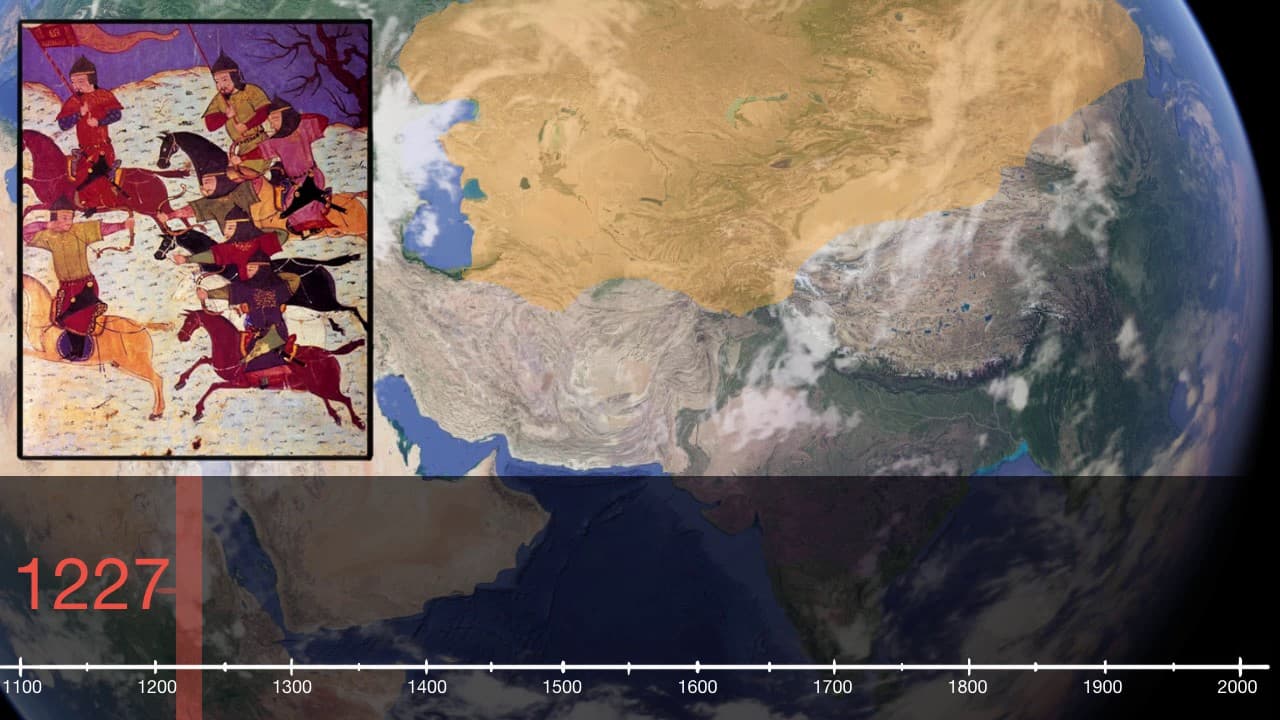
In 1206, a Mongol leader named Temujin united various nomadic tribes and established the Mongol Empire, known for its skilled horsemen and archers.
-
After the death of Genghis Khan in 1227, the Mongols continued to expand their empire, conquering much of northern Asia and eventually reaching Baghdad, marking the end of the Islamic golden age.
Read in Other Languages (beta)
Share This Summary 📚
Summarize YouTube Videos and Get Video Transcripts with 1-Click
Try YouTube Summary with ChatGPT & Claude or YouTube Transcript Generator
Explore More Summaries from Khan Academy 📚



Summarize YouTube Videos and Get Video Transcripts with 1-Click
Try YouTube Summary with ChatGPT & Claude or YouTube Transcript Generator