How Identity Politics Shapes Government Policies
TL;DR
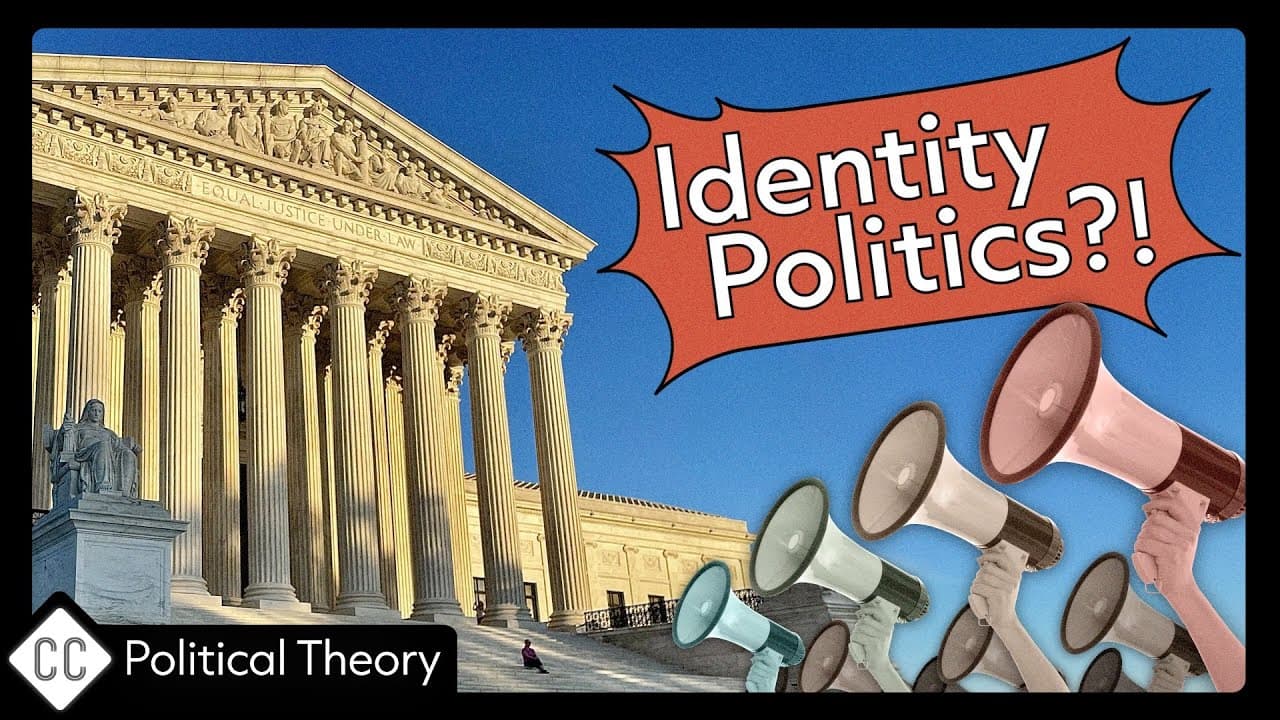
Affirmative action in college admissions has been overturned by the Supreme Court, sparking debate about race-neutral versus race-conscious laws. The video explores the historical and philosophical roots of identity politics, arguing that identity factors should be considered to address social inequities. It examines critiques and defenses of identity politics, suggesting a nuanced approach to understanding and applying these concepts in governance.
Transcript
Affirmative action in college admissions is over. That’s per a 2023 landmark decision from the United States Supreme Court. In his concurring opinion, Justice Clarence Thomas wrote that race-based admissions, quote, “fly in the face of our colorblind Constitution." This ruling overturned decades of laws and policies put into place during the Ci... Read More
Key Insights
- Affirmative action in college admissions was ended by the Supreme Court in 2023, reigniting debates about race-conscious policies.
- Liberalism, based on individual rights, traditionally supports an identity-blind approach to governance.
- Critics like Carole Pateman and Charles Mills argue that liberalism's identity-blindness overlooks systemic inequalities.
- Identity politics proponents believe addressing identity factors is crucial to achieving true equality.
- Critics of identity politics warn it can lead to identity essentialism and tribalism, potentially causing division.
- Iris Marion Young proposes a 'politics of difference' to balance identity recognition with common societal goals.
- Research indicates that race-conscious admissions benefit both underrepresented groups and overall student diversity.
- The debate over identity politics reflects broader questions about fairness, equality, and social justice in governance.
Install to Summarize YouTube Videos and Get Transcripts
Explore YouTube Video Summarizer or Get YouTube Transcript Extractor
Questions & Answers
Q: What is the impact of the Supreme Court's decision on affirmative action?
The Supreme Court's decision to end affirmative action in college admissions has significant implications for how race is considered in educational settings. This ruling overturns decades of policies aimed at addressing racial discrimination and raises questions about the future of diversity in higher education. It has reignited debates about whether race-neutral or race-conscious policies are more effective in promoting equality and fairness.
Q: How does liberalism traditionally view identity in politics?
Liberalism, as a political philosophy, traditionally emphasizes individual rights and identity-blind governance. It is based on the idea that government should protect individual freedoms without considering social identifiers like race, class, or gender. This approach assumes that all individuals start from an equal position, which critics argue overlooks systemic inequalities and the historical context of marginalized groups.
Q: What are the criticisms of identity politics?
Critics of identity politics argue that it can lead to identity essentialism, where individuals are reduced to simplified traits, potentially leading to stereotyping. There is also concern that focusing too much on differences can foster division and tribalism, detracting from common societal goals. Critics worry that this can result in a pendulum effect, where progress for one group triggers backlash from others, hindering social cohesion.
Q: How does Iris Marion Young's 'politics of difference' approach identity?
Iris Marion Young's 'politics of difference' advocates for recognizing individual identities while focusing on the social structures that create inequalities. This approach moves away from identity essentialism, emphasizing the importance of addressing specific social issues within their contexts. It seeks to balance acknowledging diversity with pursuing collective societal goals, offering a more nuanced framework for understanding identity politics.
Q: What role did the civil rights movement play in affirmative action?
The civil rights movement of the 1960s was instrumental in making racial discrimination illegal, leading to the implementation of affirmative action policies. These policies aimed to increase representation of underrepresented groups in higher education and the workforce. By considering race as a factor in admissions, affirmative action sought to address historical injustices and promote diversity, contributing to significant increases in minority enrollment over the decades.
Q: Why do some argue for race-conscious admissions policies?
Proponents of race-conscious admissions argue that such policies are necessary to address systemic inequalities and ensure diversity in educational institutions. Research shows that considering race as a factor in admissions can lead to more equitable representation of minority groups, benefiting all students by enhancing academic achievement and intergroup relations. These policies aim to level the playing field and provide opportunities for historically marginalized communities.
Q: How does the concept of identity-blindness relate to liberalism?
Identity-blindness in liberalism refers to the idea that policies should not consider social identifiers like race or gender, aiming for neutrality and fairness. This concept is rooted in the belief that individual rights should be protected without bias. However, critics argue that this approach ignores the realities of systemic discrimination and fails to address the unique challenges faced by marginalized groups, necessitating a more inclusive political framework.
Q: What are the potential benefits of diversity in student bodies?
Diversity in student bodies offers numerous benefits, including enhanced academic achievement, improved intergroup relations, and better preparation for the workforce. Research indicates that diverse educational environments foster critical thinking, creativity, and empathy among students. Exposure to different perspectives and backgrounds enriches the learning experience, equipping students with the skills needed to navigate an increasingly globalized and interconnected world.
Summary & Key Takeaways
-
The Supreme Court's decision to end affirmative action in college admissions has sparked renewed debate about the role of identity in politics. While some argue for a race-neutral approach, others believe race-conscious policies are necessary to address historical inequities. The video examines the philosophical roots of these debates and suggests a nuanced approach to identity politics.
-
Liberalism, rooted in individual rights, traditionally supports an identity-blind approach, but critics argue this overlooks systemic inequalities. Carole Pateman and Charles Mills highlight how identity factors like race and gender have historically been ignored, calling for a more inclusive political framework.
-
Identity politics is critiqued for potentially leading to division and essentialism, but proponents argue it's necessary for true equality. Iris Marion Young's 'politics of difference' offers a way to recognize identities while pursuing common societal goals, suggesting a balanced approach to governance.
Read in Other Languages (beta)
Share This Summary 📚
Summarize YouTube Videos and Get Video Transcripts with 1-Click
Try YouTube Summary with ChatGPT & Claude or YouTube Transcript Generator
Explore More Summaries from CrashCourse 📚






Summarize YouTube Videos and Get Video Transcripts with 1-Click
Try YouTube Summary with ChatGPT & Claude or YouTube Transcript Generator