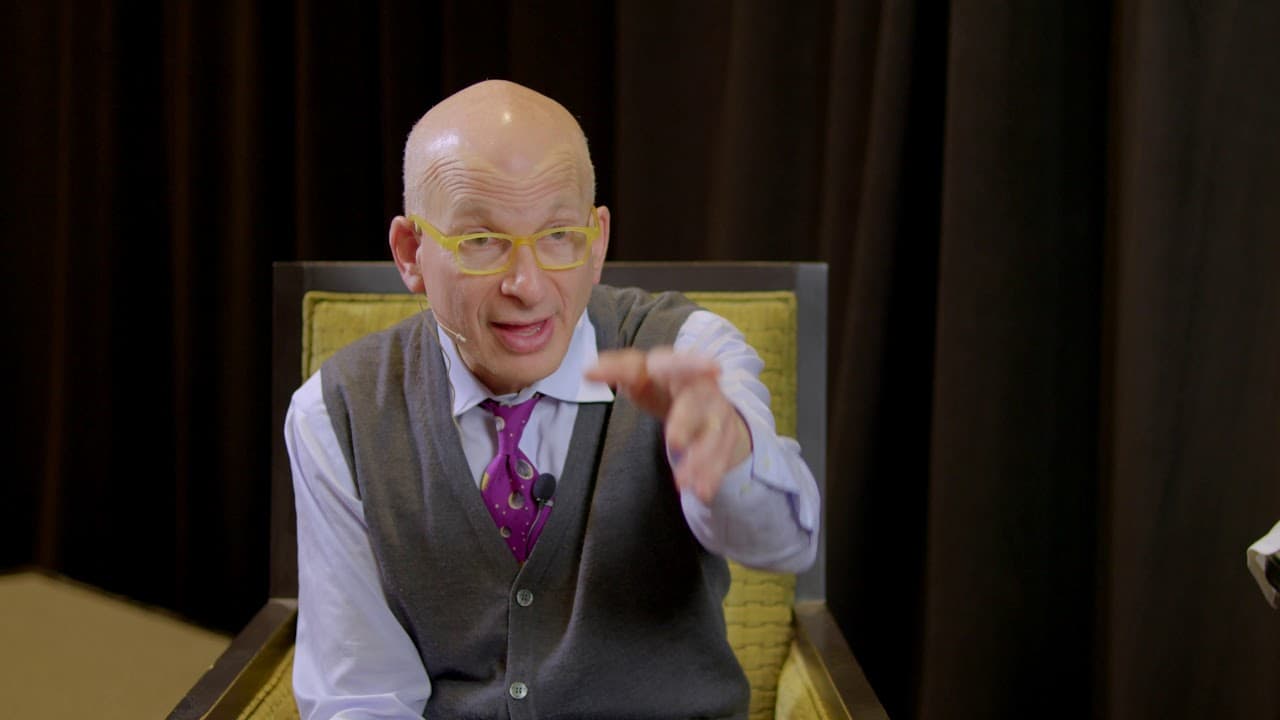
Seth Godin | How to Use Soft Skills in Business to Gain New Customers and Attract Amazing Employees
TL;DR
Soft skills are undervalued but critical in differentiating between average and exceptional performance in various industries.
Transcript
[Applause] one of my favorite books of yours I well it's hard to choose thank you lynchpin so you're sort of alluding to becoming Lynch but you talked in that book about you know we're all geniuses and we're also all not going to be the best whether it's Michael Jordan at basketball or whatever but that we can be the best at what we do in our spot ... Read More
Key Insights
- 💦 Soft skills, such as honesty, loyalty, and hard work, are often undervalued in the professional world, but they play a critical role in success.
- 🍦 Soft skills are not innate abilities but can be learned and developed through intentional practice.
- 🍦 The traditional focus on academic qualifications is shifting towards valuing soft skills for recruitment and job performance.
- 🥺 Being lean and embracing failures can lead to faster learning and innovation.
- 🐕🦺 Customer service can be improved through proactive engagement, designing products with fewer flaws, and employing AI to enhance efficiency and personalization.
- 🤪 Investing in customer relationships by rewarding employees for phone service and going above customer expectations can be beneficial in the long run.
Install to Summarize YouTube Videos and Get Transcripts
Explore YouTube Video Summarizer or Get YouTube Transcript Extractor
Questions & Answers
Q: What are soft skills, and why are they important?
Soft skills encompass traits like honesty, loyalty, hard work, perception, a sense of humor, emotional intelligence, and flexibility. These skills are crucial in various professional settings as they contribute to effective communication, teamwork, problem-solving, and overall success.
Q: Can soft skills be learned?
Yes, soft skills are not innate abilities; they can be developed through intentional practice and learning. Just like any other skill, individuals can work on improving their honesty, sense of humor, emotional intelligence, and other soft skills.
Q: What is the value of soft skills in the workplace?
Soft skills are often the differentiating factor between average and exceptional performance. They contribute to better relationships, effective collaboration, and enhanced problem-solving abilities. Soft skills also impact customer service, leadership, and overall employee satisfaction.
Q: How can managers foster a culture of friendly failure to encourage learning and growth?
Instead of using the term "feedback," which can be seen as judgmental, managers can replace it with "advice." This shift allows open and honest communication, helping individuals learn from mistakes and find better solutions. Emphasizing the value of mistakes and encouraging experimentation can foster a culture of friendly failure.
Summary & Key Takeaways
-
Soft skills, such as honesty, loyalty, hard work, perception, sense of humor, emotional intelligence, and flexibility, are essential for success in professional environments.
-
Soft skills are not inherent talents but can be learned and developed through intentional practice.
-
The traditional focus on academic qualifications is shifting towards valuing soft skills more for recruitment and job performance.
Read in Other Languages (beta)
Share This Summary 📚
Summarize YouTube Videos and Get Video Transcripts with 1-Click
Try YouTube Summary with ChatGPT & Claude or YouTube Transcript Generator
Explore More Summaries from Behind the Brand 📚



Summarize YouTube Videos and Get Video Transcripts with 1-Click
Try YouTube Summary with ChatGPT & Claude or YouTube Transcript Generator