How Can Biotechnology Help Save Endangered Species?
TL;DR
Biotechnology, including genetic rescue and cloning, can save endangered species by restoring genetic diversity and combating inbreeding. For example, Elizabeth Ann, a cloned black-footed ferret, demonstrates how these techniques increase resilience against extinction. Employing advanced technologies is crucial to address the growing threats to biodiversity from climate change and habitat loss.
Transcript
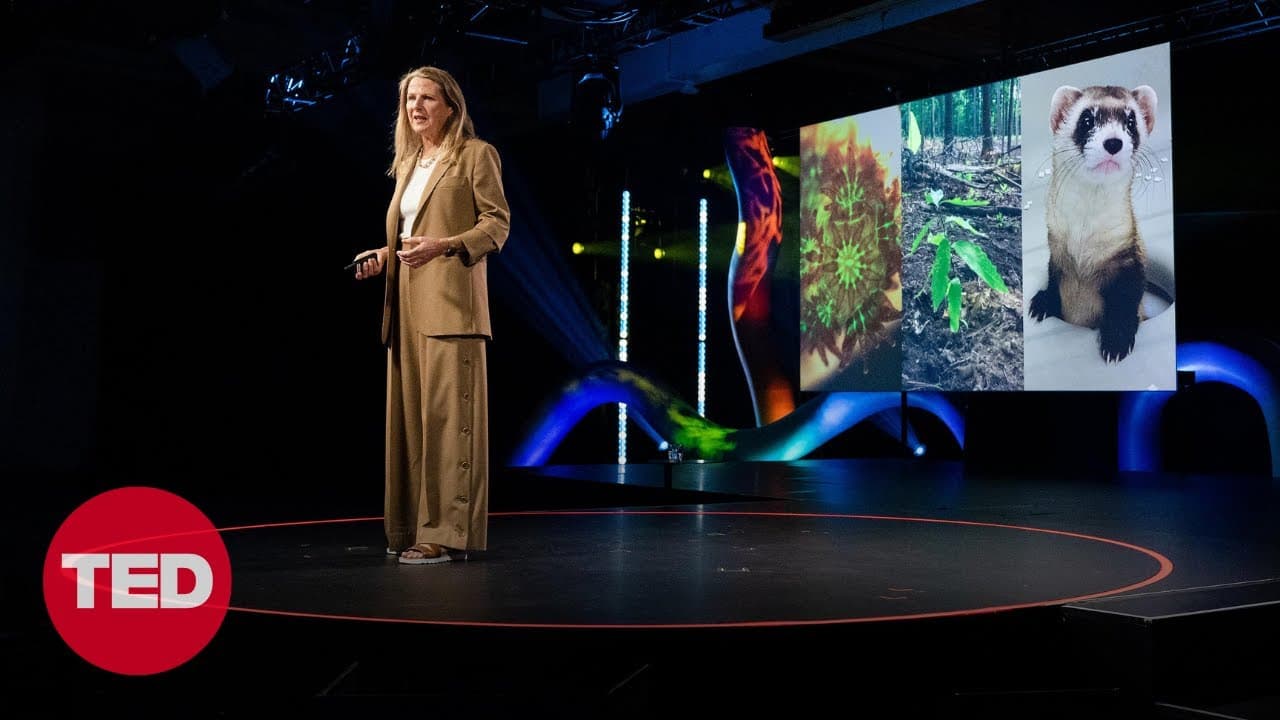
Meet Elizabeth Ann. She's a black-footed ferret, America's most endangered animal. She was cloned using cells from a ferret that lived 33 years ago. Elizabeth Ann is a new hope for the future of her species, a chance to actually restore lost genetic diversity. She was born for this intended consequence. I've been working in conservation for the las... Read More
Key Insights
- 🦡 Cloning endangered animals like Elizabeth Ann, the black-footed ferret, can help restore lost genetic diversity and increase the resilience of their species.
- 🐎 Genetic rescue can be used to combat inbreeding and the risk of extinction in small, fragmented populations like the Przewalski’s horse.
- 🐠 Cryopreservation and genetic engineering technologies offer hope for preserving and restoring coral reefs in the face of climate change and environmental degradation.
- 🌿 Over 1,000 species have been successfully introduced and reintroduced in the last century with no negative environmental impact, challenging the fear of unintended consequences.
- 🌲 Genetic modification can be a powerful tool in restoring endangered species like the American chestnut tree and reducing the risk of extinction.
- 💡 Bold initiatives in conservation require public engagement and support to overcome fear and uncertainty around the potential risks and unintended consequences.
- 🔬 Genomic sequencing, bio banking, cell culturing, and in vitro technologies are fundamental tools in genetic rescue and conservation efforts.
- 🌍 The escalating threats to biodiversity from climate change, habitat loss, fragmented populations, and wildlife diseases necessitate the use of innovative tools and technologies in conservation.
Install to Summarize YouTube Videos and Get Transcripts
Explore YouTube Video Summarizer or Get YouTube Transcript Extractor
Questions & Answers
Q: What is the purpose of cloning Elizabeth Ann, the black-footed ferret?
The purpose of cloning Elizabeth Ann is to restore lost genetic diversity and increase the long-term survival of her species.
Q: How much genetic variation does Elizabeth Ann have compared to living ferrets today?
Elizabeth Ann has three times more genetic variation than any living ferret today.
Q: What other species have been cloned using genetic rescue?
The Przewalski's horses have also been cloned using genetic rescue techniques.
Q: What are the potential benefits of genetic engineering for conservation?
Genetic engineering holds the promise of helping species adapt to climate change, solve wildlife disease problems, and address invasive species issues.
Summary & Key Takeaways
-
Elizabeth Ann, a black-footed ferret, was cloned from cells of a ferret that lived 33 years ago, offering hope for the future of her species and restoring lost genetic diversity.
-
Genetic rescue, through techniques like cloning and genome editing, can help reverse the extinction vortex and increase the long-term survival of endangered species.
-
The use of biotechnology and genetic engineering tools is crucial in addressing the escalating threats to biodiversity from climate change, habitat loss, fragmented populations, and wildlife diseases.
Read in Other Languages (beta)
Share This Summary 📚
Summarize YouTube Videos and Get Video Transcripts with 1-Click
Try YouTube Summary with ChatGPT & Claude or YouTube Transcript Generator
Explore More Summaries from TED 📚




Summarize YouTube Videos and Get Video Transcripts with 1-Click
Try YouTube Summary with ChatGPT & Claude or YouTube Transcript Generator